 William ChambersSkócia, 1723–1796
Drawing
Megnézhető?
Jelenleg nincs kiállítva
Hol van most a(z) „Drawing”? Gyűjtemény: Victoria and Albert Museum, London. Jelenleg nincs kiállítva. Ellenőrizve 2026. szeptember 25.

London, Egyesült Királyság
A gyűjteményhez tartozik, de jelenleg nincs kiállítva.
- Ellenőrizve
- Ebben az állapotban ettől kezdve
- Forrás
- A múzeum
A műről
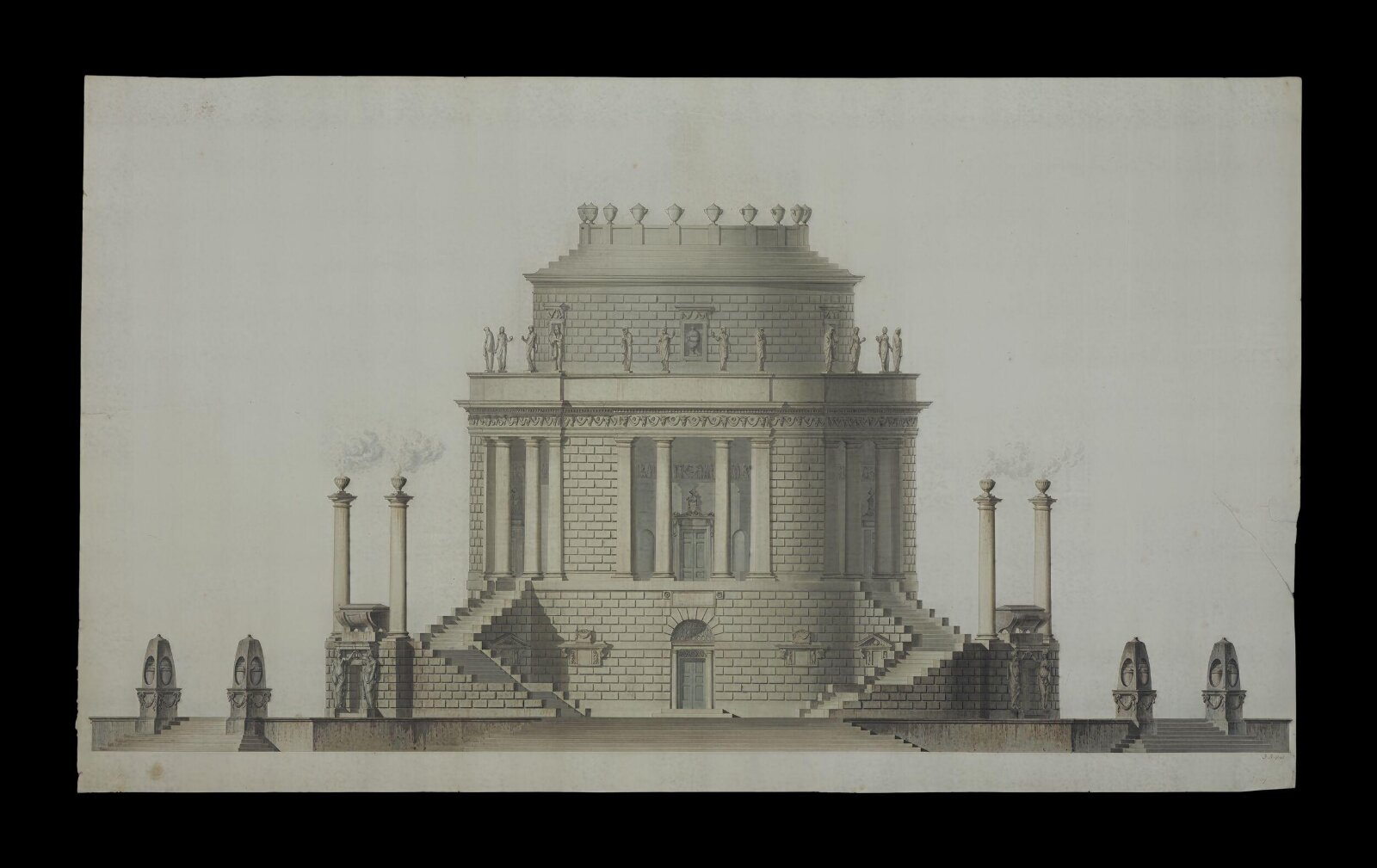
Elevation of the mausoleum to the Prince of Wales by leading architect and designer Sir William Chambers (1723-1796). The mausoleum was not built. There were three known projects for this building. All three drawings borrow both from the architecture of ancient Rome and that of Chambers’s architectural circle in Italy including M.A. Challe, L.J. le Lorrain, N.A. Jardin and especially Jean Laurent Legeay. The interior has elements of the Pantheon, and the exterior borrows from the tomb of Cecilia Metella. This was one of the larger and more elaborate projects. It does not appear to be in Chambers’s hand, and idea hinted at by C.J. Richardson’s unusual attribution of it to John Yenn.
Tovább
Although Richardson’s titling of the design as being for the mausoleum of the Duke of York (d.1767) must be discounted, it is possible that the drawing shows the elevation of a mausoleum exhibited at the Royal Academy in 1776, perhaps intended for both the Prince of Wales and Princess Augusta, who died in that year. Chambers was employed at Kew by the Dowager Princess from 1757 to completely remodel the gardens. Between that date and 1763, Chambers erected twenty-five buildings and other features at Kew, in addition to designing unbuilt projects like the monument to the British poets.
Chambers was born in Sweden and died in London. He travelled widely, visiting China, and studied architecture at the Ecole des Arts, Paris, from 1749 and in Italy from 1750 to 1755. Many of his drawings from this period are contained in his important 'Franco-Italian' album, held in the V&A. Chambers moved to London in 1755 and published his influential Treatise on Civil Architecture in 1759. Chambers demonstrated the breadth of his style in buildings such as Gower (later Carrington) House and Melbourne House, London, in such country houses as Duddingston, Scotland, and in the garden architecture he designed for Wilton House, Wiltshire, and at Kew Gardens. He became head of government building in 1782, and in this capacity built Somerset House, London.
Victoria and Albert Museum
Adatok
- Leltári szám
- 3340
Mit ábrázol?
A katalógusban
Források
- Victoria and Albert Museum
- Kép: Victoria and Albert Museum — © Victoria and Albert Museum, London