 Jacopo TintorettoOlaszország, 1518–1594
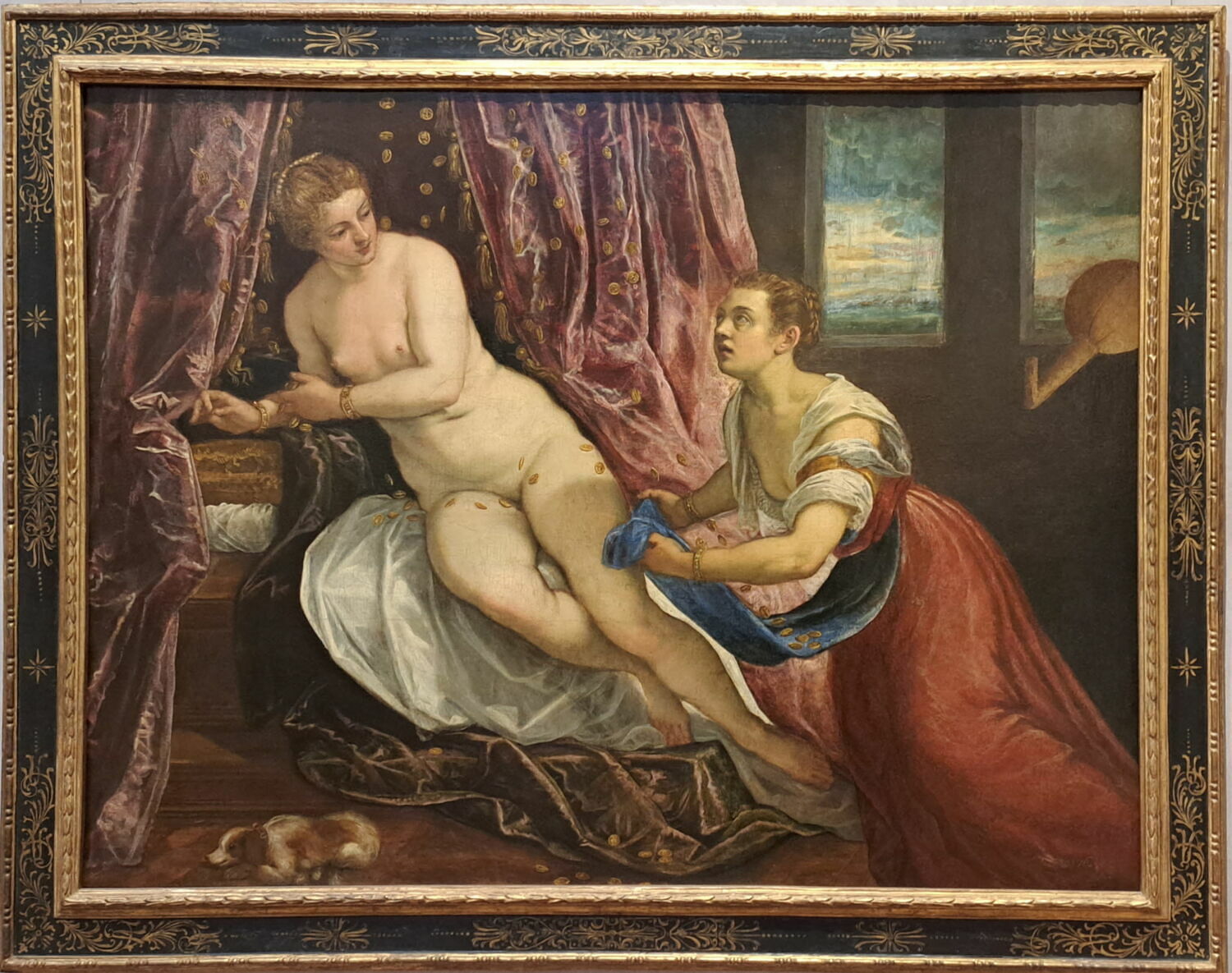
Danaé
Megnézhető?
Nem tudjuk
Hol van most a(z) „Danaé”? Gyűjtemény: Louvre, Párizs. Nem tudjuk, hogy ma ki van-e állítva.

Párizs, Franciaország
A tulajdonos ismert; azt nem tudjuk, hogy ma ki van-e állítva.
- Ebben az állapotban ettől kezdve
- Forrás
- A múzeum
A festményről
Danaë is an oil painting by the Italian artist Tintoretto, from c. 1570. It was acquired by the Museum of Fine Arts of Lyon in 1811, where it still hangs.
Adatok
- Leltári szám
- A 91
A katalógusban
Források
- Louvre
- Kép: Louvre — © 2023 Musée du Louvre / Département des Peintures
Jacopo Tintoretto életében
A teljes életút1519
Born
1530
Ten days in Titian’s studio
Noticing his son’s extraordinary talent for painting, his father placed him in Titian’s studio in 1530, but Jacopo spent no more than ten days there (by another version, a few weeks): according to legend Titian did not want to keep a future dangerous rival. From then on the two artists’ relations remained hostile, although Tintoretto went on admiring Titian; many scholars deny the “apprenticeship” altogether.
1539
Becomes an independent master
A notarised document shows that in 1539 Tintoretto already had the status of an “independent artist” known under that name; his very first works have not survived.
c. 1560
Begins work in the Doge’s Palace
It was probably then that he began his numerous paintings for the Doge’s Palace; the first there was a portrait of the Doge Girolamo Priuli.
1564
The San Rocco competition: a finished ceiling instead of a sketch
Of the four finalists (Tintoretto, Federico Zuccaro, Giuseppe Salviati and Paolo Veronese) invited to submit models for a ceiling painting of Saint Roch in Glory for the Sala dell’Albergo, Tintoretto produced no sketch: he secretly installed a full-sized finished painting on the ceiling and on the day of the competition offered it as a gift — perhaps aware that a bylaw prohibited rejecting any gift. The ruse has been called “the most notorious incident” of his career.
1594. május 31.
Died