John RuskinAnglia, 1819–1900
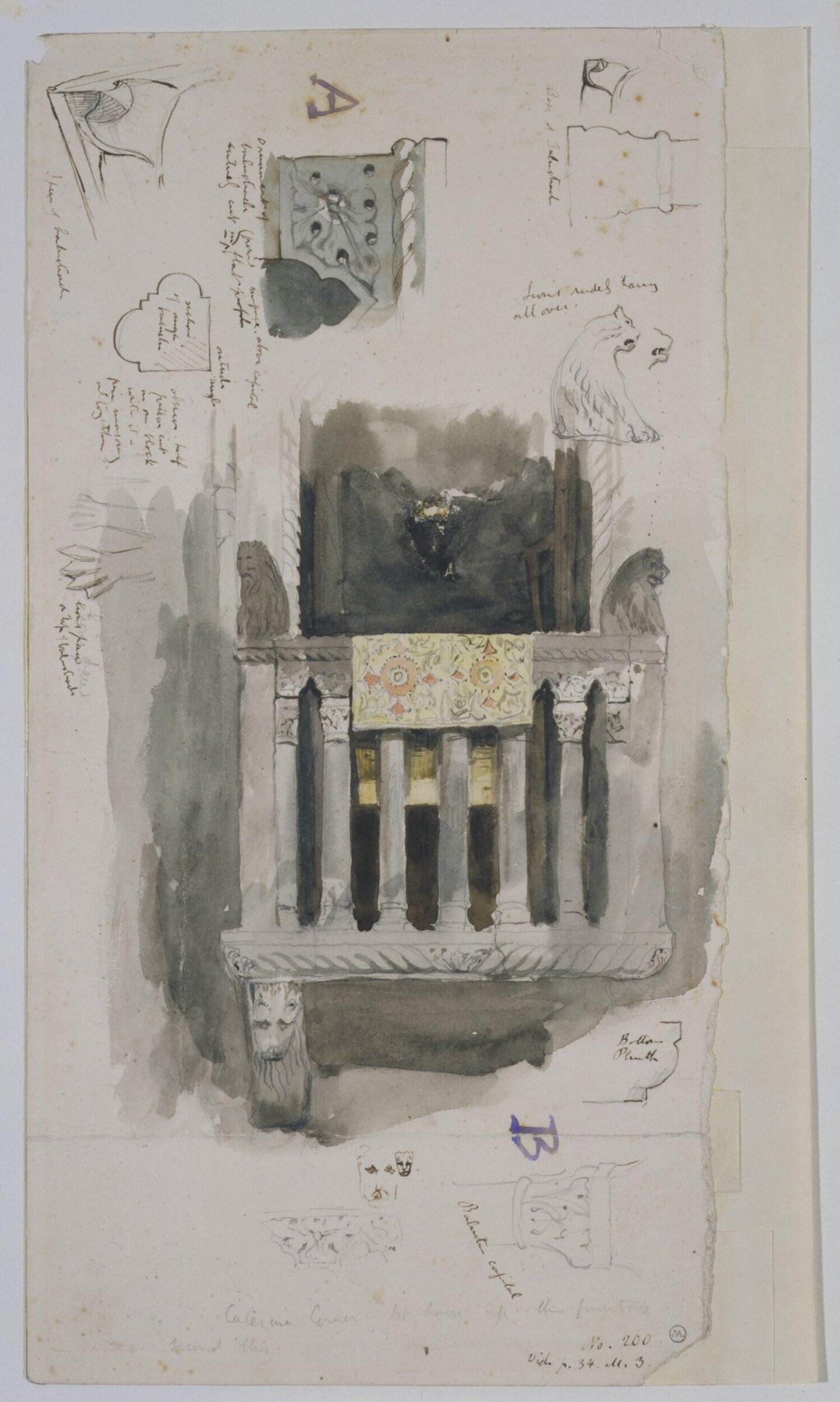
Architectural Study at Caudebec
Megnézhető?
Jelenleg nincs kiállítva
Hol van most a(z) „Architectural Study at Caudebec”? Gyűjtemény: Harvard Art Museums, Cambridge. Jelenleg nincs kiállítva. Ellenőrizve 2026. november 9.

Cambridge, Amerikai Egyesült Államok
A gyűjteményhez tartozik, de jelenleg nincs kiállítva.
- Ellenőrizve
- Ebben az állapotban ettől kezdve
- Forrás
- A múzeum
Adatok
- Leltári szám
- 1926.33.143
A katalógusban
Források
- Harvard Art Museums
- Kép: Harvard Art Museums — © President and Fellows of Harvard College
John Ruskin életében
A teljes életút1834–1900 · Munkahely
Great Britain
April 1846
The second volume of “Modern Painters”
The second volume, written on the strength of his travels, concentrates on Renaissance and pre-Renaissance artists rather than Turner and is more theoretical than the first: Ruskin links the beautiful with the divine, and critics receive it more warmly, although many find his attack on the aesthetic orthodoxy of Joshua Reynolds hard to accept. That summer he is abroad again with his father, who still hopes his son might become a poet — one of many factors raising the tension between them.
October 1847
Engagement to Effie Gray
During 1847 Ruskin grows closer to Euphemia “Effie” Gray, the daughter of family friends, for whom he had once written “The King of the Golden River”; they become engaged in October.
1848. április 10.
Married: Effie Gray
1849
The Alps without Effie: beauty and the peasants' poverty
Effie is too unwell for the European tour of 1849, so Ruskin visits the Alps with his parents, gathering material for the third and fourth volumes of “Modern Painters”. The contrast between Alpine beauty and the poverty of the Alpine peasants stirs his increasingly sensitive social conscience.
1849
In Venice with Effie: the sketches behind “The Stones of Venice”
In November 1849 the couple stay at the Hotel Danieli: Effie looks for company, while Ruskin works alone and hurries to draw the Ca' d'Oro and the Doge's Palace, fearing that the occupying Austrian troops will destroy them. These sketches and notes will grow into “The Stones of Venice”.