 Viktor Vasnetsov1848–1926
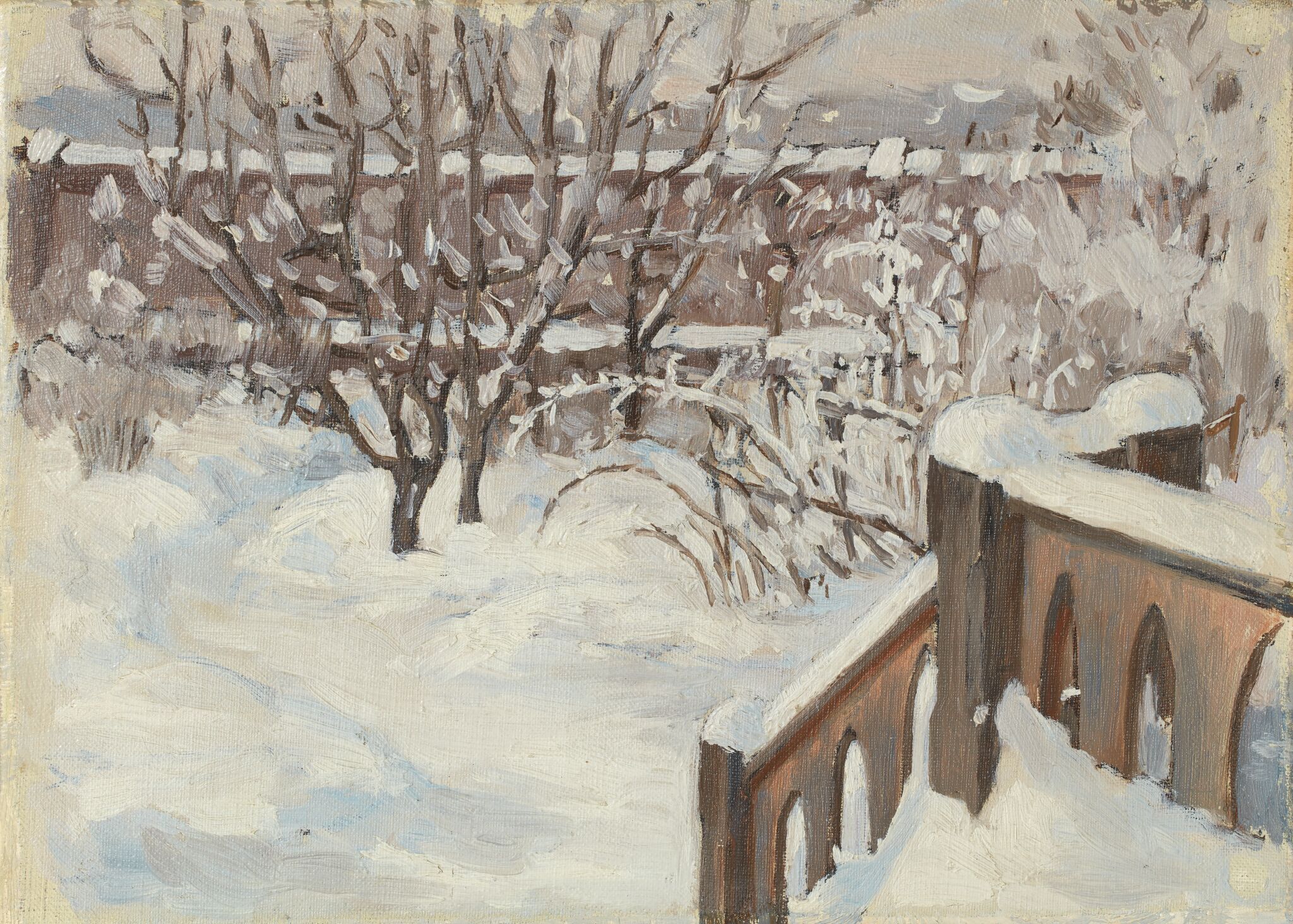
Этюд "Зимний сад дома в Москве"
Peut-on la voir ?
Inconnu
Où est « Этюд "Зимний сад дома в Москве" » aujourd’hui ? Collection: Galerie Tretiakov, Moscou. Inconnu.

Moscou, Russie
Le propriétaire est connu ; on ignore si l’œuvre est exposée aujourd’hui.
- Source
- Le musée
À propos du tableau
Selon le musée — en russe
«Замечателен был у Виктора Васнецова дом, самим им выстроенный на одной из Мещанских улиц Москвы. Нечто среднее между современной крестьянской избой и древним княжеским теремом», – вспоминал Фёдор Иванович Шаляпин. В этом доме Виктор Михайлович жил и работал последние 32 года своей жизни.
В архитектуре дома, убранстве его комнат сказалась любовь мастера к искусству и укладу жизни старой, еще допетровской Руси. Сам район Мещанской слободы, где он купил для постройки участок земли, на рубеже XIX–XX веков был окраиной Москвы, сюда не доносилась деловая суета большого города.
Lire plus
Обширный сад при доме приближал Васнецовых к природе. Виктор Михайлович любил писать свой сад в разное время года. Камерный зимний этюд передает дух мирной семейной жизни. Такое настроение создается ухоженностью подстриженных деревьев, протоптанными в снегу дорожками, видом перил лестницы, ведущей на террасу. Забор выше человеческого роста – зримая ограда домашнего очага. Простоте сюжета соответствует приглушенный колорит, в котором переливается множество оттенков, рождая ощущение гармонии жизни неба, снега, деревьев и людей в этом доме.
Galerie Tretiakov
Notice
- Numéro d’inventaire
- ДМВ Ж-45
Au catalogue
Sources
- Galerie Tretiakov
- Image : Galerie Tretiakov — © State Tretyakov Gallery
Dans la vie de Viktor Vasnetsov
La vie entière1912
A patent of nobility from Nicholas II
In 1912 an imperial decree granted him, for his artistic merits, “the nobility of the Russian Empire with all his descendants”; in 1914 he received the rank of actual state councillor.
1915
A sketch of the “bogatyrka”, the future budenovka
In 1915 he took part in designing a military uniform for the Russian army’s victory parade in Berlin and Constantinople; he is credited with creating the “bogatyrka”, a hat reproducing the cone-shaped helmets of Kievan Rus’ — the future budenovka.
1917
He rejects the revolution but stays in Russia
He did not accept the October Revolution, calling himself a convinced monarchist “on the ancient Russian principles”; his nobility and ties with the old regime found no favour with the Bolsheviks, but he did not emigrate and went on living and working in Moscow.
1919
His son Boris dies
In 1919 his son Boris (1880–1919) died; after the revolution the artist’s family was scattered, which he took hard.
September 1919
Rumours that Vasnetsov has been shot
In September 1919 a Russian émigré newspaper reported that the Bolsheviks had “in all likelihood” killed the artist; the rumour reached Repin at Penaty, who anxiously asked the Soviet artists visiting him whether it was true that Vasnetsov had been shot.
1920
His son Mikhail emigrates on the last steamer
During the Civil War Mikhail taught at the White Army’s flying school in Kiev; in 1920, escaping the Red Army, he sent his wife and son to his father’s house and left on the last steamer sailing from Crimea to Gallipoli — the family knew nothing of his fate until 1922.