 Jean-Baptiste CarpeauxFrance, 1827–1875
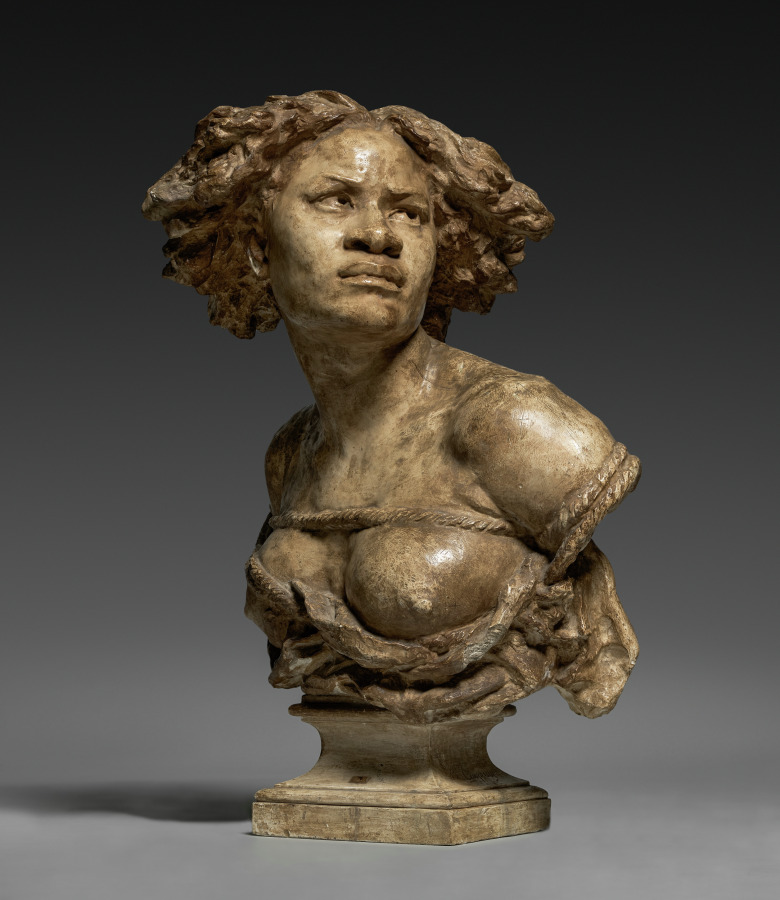
Why Born Enslaved!
Peut-on la voir ?
Oui, exposée actuellement
Où est « Why Born Enslaved! » aujourd’hui ? Cleveland Museum of Art, 219 19th Century European, Cleveland. Oui, exposée actuellement. Vérifié 12 octobre 2026.

Présentée au public.
- Vérifié
- Dans cet état depuis
- Source
- Le musée
À propos de la sculpture
One of the most powerful expressions of abolitionist sentiment in the visual arts, Why Born Enslaved! depicts an African woman bound by ropes and looking defiantly upward. The ropes press painfully into her breasts; her torn blouse alludes to the violence responsible for her condition. The original, polychromed surface is covered with complex, nuanced hatchings and subtle modeling. Evidence indicates that this masterpiece of 19th-century French sculpture served as the master model for numerous casts in other museum collections.
Cleveland Museum of Art
Notice
- Numéro d’inventaire
- 2022.2
Au catalogue
Sources
- Cleveland Museum of Art
- Image : Cleveland Museum of Art — Museum open access
Dans la vie de Jean-Baptiste Carpeaux
La vie entière1866
Made a chevalier of the Legion of Honour
He is made a chevalier of the Legion of Honour.
1868
Opens his own studio in Auteuil
He opens his own studio in the Paris district of Auteuil (other accounts say as early as 1866) in order to reproduce his work and take on larger commissions; his brother manages sales. He multiplies his sculpture models in plaster, terracotta, bronze and marble, also using independent founders to cast them in bronze.
27 avril 1869
Married: Amélie de Montfort
27 – 28 August 1869
An inkwell is thrown at “The Dance”
In the night of 27–28 August 1869 an indignant gentleman hurls an inkwell at the sculpture. It is soon cleaned, but satirical magazines are full of spiteful caricatures, and Prosper Mérimée fumes that savages are dancing the cancan before the Opéra, marvelling that the police do not intervene.