 Aristide MaillolFrance, 1861–1944
Wave
Peut-on la contempler ?
Elle ne reçoit pas en ce moment

Cleveland Museum of Art
Cleveland, États-Unis
Elle appartient à la collection, mais n’est pas présentée en ce moment.
- Vérifié
- avant-hier
- Dans cet état depuis
- 19 août 2026
- Source
- Les données de collection du musée lui-même
À propos de l’œuvre
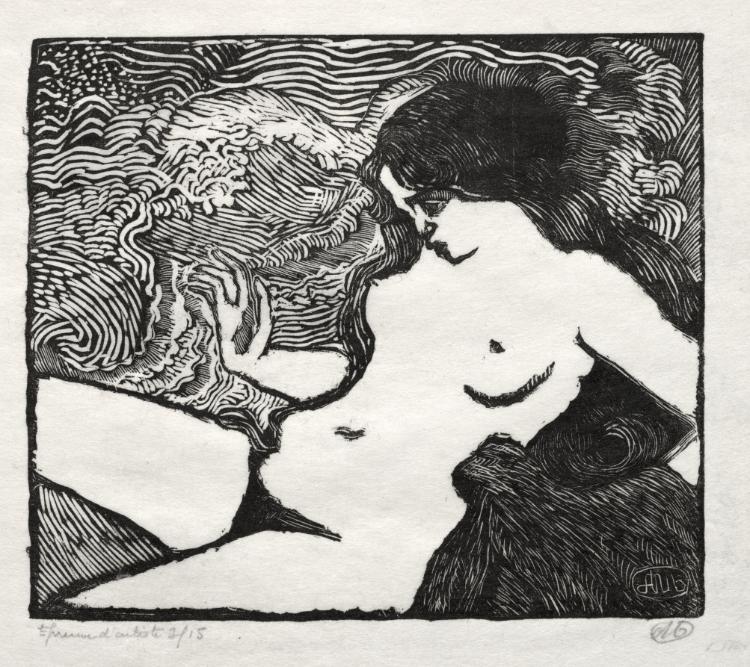
The color woodcuts of Katsushika Hokusai were highly esteemed. One of his most famous prints, The Great Wave off Kanagawa (1823-31), is a striking image of an enormous cresting wave. Maillol exploited the curling water motif to achieve an energetic linear design that surrounds and cushions the nude woman but also creates a lively contrast to the large, flat white shape of her body. A precursor to Maillol's future work as a sculptor, Wave reveals the artist's interest in conveying the sensual curves of the female form.
Cleveland Museum of Art
Notice
- Numéro d’inventaire
- 1997.5
Au catalogue
Sources
- Cleveland Museum of Art: the museum's own open data · obtenue il y a 5 jours
- Image : Cleveland Museum of Art — Museum open access
Pendant ce temps, chez Aristide Maillol
La vie entière1893
A tapestry workshop in Banyuls
Gauguin encouraged his growing interest in decorative art, and in 1893 Maillol opened a tapestry workshop in Banyuls, whose technical and artistic quality earned him recognition for renewing the art in France. The medieval tapestries of The Lady and the Unicorn at the Musée de Cluny provided the spark.
1895
First terracottas: the turn to sculpture
In 1895 Maillol began making small terracotta sculptures, and within a few years sculpture had displaced his tapestry work. It was failing eyesight that drove him to sculpture, and by some accounts he first showed his works to the public in 1894.
July 1896
Marries Clotilde Narcis
In July 1896 Maillol married Clotilde Narcis, one of the employees of his tapestry workshop.
October 1896
Birth of his son Lucien
In October 1896 Maillol and Clotilde's only son, Lucien, was born.