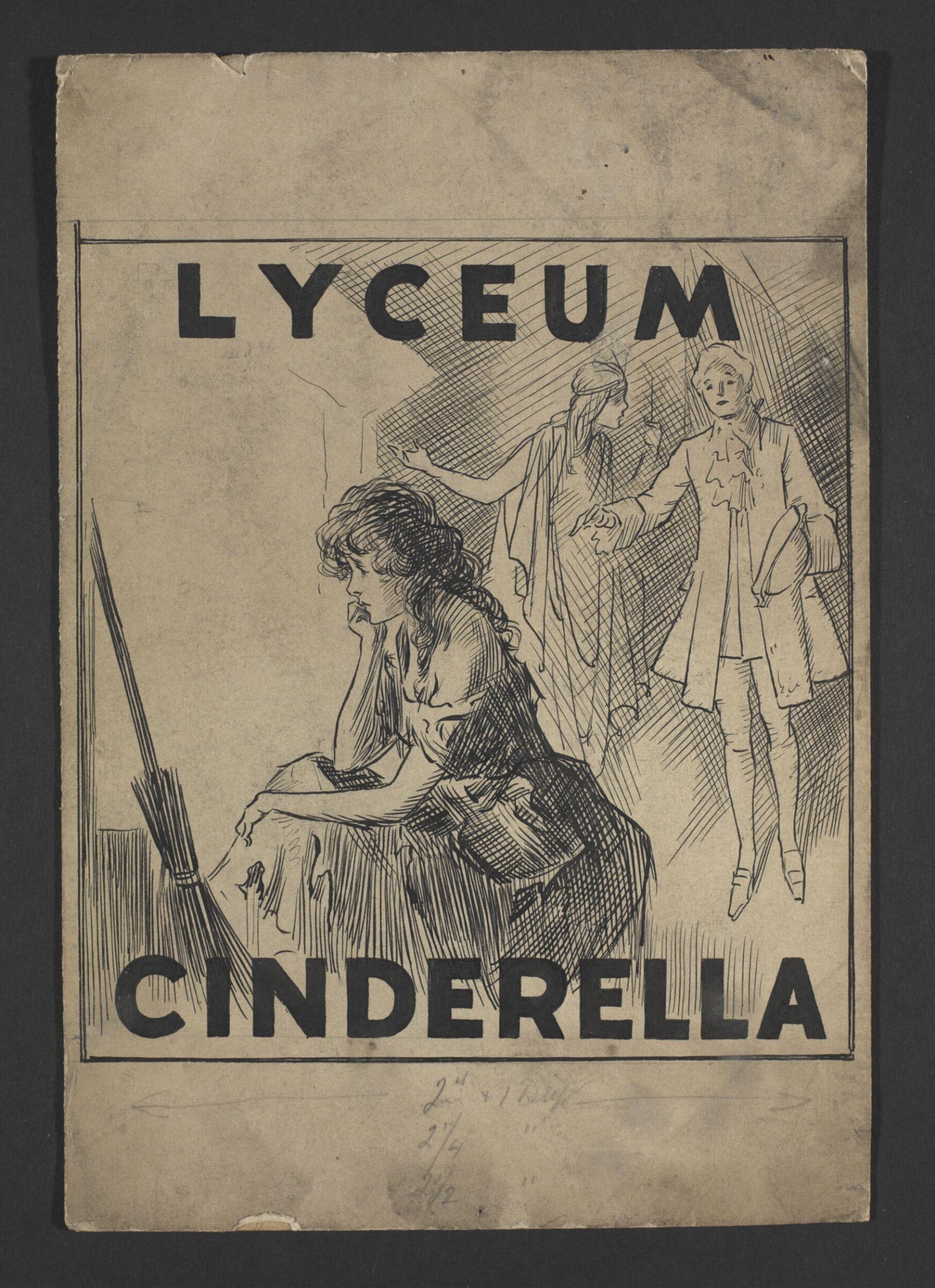
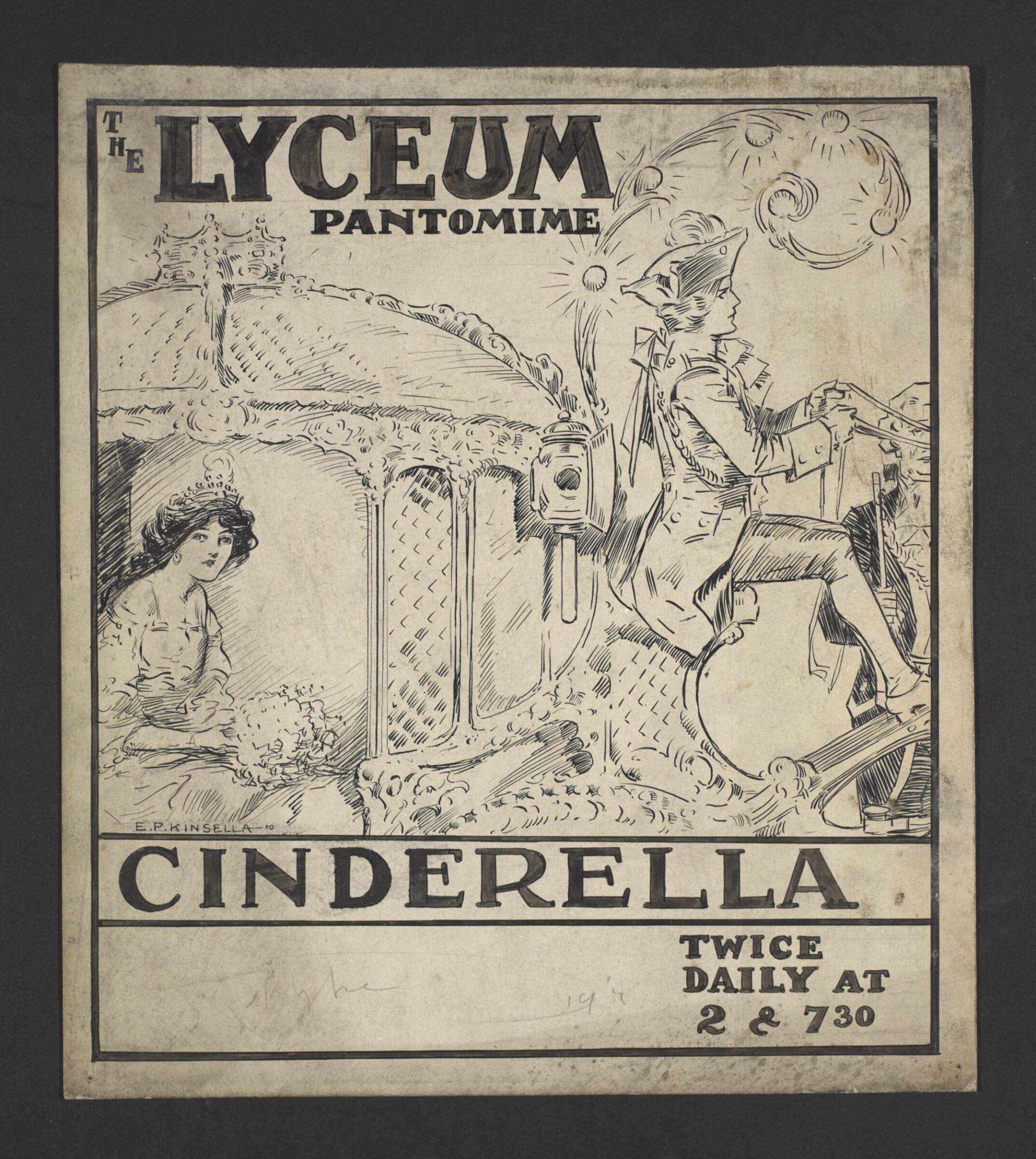
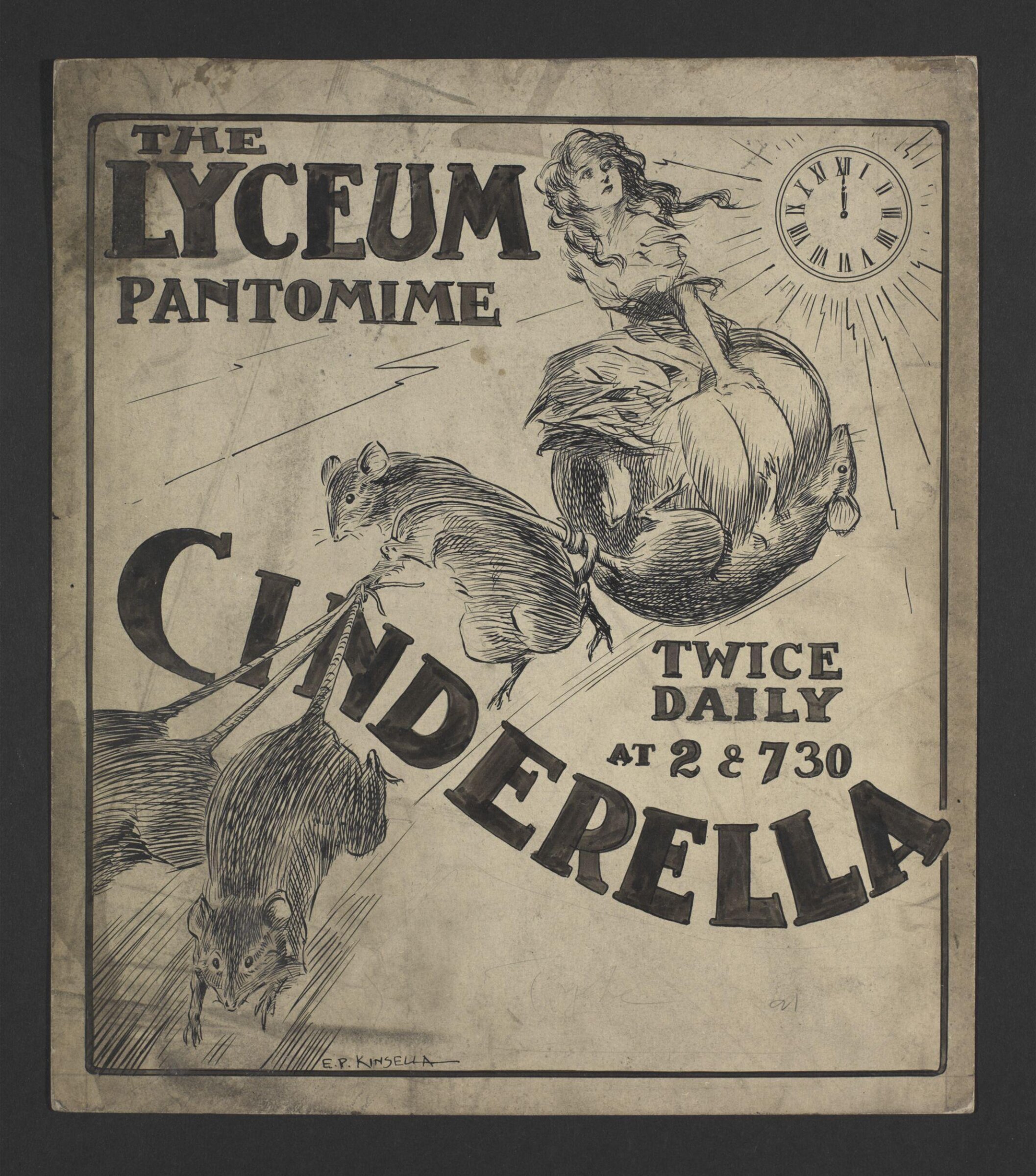
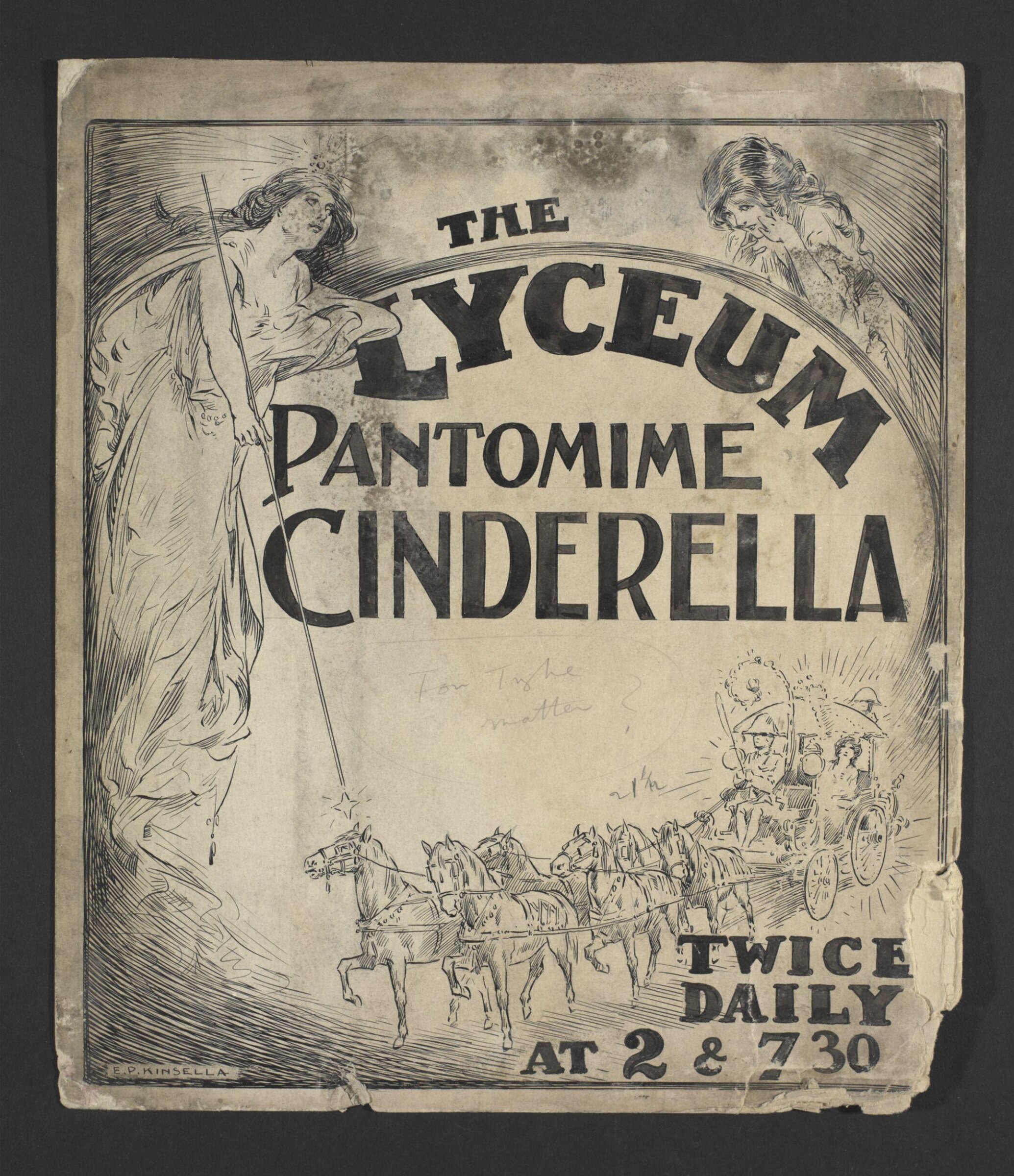
Walter Melville (1875-1937) ran the Lyceum Theatre in partnership with his brother Frederick between 1910-1938. They became particularly known for their annual spectacular pantomimes.
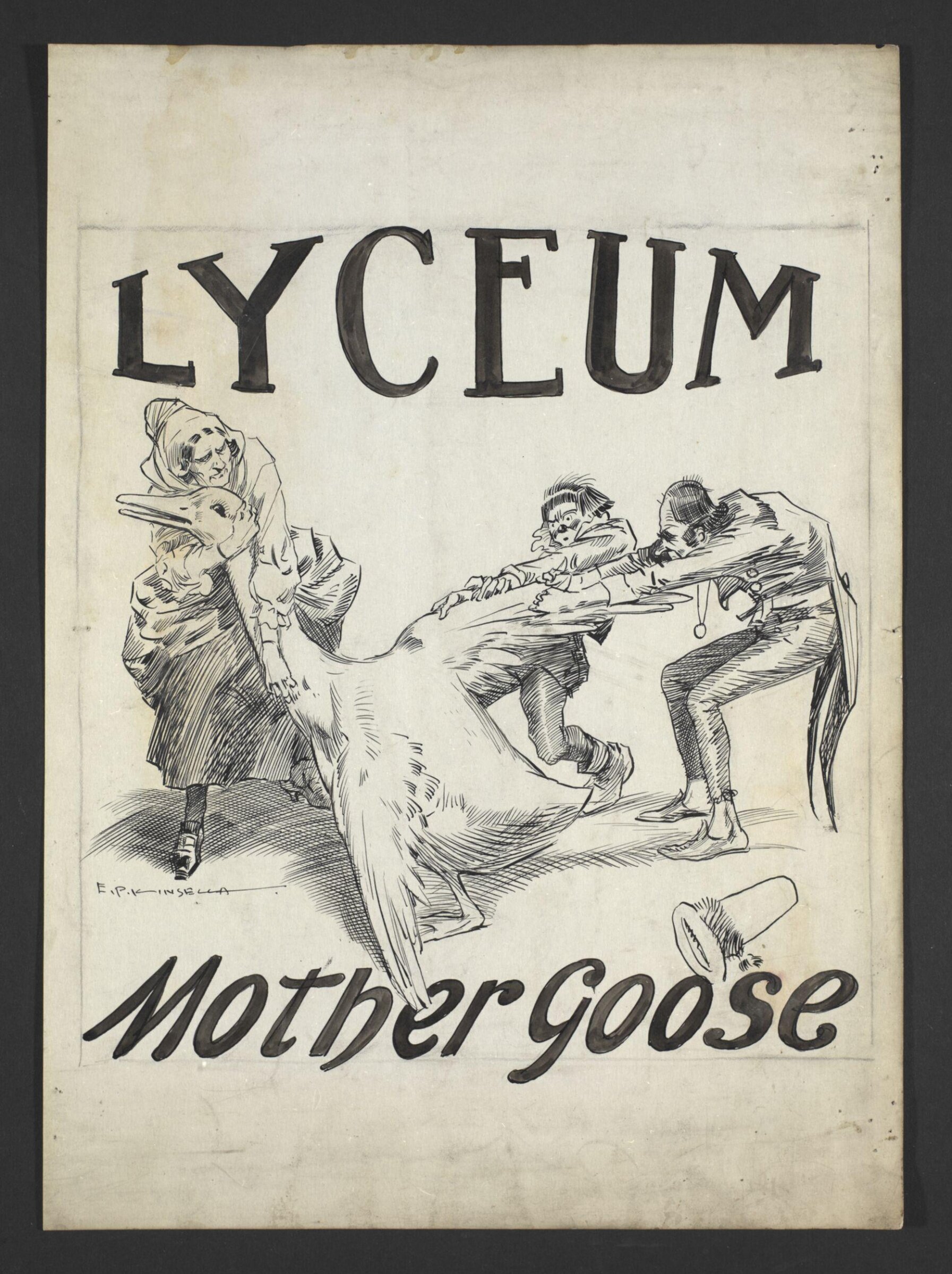
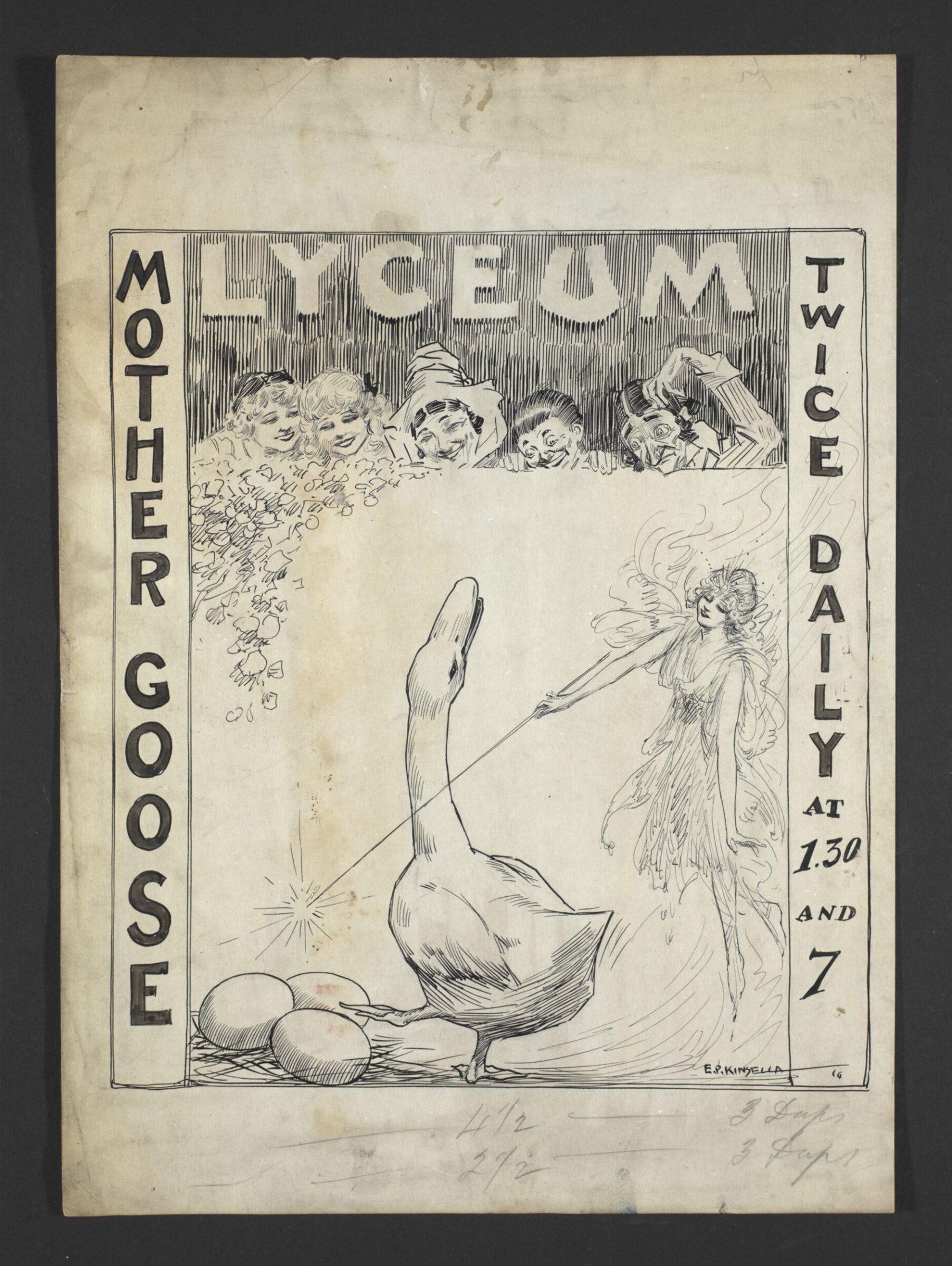
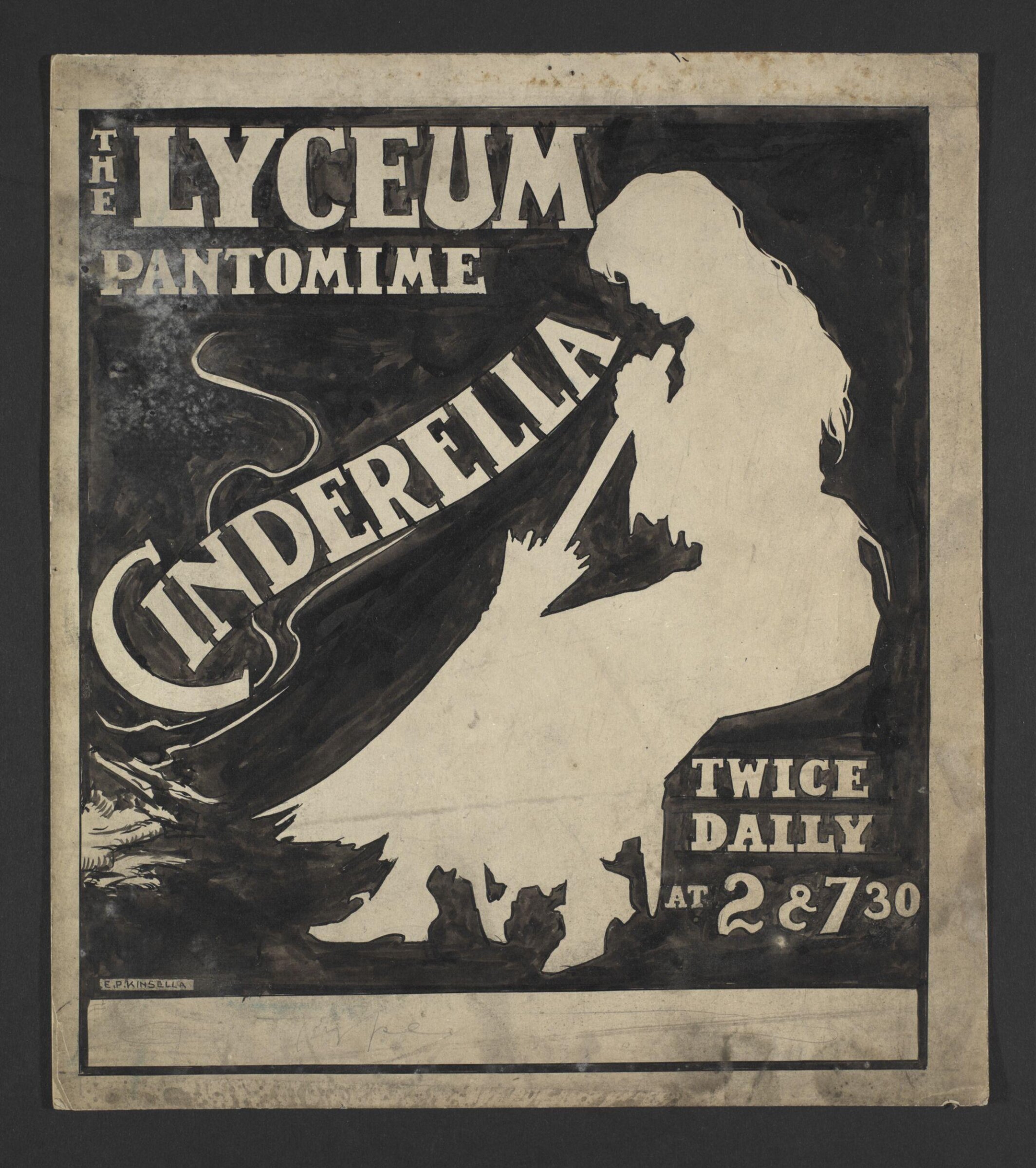
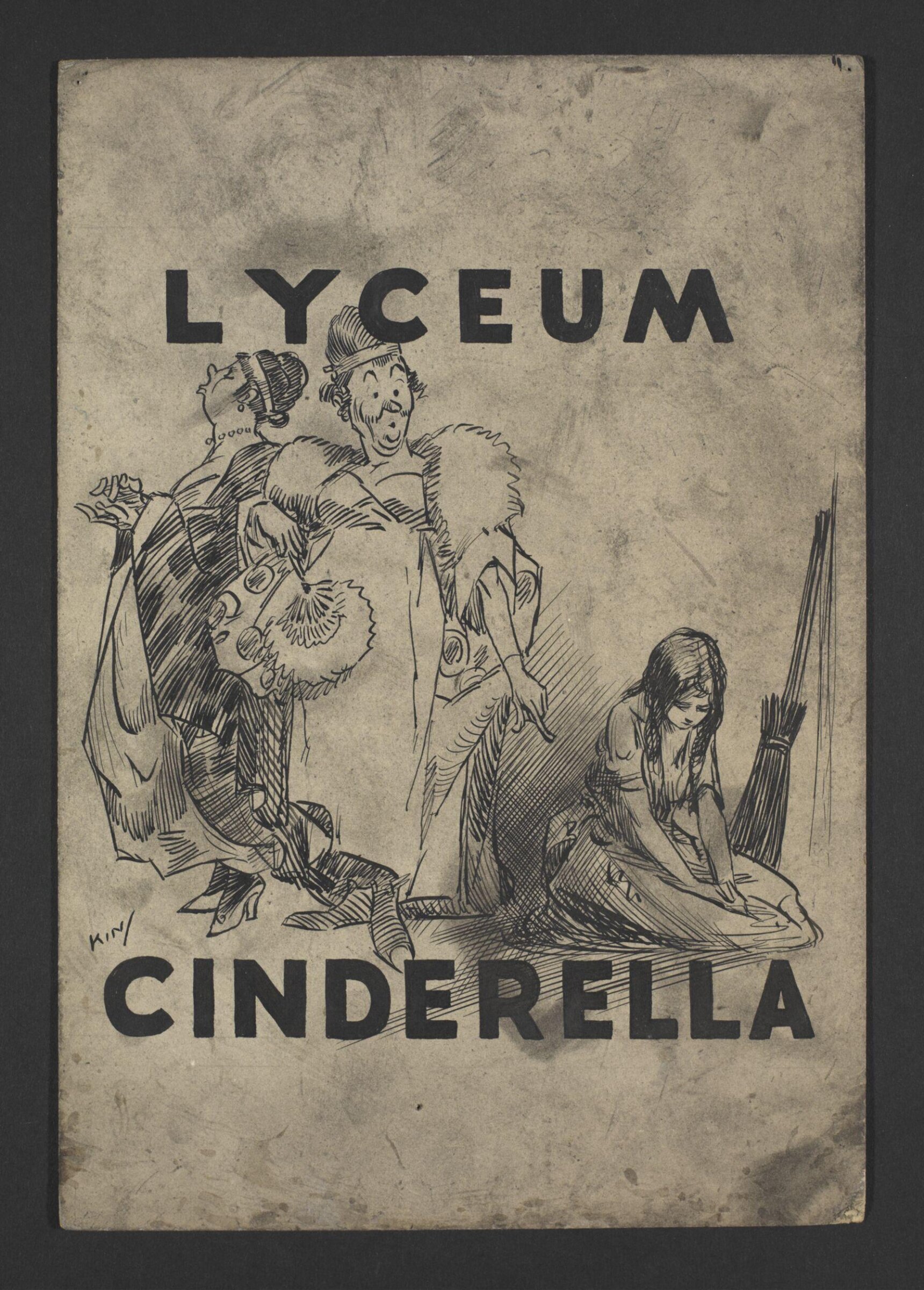
The artist, book illustrator and film-maker Patrick Russell Edmund Kinsella, known as E.P. Kinsella (1875-1936) was born in Liverpool, the son of the music-hall performer and proprietor Patrick ‘Pat’ Kinsella and his wife Flora. In London Kinsella worked as an artist, set designer and illustrator, producing illustrations for publicity for the Melvilles at the Lyceum Theatre and the Princes Theatre (now the Shaftesbury), that they built in 1911.
Lire la suite
Kinsella appears to have started designing posters for London theatres about 1911 when he did those for Orpheus in the Underworld at His Majesty’s Theatre, and The Eternal Waltzat the London Hippodrome. His artwork for publicity material for the Melville Brothers dates from about 1916, and his friendship with Walter Melville continued into the 1920s.
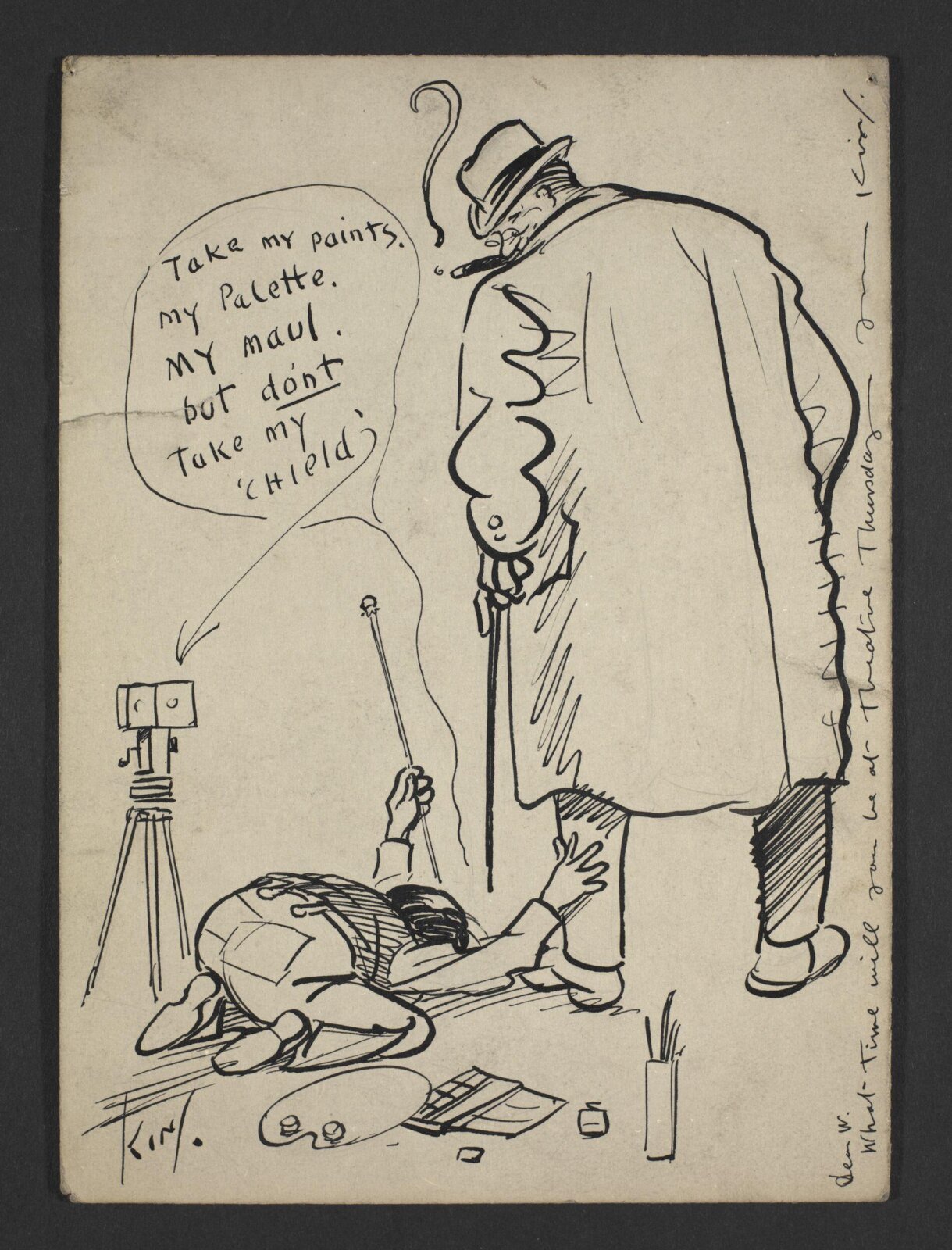
Kinsella was also an enthusiastic film maker. He formed the Kinsella & Morgan Film Company with Horace Morgan, making cartoons and live action shorts for the War Aims Committee, and seven Kincartoons between 1917 and 1918 including Simple Simon and George Robey’s Day Off featuring his friend the actor George Robey. Kinsella & Morgan ceased film production at the end of the war, but Kinsella continued to use his camera after that date, judging from this postcard he sent Walter Melville on 22nd July 1922.
Kinsella asks Melville what time he will be at the theatre, with a sketch obviously referring to a private joke between the two. He depicts himself crouched on his studio floor as a supplicant, touching Melville's trouser leg and telling him he can take the tools of his artwork - 'my paints, my palette, my maul' (his artist's mahl or maul stick), but not his camera which he lovingly refers to as his 'chield' – probably a corruption of 'child'. His hand-cranked camera stands on a tripod, topped with what appears to be a wooden film casette.