 Hans MemlingPays-Bas, 1494
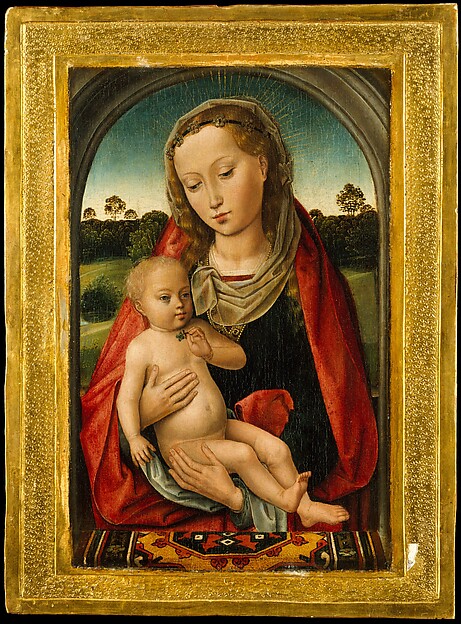
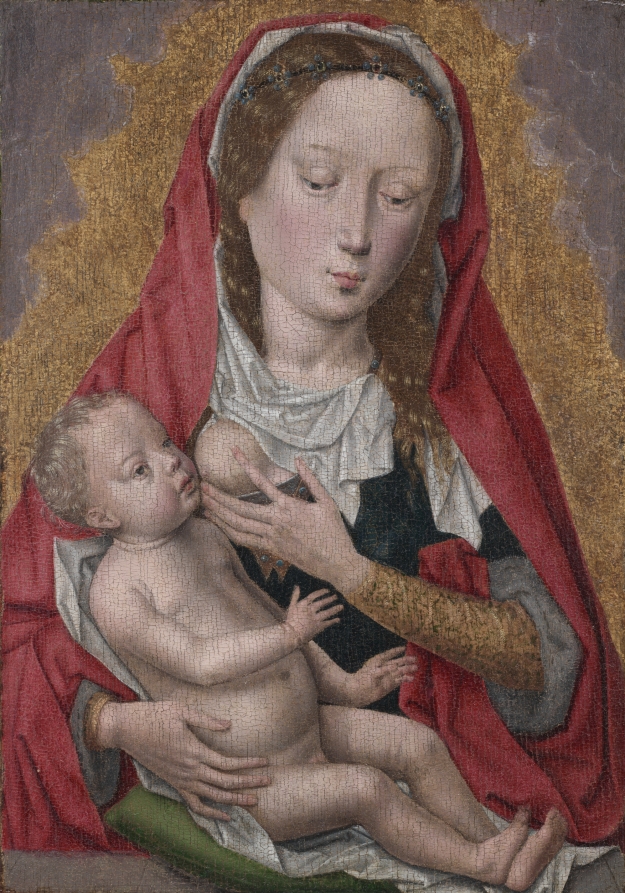
Virgin and Child
À propos du tableau
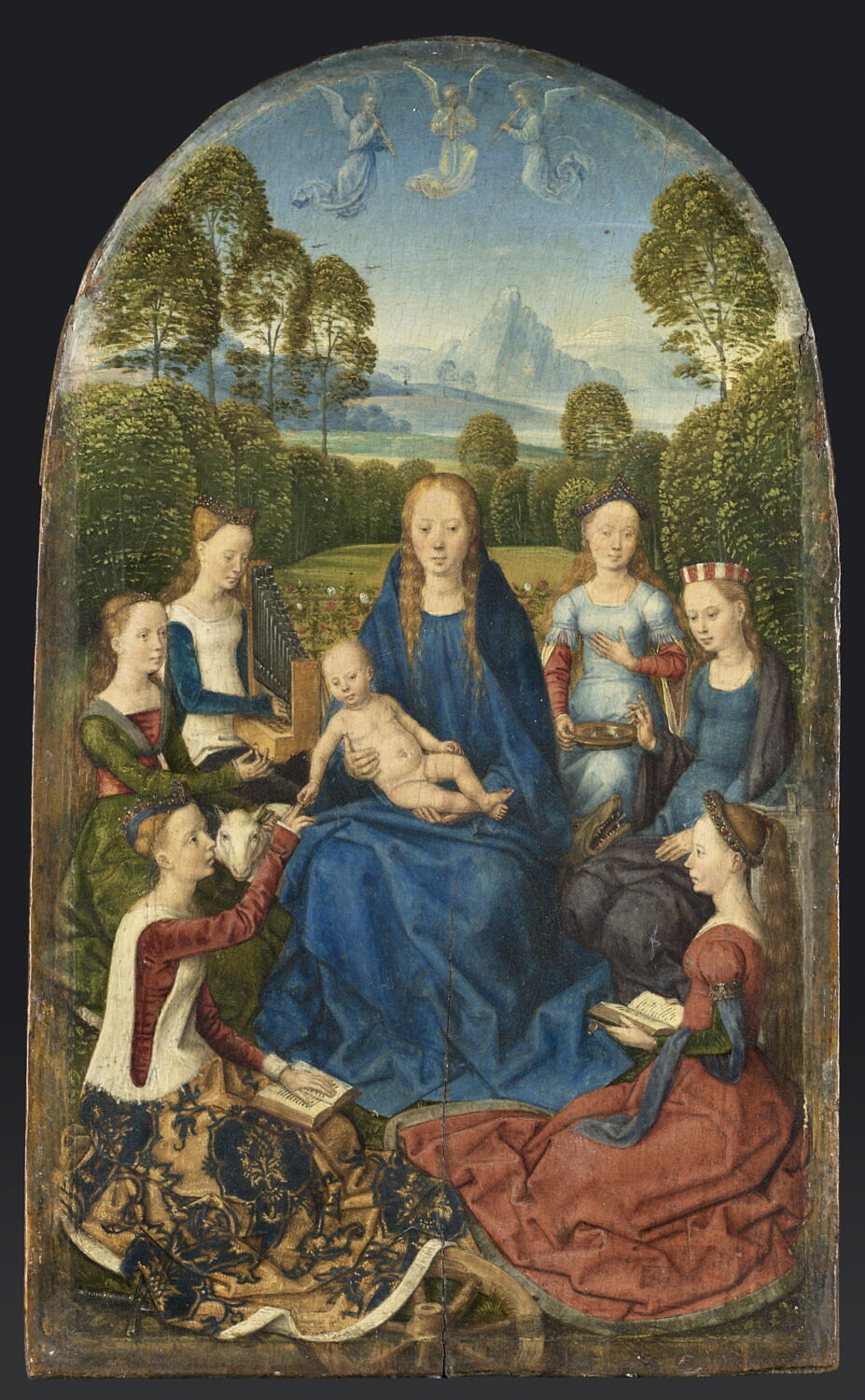
This small panel was once part of a devotional portrait diptych (a hinged two-panel painting). The Christ child’s attention seems drawn to something outside the picture and lifts his hand in recognition. The opposing panel, once hinged on the right, would have featured a portrait of its original owner in prayer, now unfortunately lost. Such devotional portrait diptychs were popular after 1400 and remained so until their production ceased around the 1530s. Used in private chapels or within the curtain folds of four-poster beds, they could easily be closed when not in use. Hans Memling was born near Frankfurt, Germany. He settled in Bruges around 1465 where he developed a reputation for his painting skills, and provided works to the Burgundian court, which likely cultivated the taste for small portrait diptychs. This example seems to have been painted by a member of Memling’s workshop, perhaps for a wealthy merchant or clergyman.
Cleveland Museum of Art

Notice
- Numéro d’inventaire
- 1934.29
Pendant ce temps, chez Hans Memling
La vie entière1466–1494 · Lieu de travail
Bruges
between 1470 and 1480
Marries Anna de Valkenaere
Sometime between 1470 and 1480 Memling marries Anna de Valkenaere; the couple have three sons, Jan, Cornelis and Nicolaas.
April 1473
“The Last Judgment” is captured by a Danzig privateer
The triptych, commissioned for a chapel at Fiesole by Angelo Tani, former director of the Bruges branch of the Medici bank, is shipped to Italy by sea; in April 1473 the vessel is captured by the Danzig privateer Paul Beneke. Neither the Medici bank’s protests nor a bull of Pope Sixtus IV win the painting back, and it stays in Danzig, now Gdańsk.
1477
A contract with the booksellers’ guild of Bruges
In 1477, when he was believed dead, Memling is under contract for an altarpiece for the guild chapel of the booksellers of Bruges, the “Scenes of the Passion of Christ”, now in the Galleria Sabauda in Turin. The romantic legend of a soldier of Charles the Bold’s army wounded at Nancy in 1477 does not correspond to reality.
1480
Among the richest burghers: a loan to Maximilian I
A tax document of 1480 lists Memling among the wealthiest citizens of Bruges: his name is on the list of 875 burghers obliged to subscribe to the loan Maximilian I of Austria raised to finance his war against France. It does not appear on later lists of this kind.