ART WIKI32 963 en salle
CarteCollectionArtistesMuséesExpositionsJournal
Connexion

ART WIKI

Où est accroché le chef-d’œuvre, et quand on vous laisse entrer.

Collections : Art Institute of Chicago, Cleveland Museum of Art, Galerie Tretiakov, Hirshhorn Museum and Sculpture Garden, J. Paul Getty Museum, Metropolitan Museum of Art, Minneapolis Institute of Art, Musée de l'Ermitage, Musée des Beaux-Arts Pouchkine, Musée du Louvre, musée national d'art asiatique, Musée russe, Musées d'Art de Harvard, Museum of Modern Art, National Gallery of Art, National Portrait Gallery, Rijksmuseum Amsterdam, Smithsonian American Art Museum, Statens Museum for Kunst, Victoria and Albert Museum, Villa Getty, Whitney Museum of American Art, Catalogue d’État du fonds muséal de Russie (274 musées), Europeana (19 musées), Wikidata (6 musées), Paris Musées (12 musées) et Joconde, la base des musées du ministère de la Culture (495 musées). Les images appartiennent à leurs ayants droit.

Rubriques

  • Carte
  • Recherche
  • Collection
  • Chefs-d’œuvre
  • Exposées en ce moment
  • Artistes

Et aussi

  • Musées et galeries
  • Expositions
  • Journal
  • D’où viennent les données
  • Confidentialité et cookies
AccueilCarteCatalogue
  1. Collection/
  2. Musée de l'Ermitage/
  3. Bacchus
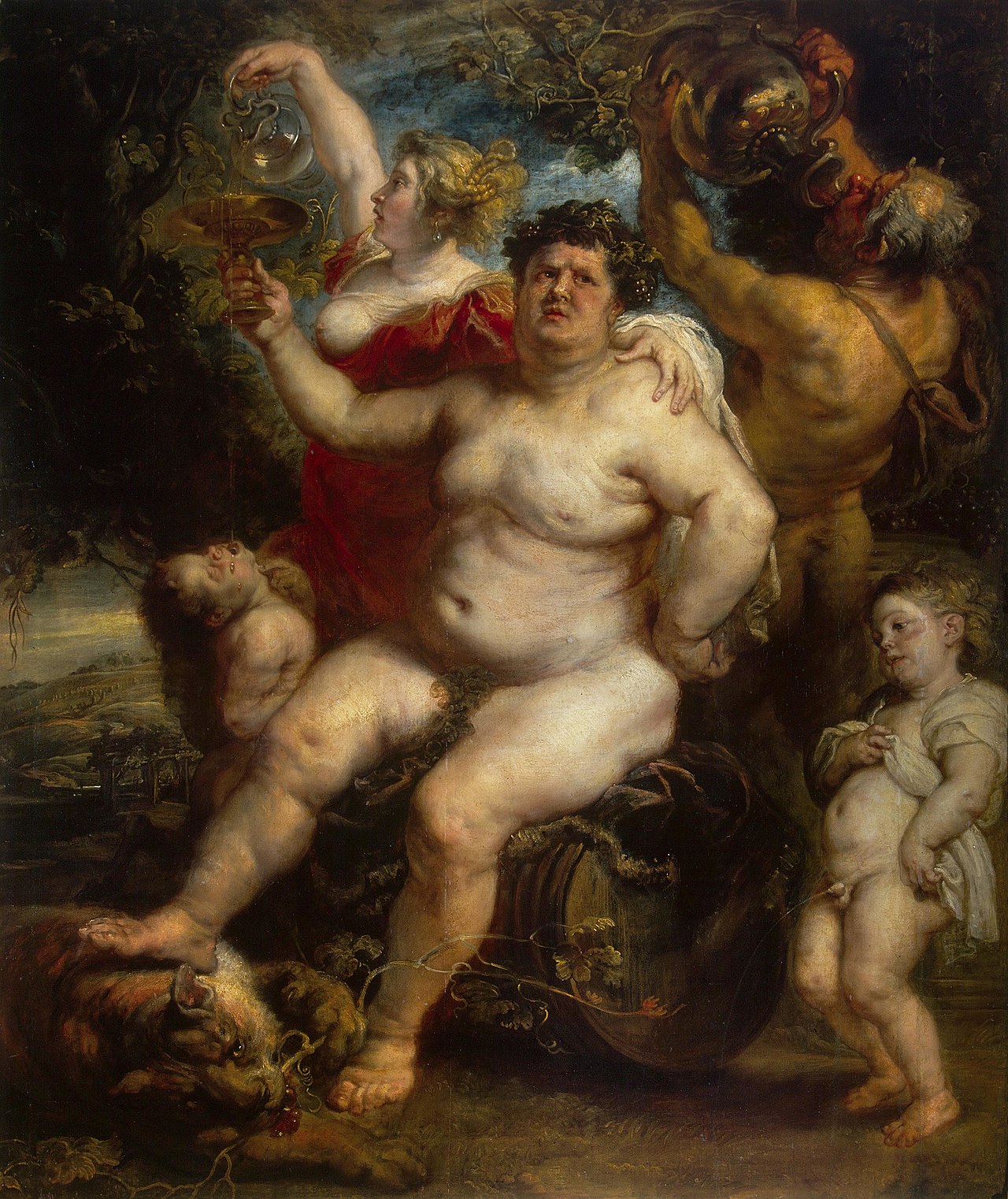
Bacchus, Peter Paul Rubens, 1630s
Peter Paul Rubens, portraitPeter Paul RubensFlandre, 1577–1640

Bacchus

1630s · Painting · 191 × 161.3 cm

Peut-on la contempler ?

Elle ne reçoit pas en ce moment

Musée de l'Ermitage

Saint-Pétersbourg, Russie

Elle appartient à la collection, mais n’est pas présentée en ce moment.

Vérifié
29 août 2026
Dans cet état depuis
30 août 2026
Source
Les données de collection du musée lui-même
Sur la cartePage du musée

À propos du tableau

Bacchus est une peinture mythologique du peintre flamand Pierre Paul Rubens, créée vers 1640. Elle est conservée au musée de l'Ermitage à Saint-Pétersbourg.

Wikipédia · CC BY-SA

Selon le musée — en russe

Образ Вакха на картине Питера Пауля Рубенса представляет собой сложный синтез художественных традиций. Важнейшим аспектом изучения стала полемика вокруг возможных иконографических источников: если М. Варшавская (1975) усматривала в работе отражение дуалистической концепции двух Вакхов, то И. Линник (1981) убедительно доказала отсутствие в картине этого противопоставления, указав на североевропейские корни изображения Вакха как персонификации осеннего изобилия. Особый интерес представляет установленный А. Бейером и И. Линник (1977) факт использования античного бюста императора Вителлия в качестве прототипа для головы Вакха. Этот случай не единичен в творчестве Рубенса, что свидетельствует о системном подходе художника к заимствованию и переосмыслению античных образцов.

Lire la suite

Анализ композиционных особенностей позволяет говорить о влиянии различных художественных источников: нидерландской гравюрной традиции XVI-XVII вв., работ А. Мантеньи и Х. Бальдунга Грина, а также произведений Тициана, которые Рубенс активно копировал. Перед нами не просто изображение античного божества, но гимн жизненной энергии и чувственному началу, что составляет суть творческого метода великого фламандского мастера. История бытования картины, прослеженная по архивным документам, демонстрирует ее путь от мастерской художника, через собрание герцога Ришелье и семьи Кроза до поступления в Императорский Эрмитаж в 1772 году.

Musée de l'Ermitage

Notice

1630s · à 53 ans
15771640
Numéro d’inventaire
ГЭ-467

Au catalogue

PeinturesHuilePeinture flamandeBaroqueXVIIe siècleFlandre

Sources

  • Musée de l'Ermitage : les données ouvertes du musée · obtenue 29 août 2026
  • Image : Musée de l'Ermitage — Museum open access

Pendant ce temps, chez Peter Paul Rubens

La vie entière
  1. 1627–1630

    Diplomatic Missions between Spain and England

    Rubens was active as a diplomat, shuttling between the courts of Spain and England in an effort to achieve peace between the Catholic Spanish Netherlands and the Protestant Dutch Republic; he also made several trips to Holland.

  2. 1628–1629

    Eight Months in Madrid, Friendship with Velázquez

    During an eight-month stay in Madrid, Rubens, in addition to diplomatic negotiations, executed important works for Philip IV, studied and copied Titian anew, and became friends with the court painter Diego Velázquez.

  3. 1629 – April 1630

    Diplomatic Journey to London

    After a brief stay in Antwerp, Rubens traveled to London, where he remained until April 1630, continuing the peace negotiations between Spain and England.

  4. 1630

    Marriage to Helena Fourment

    Four years after the death of Isabella Brant, the 53-year-old Rubens married the 16-year-old Helena Fourment; she became the artist's muse and the inspiration for the sensuous figures in many of his paintings of the 1630s, including The Three Graces and The Judgment of Paris.

  5. 1630

    Knighted by Charles I

    King Charles I of England knighted Rubens, adding a heraldic lion to his personal coat of arms; a few months later Philip IV confirmed his knightly status.

  6. 6 décembre 1630

    Married: Helena Fourment
Autres œuvres : Peter Paul Rubens

Toutes les œuvres
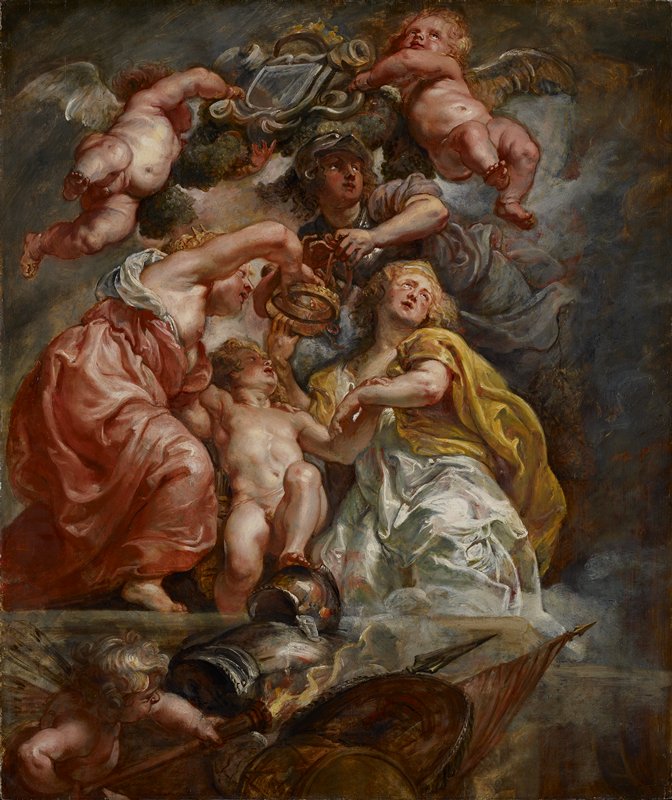
The Union of England and Scotland (Charles I as the Prince of Wales), Peter Paul Rubens, 1633–34

The Union of England and Scotland (Charles I as the Prince of Wales)

1633–34 · Minneapolis Institute of Art

Rubens, Helena Fourment (1614–1673), and Their Son Frans (1633–1678), Peter Paul Rubens, ca. 1635

Rubens, Helena Fourment (1614–1673), and Their Son Frans (1633–1678)

ca. 1635 · Metropolitan Museum of Art

Coronation and Assumption of the Virgin, Peter Paul Rubens, 17th century

Coronation and Assumption of the Virgin

17th century · Musée de l'Ermitage

Feast in the House of Simon the Pharisee, Peter Paul Rubens, 17th century

Feast in the House of Simon the Pharisee

17th century · Musée de l'Ermitage

Lioness and Two Lions, Peter Paul Rubens, first half of the 17th century

Lioness and Two Lions

first half of the 17th century · Musée de l'Ermitage

Resurrection of Christ, Peter Paul Rubens, 17th century

Resurrection of Christ

17th century · Musée de l'Ermitage

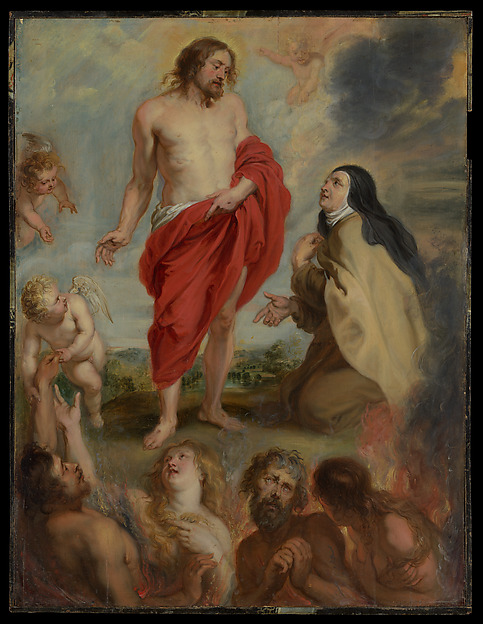
Saint Teresa of Avila Interceding for Souls in Purgatory, Peter Paul Rubens

Saint Teresa of Avila Interceding for Souls in Purgatory

Metropolitan Museum of Art

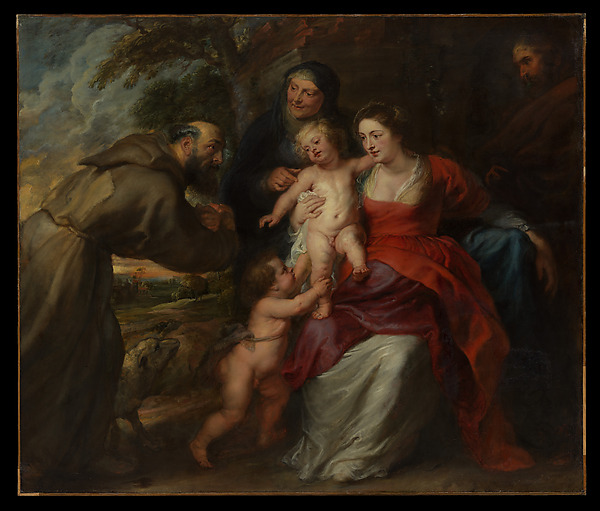
The Holy Family with Saints Francis and Anne and the Infant Saint John the Baptist, Peter Paul Rubens, early or mid-1630s

The Holy Family with Saints Francis and Anne and the Infant Saint John the Baptist

early or mid-1630s · Metropolitan Museum of Art

Sous le même toit : Musée de l'Ermitage

Page du musée
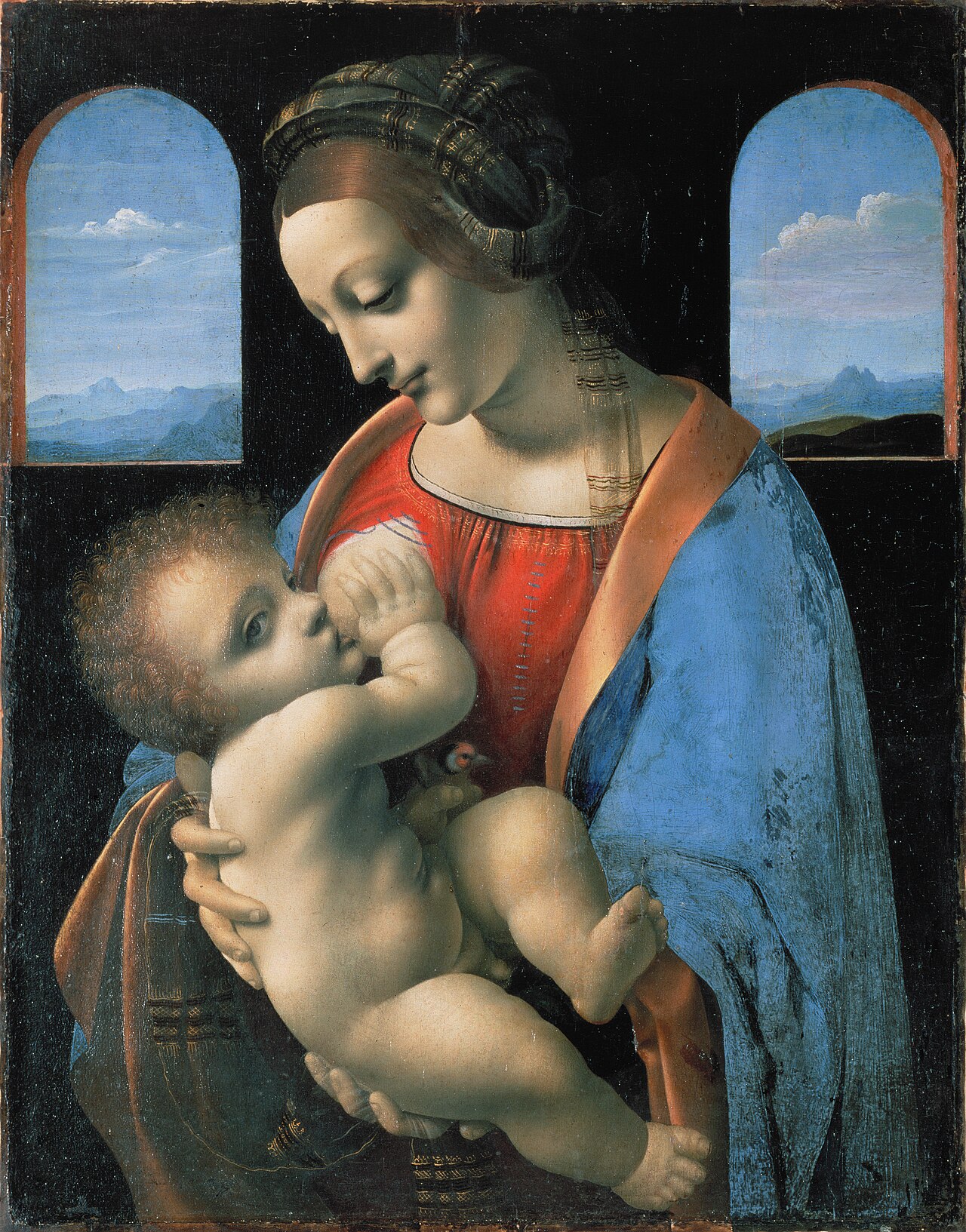
Madone Litta, Leonardo da Vinci, 1490

Leonardo da Vinci

Madone Litta, 1490

Madonna Benois, Leonardo da Vinci, 15th century

Leonardo da Vinci

Madonna Benois, 15th century

Morning. Going to Work (after Millet ), Vincent van Gogh, 01.1890

Vincent van Gogh

Morning. Going to Work (after Millet ), 01.1890

Chaumières à Auvers-sur-Oise, Vincent van Gogh, 05.1890

Vincent van Gogh

Chaumières à Auvers-sur-Oise, 05.1890

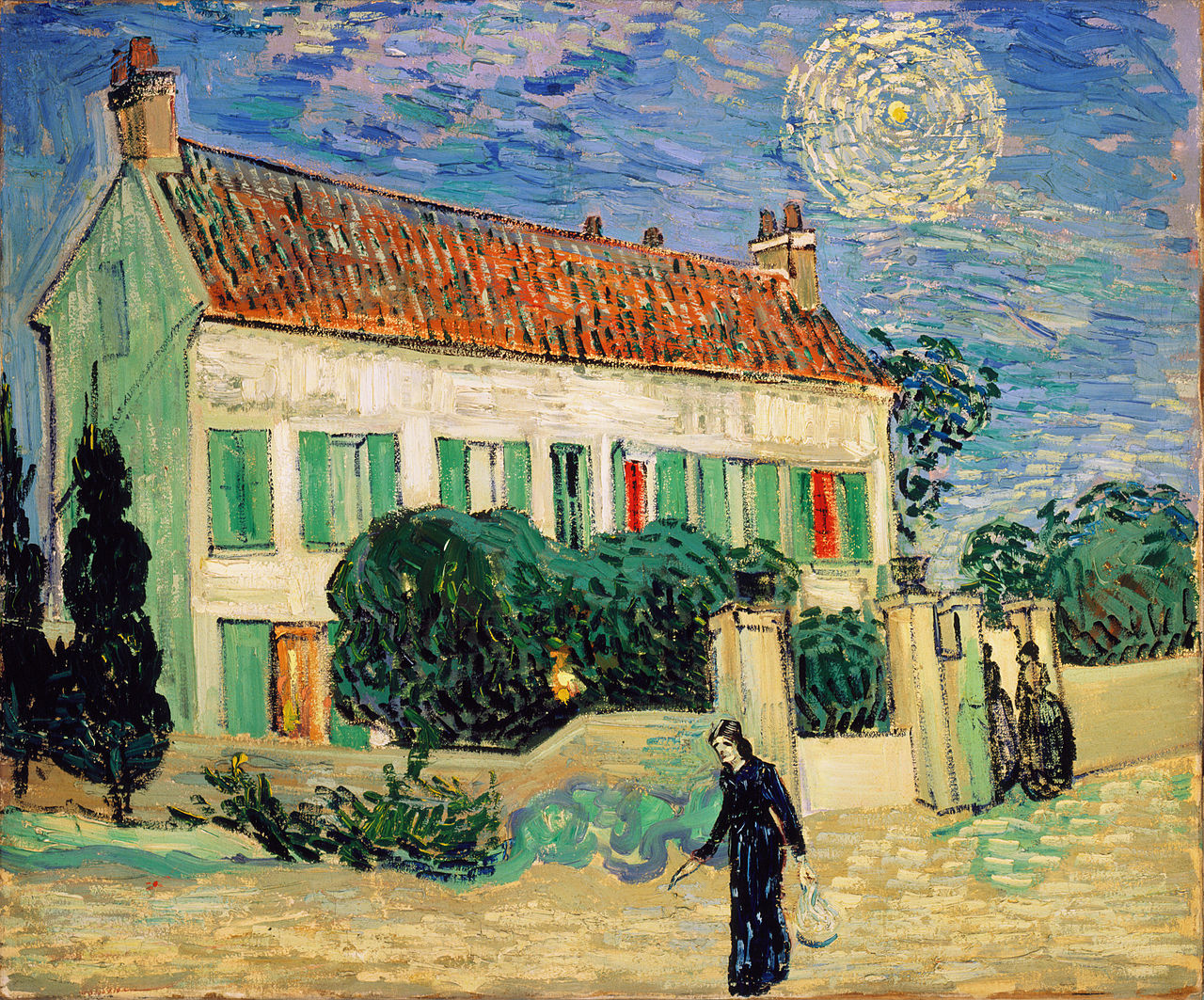
La Maison blanche, la nuit, Vincent van Gogh, 1890

Vincent van Gogh

La Maison blanche, la nuit, 1890

Landscape with House and Ploughman, Vincent van Gogh, 01.12.1889

Vincent van Gogh

Landscape with House and Ploughman, 01.12.1889

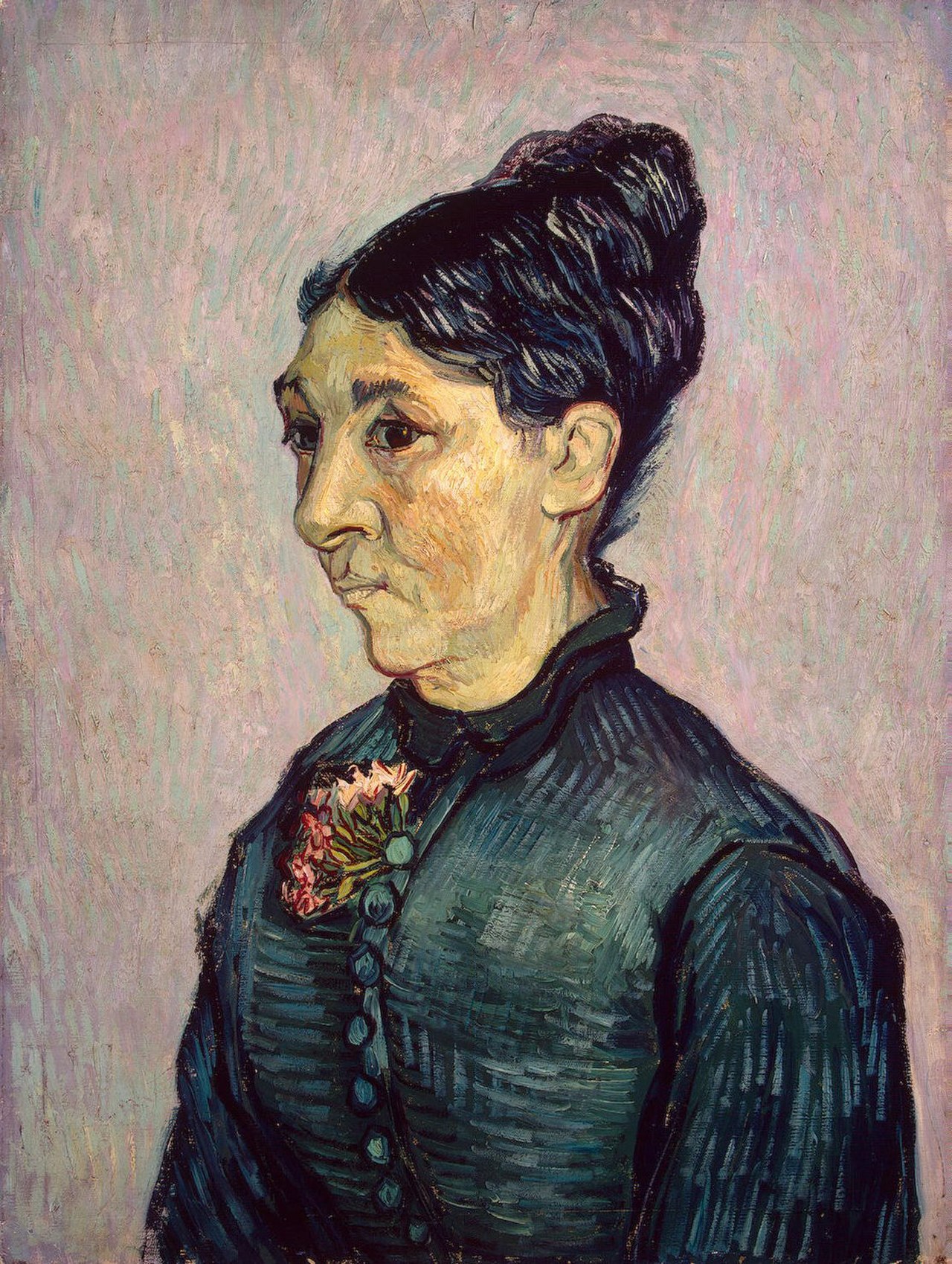
Portrait de Madame Trabuc, Vincent van Gogh, 09.1889

Vincent van Gogh

Portrait de Madame Trabuc, 09.1889

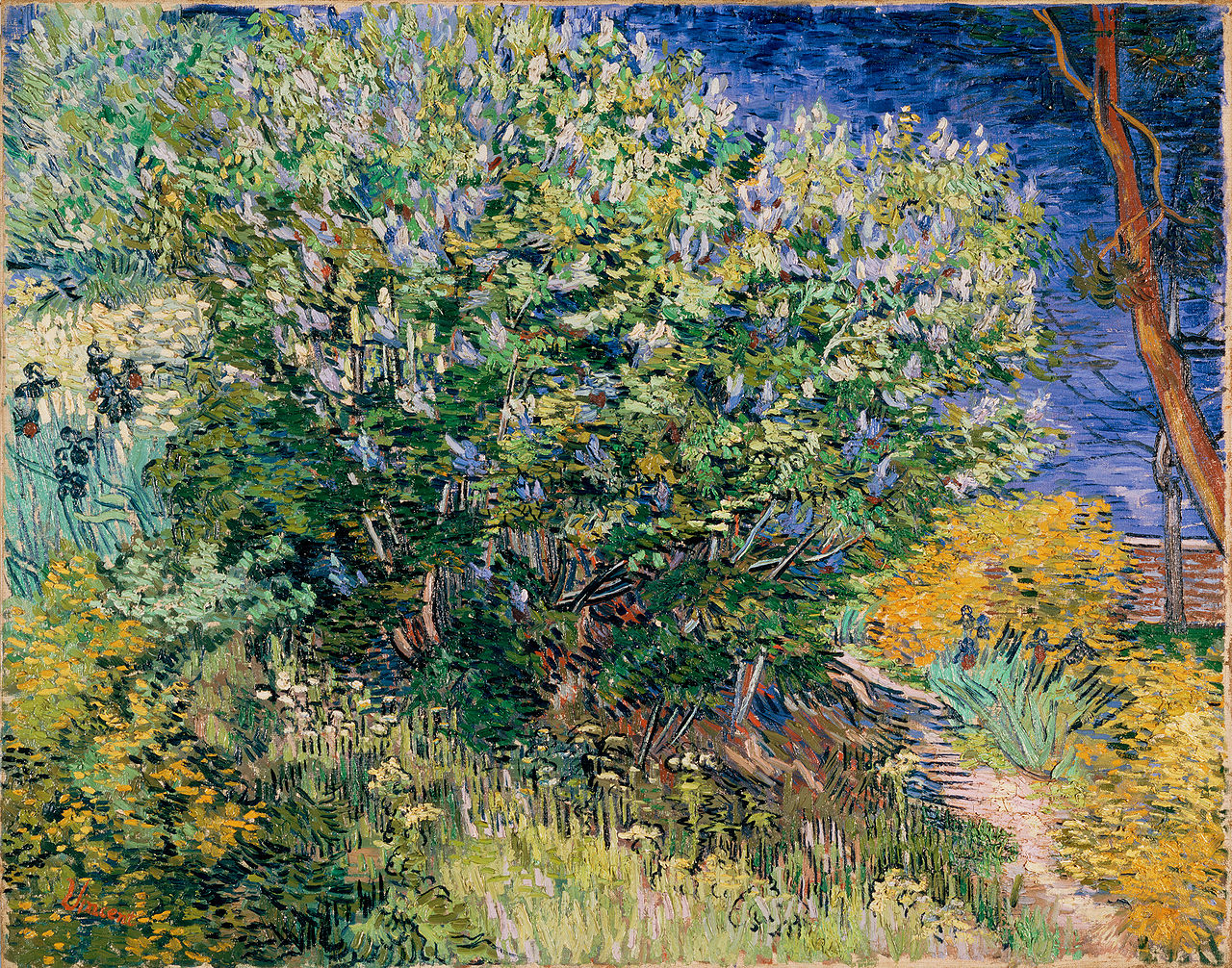
Lilas, Vincent van Gogh, 05.1889

Vincent van Gogh

Lilas, 05.1889