Tuccia (Chastity)
Peut-on la contempler ?
Elle ne reçoit pas en ce moment

Londres, Royaume-Uni
Elle appartient à la collection, mais n’est pas présentée en ce moment.
- Vérifié
- Dans cet état depuis
- Source
- Le musée
À propos du tableau
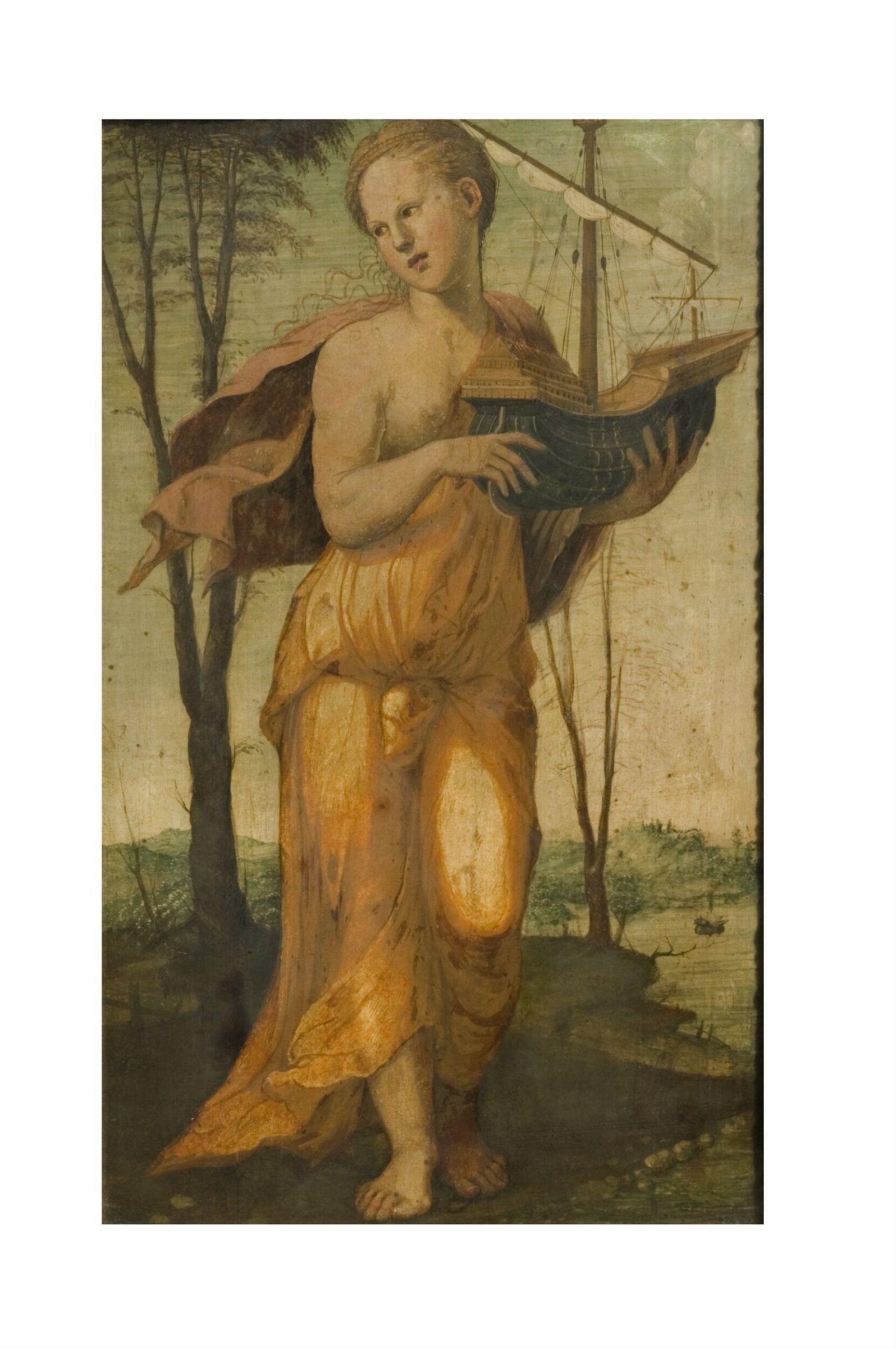
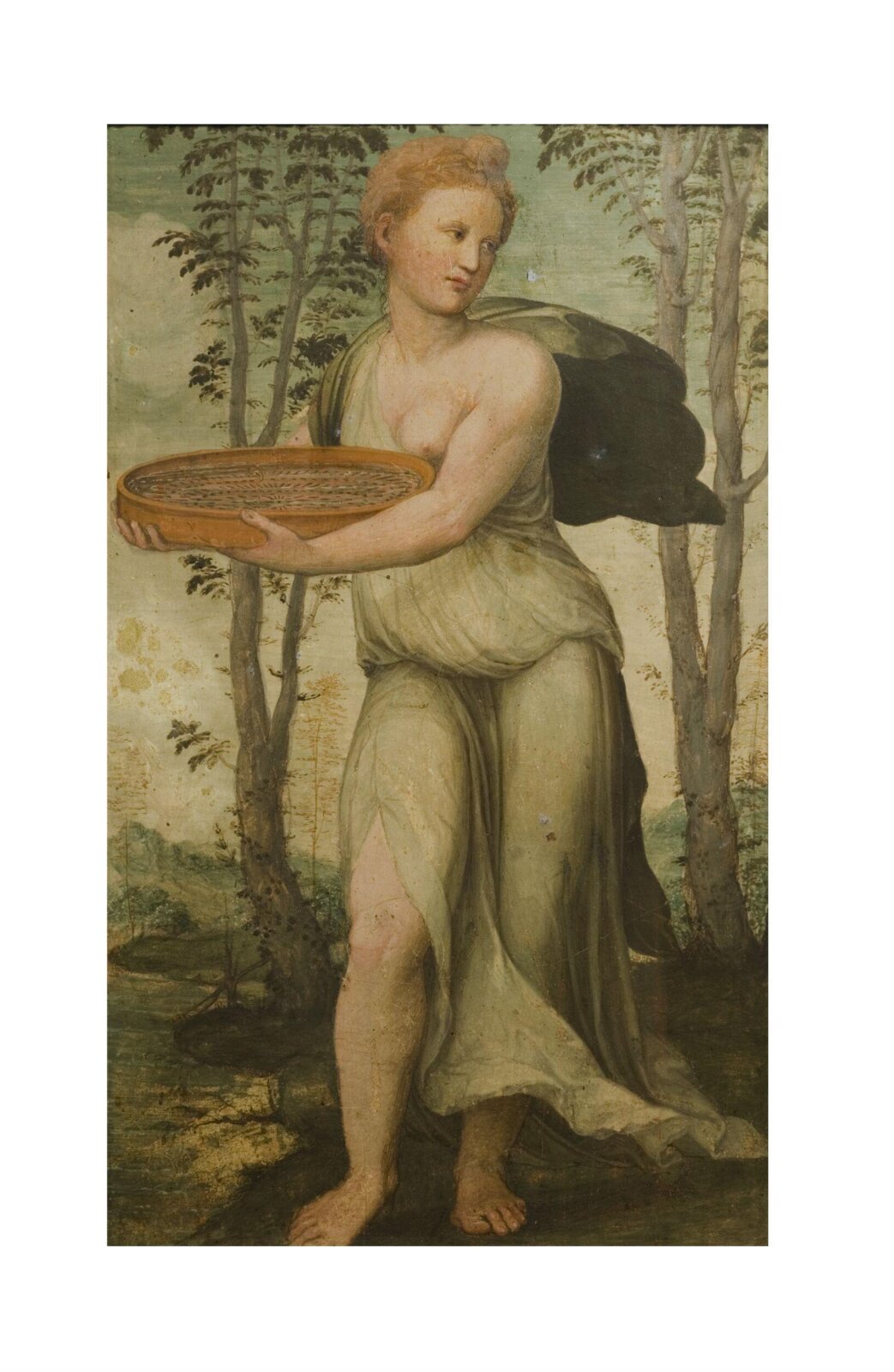
A woman in classical dress with left breast exposed stands in a wooded landscape at the bank of a river carrying a large round sieve full of water. Bartolommeo Neroni, (known as il Riccio) (1505/15?- 1571) was a Sienese painter, illuminator, architect, stage designer and engineer. His earliest works reveal the influence of Il Sodoma while his later paintings also demonstrate a close familiarity with works by Domenico Beccafumi and Baldassare Peruzzi who were also working in Siena at that time. Neroni most likely painted the two panels depicting standing women holding attributes (425-1869; 426-1869) in the V&A collection as part of a series of three donne illustre or famous women in the poetic tradition of Petrarch and Bocaccio.
Lire plus
These panels probably formed part of a painted series of decorations for a room in a palace and may have originally formed the back of a cassapanca or bench chest such as those painted by Beccafumi ca. 1519 for Francesco Petrucci (National Gallery, London, Doria Pamphilj, Rome). 425-1869 depicts the ancient Roman maiden Tuccia, held up as an epitome of Chastity by the ancient authors Valerius Maximus, Petrarch and Pliny as, having been accused of incest, she successfully entreated the Roman goddess Vesta to help her demonstrate her innocence by allowing her to carry a sieve of water from the Tiber River to the temple of the goddess without spilling a drop.
Victoria and Albert Museum
Notice
- Numéro d’inventaire
- 425-1869
Ce qu’elle montre
Au catalogue
Sources
- Victoria and Albert Museum
- Image : Victoria and Albert Museum — © Victoria and Albert Museum, London