ART WIKI32 963 en salle
CarteCollectionArtistesMuséesExpositionsJournal
Connexion

ART WIKI

Où est accroché le chef-d’œuvre, et quand on vous laisse entrer.

Collections : Art Institute of Chicago, Cleveland Museum of Art, Galerie Tretiakov, Hirshhorn Museum and Sculpture Garden, J. Paul Getty Museum, Metropolitan Museum of Art, Minneapolis Institute of Art, Musée de l'Ermitage, Musée des Beaux-Arts Pouchkine, Musée du Louvre, musée national d'art asiatique, Musée russe, Musées d'Art de Harvard, Museum of Modern Art, National Gallery of Art, National Portrait Gallery, Rijksmuseum Amsterdam, Smithsonian American Art Museum, Statens Museum for Kunst, Victoria and Albert Museum, Villa Getty, Whitney Museum of American Art, Catalogue d’État du fonds muséal de Russie (274 musées), Europeana (19 musées), Wikidata (6 musées), Paris Musées (12 musées) et Joconde, la base des musées du ministère de la Culture (495 musées). Les images appartiennent à leurs ayants droit.

Rubriques

  • Carte
  • Recherche
  • Collection
  • Chefs-d’œuvre
  • Exposées en ce moment
  • Artistes

Et aussi

  • Musées et galeries
  • Expositions
  • Journal
  • D’où viennent les données
  • Confidentialité et cookies
AccueilCarteCatalogue
  1. Collection/
  2. Art Institute of Chicago/
  3. Throwing the Shuttle
Throwing the Shuttle, Suzuki Harunobu, c. 1766/67
SSuzuki HarunobuJapon, 1724–1770

Throwing the Shuttle

c. 1766/67 · Print

Peut-on la contempler ?

Elle ne reçoit pas en ce moment

Art Institute of Chicago

Chicago, États-Unis

Elle appartient à la collection, mais n’est pas présentée en ce moment.

Vérifié
il y a 3 jours
Dans cet état depuis
19 août 2026
Source
Le musée
Sur la cartePage du musée

Notice

c. 1766/67
17241770
Numéro d’inventaire
1937.21

Au catalogue

EstampesGravure sur boisEstampes japonaisesRococoNéoclassicismeXVIIIe siècleJapanese (culture or style)Japon

Sources

  • Art Institute of Chicago
  • Image : Art Institute of Chicago — CC0

Pendant ce temps, chez Suzuki Harunobu

La vie entière
  1. 1764

    E-goyomi calendar prints for a circle of samurai

    Trained in painting at the Kanō school, Harunobu began in the manner of the Torii school — skilful but undistinguished — and found his own style fairly late, only after becoming involved with a circle of literati samurai. In 1764, thanks to his social connections (he was close to many of the period’s prominent artists and scholars and to friends of the shōgun), he was chosen to help these amateurs create e-goyomi — calendar prints that worked the calculations of the lunar calendar into their images and were exchanged at gatherings in Edo.

  2. 1765

    The first full-colour nishiki-e prints

    The calendar prints became the first nishiki-e (“brocade prints”), and their origin is traced to 1765: Harunobu printed a single image from several separate blocks, up to ten colours on a sheet, and was the first ukiyo-e artist to use more than three colours consistently; notches and wedges held the paper in place so that the successive printings stayed in register. Paid for by wealthy patrons, he used the best materials — cherry wood instead of catalpa and more expensive colours applied more thickly for a more opaque effect.

  3. 1765–1770

    Five years at his peak: 20 books and a thousand prints

    Between 1765 and 1770 Harunobu created over twenty illustrated books, over one thousand colour prints (other accounts give more than eight hundred works) and a number of paintings.

  4. 1765–1770

    Recognised as the master of ukiyo-e and widely imitated

    In the last years of his life Harunobu came to be regarded as the master of ukiyo-e and was widely imitated: many artists copied his style during his lifetime.

  5. late 1760s

    Master of bijin-ga and scenes of Edo life

    Harunobu became one of the primary producers of pictures of beautiful women (bijin-ga) and scenes of urban life for the Edo print connoisseur market: his prints include not only geisha, courtesans and sumo wrestlers but also street vendors and errand boys. Accounts differ on portraits of kabuki actors: by some he was among the first to paint them, by others he scornfully refused the subject.

Autres œuvres : Suzuki Harunobu

Toutes les œuvres
Een paar met vogelkooi, Suzuki Harunobu

Een paar met vogelkooi

Rijksmuseum Amsterdam

Zwei Mädchen vor einem Spiegelapparat, Suzuki Harunobu

Zwei Mädchen vor einem Spiegelapparat

Albertina

Liefdespaar op tatamimatten., Suzuki Harunobu, c. 1740 - c. 1750

Liefdespaar op tatamimatten.

c. 1740 - c. 1750 · Rijksmuseum Amsterdam

De dichter Yamabe no Akahito kijkend naar de berg Fuji, Suzuki Harunobu, 1761 - 1765

De dichter Yamabe no Akahito kijkend naar de berg Fuji

1761 - 1765 · Rijksmuseum Amsterdam

Chinese dichter uitkijkend over waterlandschap, Suzuki Harunobu, 1761 - 1765

Chinese dichter uitkijkend over waterlandschap

1761 - 1765 · Rijksmuseum Amsterdam

Rijstplanters, Suzuki Harunobu, 1763 - 1767

Rijstplanters

1763 - 1767 · Rijksmuseum Amsterdam

Jonge vrouw en twee meisjes bij een grote sneeuwbal, Suzuki Harunobu, 1763 - 1767

Jonge vrouw en twee meisjes bij een grote sneeuwbal

1763 - 1767 · Rijksmuseum Amsterdam

Meisje en sneeuwbal, Suzuki Harunobu, 1763 - 1767

Meisje en sneeuwbal

1763 - 1767 · Rijksmuseum Amsterdam

Sous le même toit : Art Institute of Chicago

Page du musée
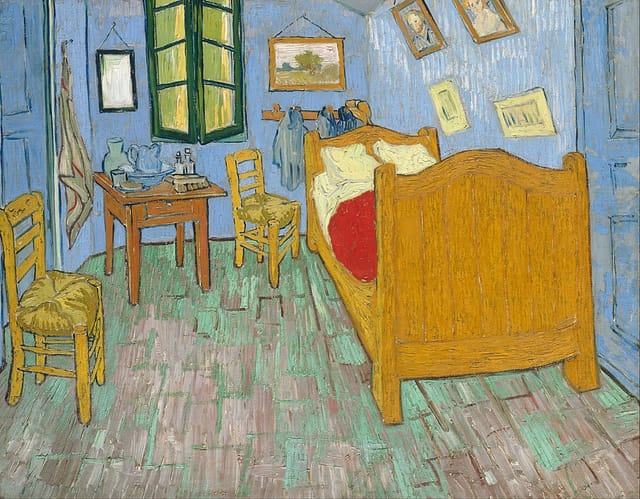
The Bedroom, Vincent van Gogh, 1889

Vincent van Gogh

The Bedroom, 1889

A Sunday on La Grande Jatte — 1884, Georges Seurat, 1884–86, border added 1888–89

Georges Seurat

Un dimanche après-midi à l'Île de la Grande Jatte, 1884–86, border added 1888–89

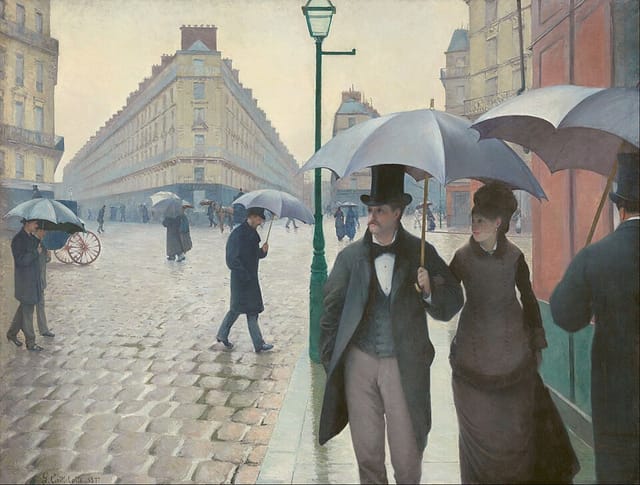
Paris Street; Rainy Day, Gustave Caillebotte, 1877

Gustave Caillebotte

Rue de Paris, temps de pluie, 1877

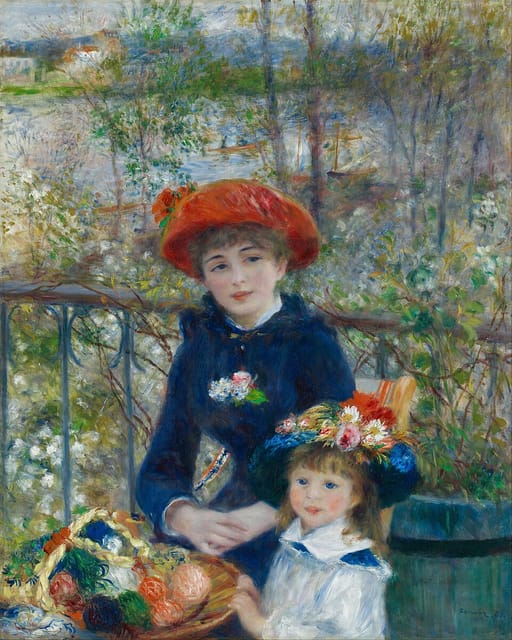
Two Sisters (On the Terrace), Pierre-Auguste Renoir, 1881

Pierre-Auguste Renoir

Les Deux Sœurs, 1881

The Basket of Apples, Paul Cézanne, c. 1893

Paul Cézanne

La Corbeille de pommes, c. 1893

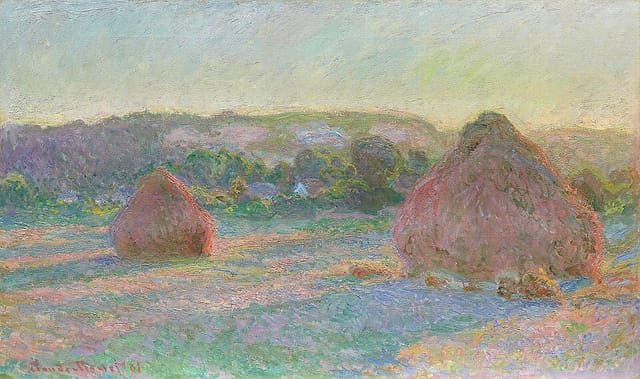
Stacks of Wheat (End of Summer), Claude Monet, 1890–91

Claude Monet

Stacks of Wheat (End of Summer), 1890–91

American Gothic, Grant Wood, 1930

Grant Wood

American Gothic, 1930

Nighthawks, Edward Hopper, 1942

Edward Hopper

Nighthawks, 1942