Jean-Antoine WatteauFrance, 1684–1721
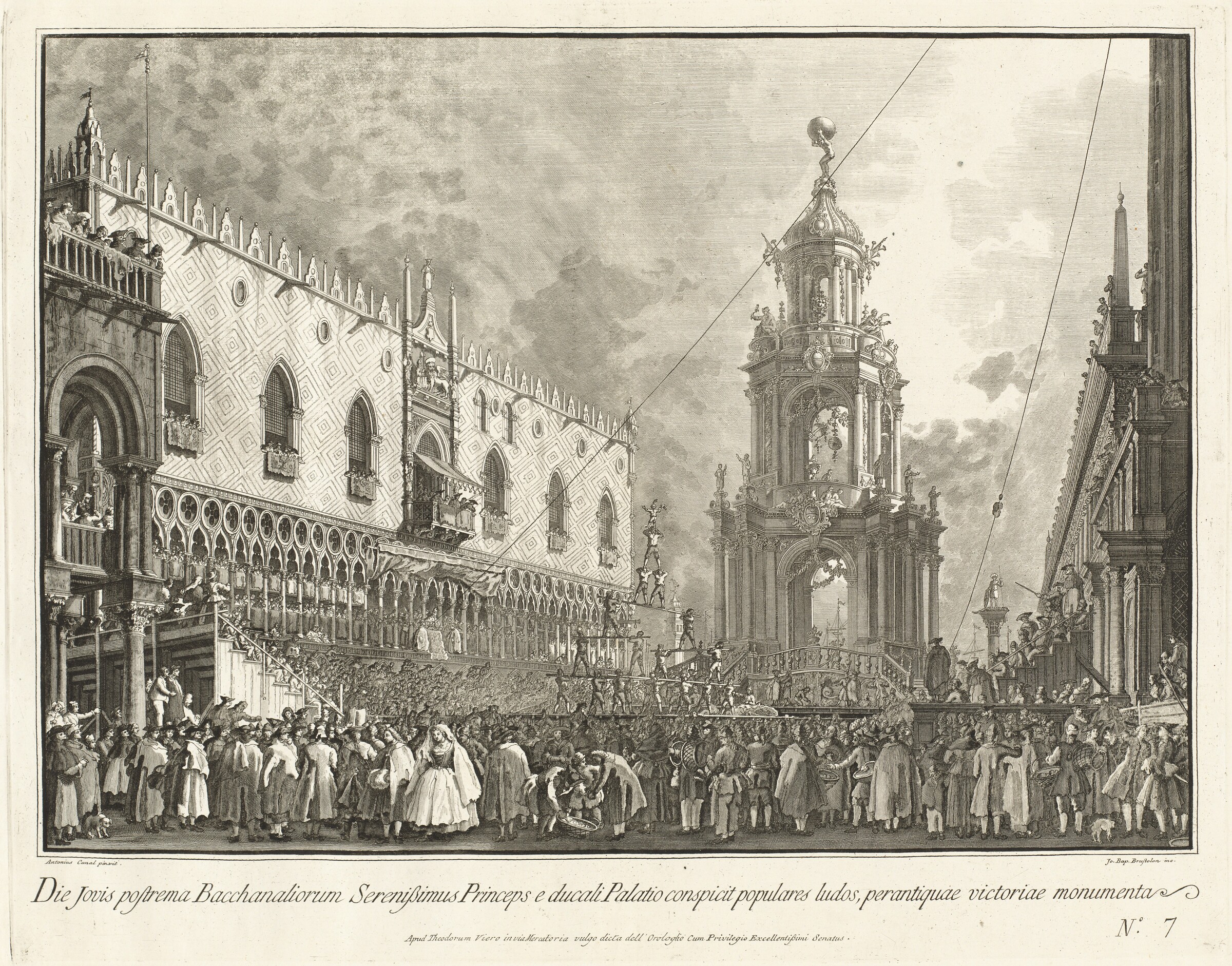
The Wedding Procession
Peut-on la contempler ?
Elle ne reçoit pas en ce moment

Washington, États-Unis
Elle appartient à la collection, mais n’est pas présentée en ce moment.
- Vérifié
- Dans cet état depuis
- Source
- Le musée
Notice
- Numéro d’inventaire
- 2000.8.1
Ce qu’elle montre
Au catalogue
Sources
- National Gallery of Art
- Image : National Gallery of Art — Museum open access
Pendant ce temps, chez Jean-Antoine Watteau
La vie entièrec. 1709 – 1710
The dealer Sirois buys the camp pictures
“The Departing Regiment” goes for a modest 60 livres to a man named Sirois, the father-in-law of Gersaint, and the money lets Watteau return to the home of his childhood. In Valenciennes he paints a number of small camp pictures; Sirois buys one of them, a camp-fire scene, again — this time for 200 livres.
c. 1710
Friendship with Antoine de La Roque
In Valenciennes Watteau meets Antoine de La Roque, an officer in the king's mounted gendarmerie who is recovering from a serious wound. A man of letters and later for many years the editor of the Mercure de France, he becomes one of the painter's close friends.
c. 1710
The sculptor Pater entrusts his son to Watteau
In Valenciennes Watteau meets the local sculptor Antoine-Joseph Pater, then forty. To Pater the 25-year-old Watteau is already a Paris celebrity, and he asks him to take under his wing his fifteen-year-old son Jean-Baptiste, a beginning painter.
c. 1710
Back to Paris, to the dealer Sirois
After less than a year in Valenciennes, Watteau returns to Paris with his pupil Jean-Baptiste Pater and accepts an invitation from Pierre Sirois, the buyer of his military pictures, to move in with him and work for him.
30 July 1712
Admitted to the Academy as an associate
Watteau seeks admission to the Royal Academy of Painting and Sculpture. According to Gersaint, the academician Charles de La Fosse, having seen his work, urges him to apply and helps to get him accepted among the Academy's associate members.
1714
Moves into the banker Crozat's mansion
Through Sirois, Watteau finds a patron in the very wealthy banker and collector Pierre Crozat and, at his invitation, moves into Crozat's newly built Paris mansion. There he gains access to the celebrated collection and eagerly copies drawings by the great masters; next door lives the academician Charles de La Fosse, with whom he is on good terms.



![Ginevra de' Benci [obverse], Leonardo da Vinci, c. 1474/1478](https://api.nga.gov/iiif/8f29e3c9-a289-4d53-abf0-31a66e9e98fa/full/!2400,2400/0/default.jpg)
![Wreath of Laurel, Palm, and Juniper with a Scroll inscribed Virtutem Forma Decorat [reverse], Leonardo da Vinci, c. 1474/1478](https://api.nga.gov/iiif/ff62e8d0-45c4-498f-ad36-6358de827e04/full/!2400,2400/0/default.jpg)