Henri Fantin-LatourFrance, 1836–1904
The Reader
Peut-on la voir ?
Inconnu
Où est « The Reader » aujourd’hui ? Collection: Musée d'Orsay, Paris. Inconnu.

Paris, France
Le propriétaire est connu ; on ignore si l’œuvre est exposée aujourd’hui.
- Dans cet état depuis
- Source
- Le musée
À propos du tableau
La Liseuse est un tableau réalisé par le peintre français Henri Fantin-Latour en 1861. De format vertical, cette huile sur toile est un portrait d'une sœur de l'artiste pendant sa lecture. Elle figure la jeune femme assise en noir dans un canapé rouge devant un mur verdâtre, les yeux baissés sur son livre. Présentée au Salon de 1861, l'œuvre est plus tard acquise auprès de son auteur par Raymond Koechlin, via le legs duquel elle entre dans les collections publiques en 1931. D'abord au musée du Louvre, l'œuvre est conservée depuis 1986 au musée d'Orsay, également à Paris.
Notice
- Numéro d’inventaire
- RF 3702
Au catalogue
Sources
- Wikidata
- Image : Musée d'Orsay — Henri Fantin-Latour · Public domain · Wikimedia Commons
Dans la vie de Henri Fantin-Latour
La vie entière1859
Meets Gustave Courbet
In 1859 Fantin-Latour met Gustave Courbet and worked in his studio for the next two years. According to other accounts, he only briefly frequented Courbet's studio in 1861; a painting from this period shows him with the painter and caricaturist Oulevay.
1859
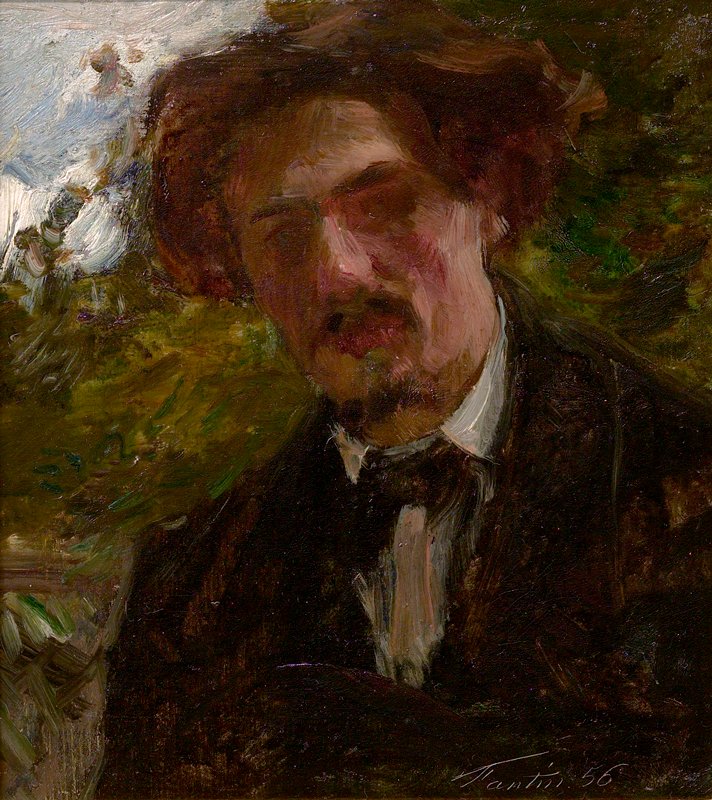
The Salon of 1859 rejects his self-portrait
The Salon of 1859 rejected his first submissions, including one of his self-portraits. Fantin-Latour then began exhibiting with his friend Édouard Manet and the future Impressionists Pierre-Auguste Renoir and Claude Monet.
1859–1881
Stays in London at Whistler's invitation
At Whistler's invitation Fantin-Latour stayed in London several times between 1859 and 1881 and found many admirers in England for his still lifes of flowers and fruit. Whistler introduced him to his brother-in-law Francis Seymour Haden and the engraver Edwin Edwards; it was in London that Fantin learned etching.
1860s
Still lifes bring recognition in England
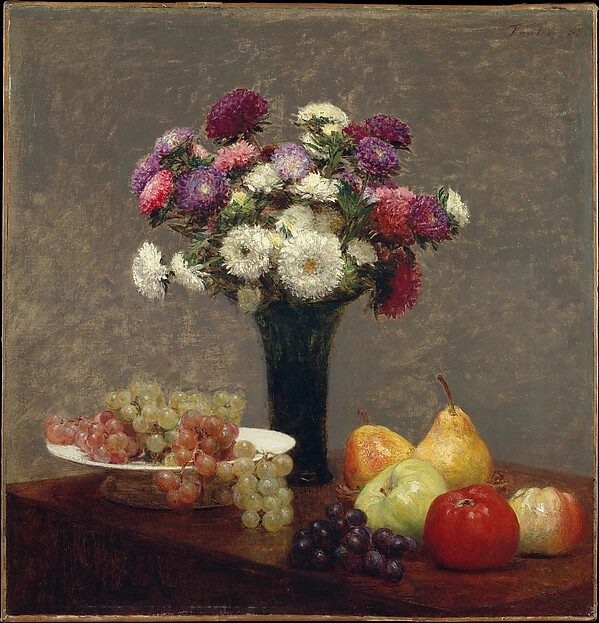
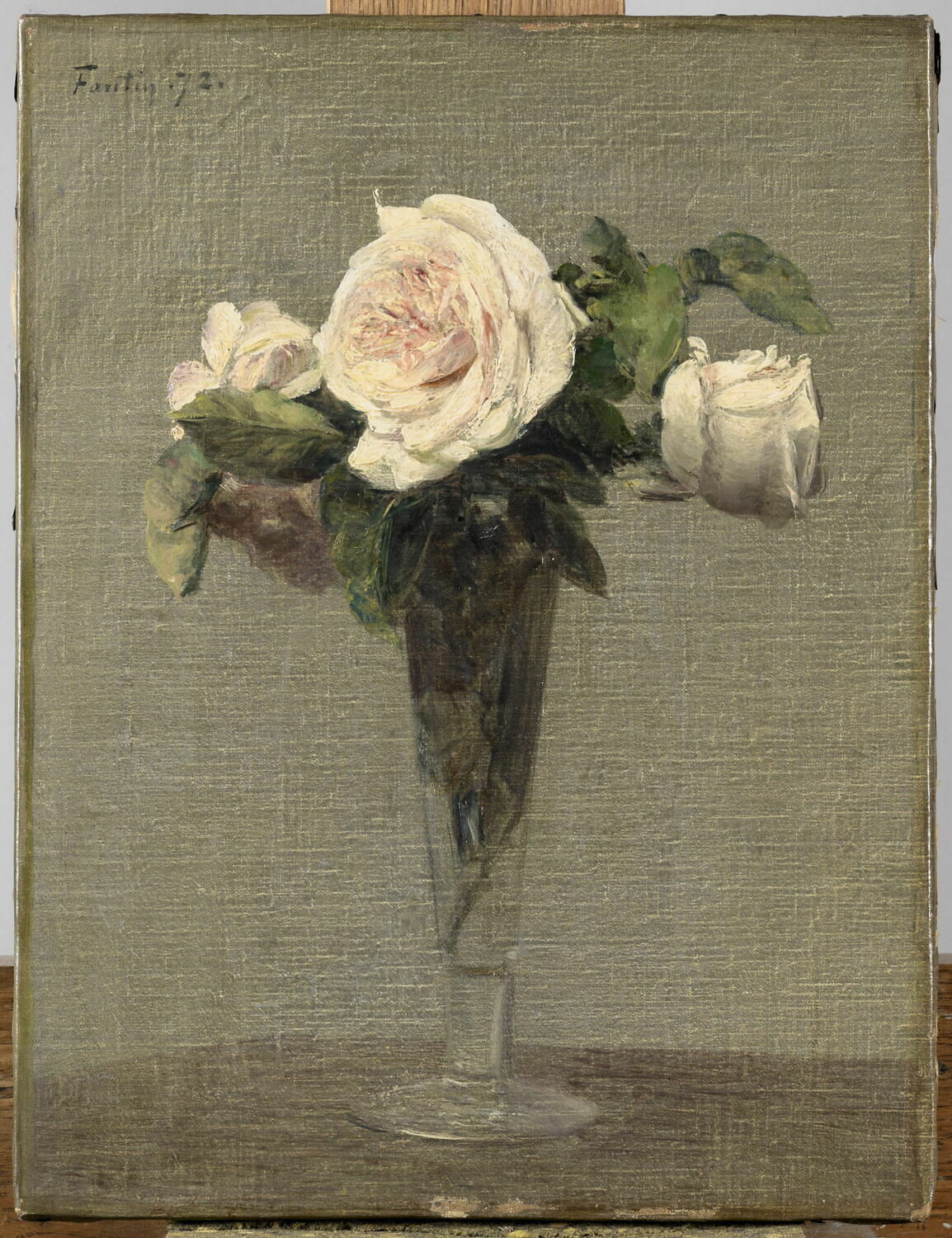
In the 1860s Fantin-Latour cultivated the still life, a genre that would play a capital role in his career. His flowers and fruit found recognition in England, while in France they were said to be practically unknown during his lifetime; his English patrons and dealers Edwin and Ruth Edwards advised him to use simple vases and table tops to show off his gift for rendering texture and colour.
1862
A still life at the Royal Academy in London
In 1862 one of his still lifes was exhibited at the Royal Academy in London. It was the first of a long series: thereafter he showed several there almost every year, and they invariably occupied a prominent place in the exhibition.
1863
In both the Salon and the Salon des Refusés
In 1863 Fantin-Latour's works were shown simultaneously at the Paris Salon and the Salon des Refusés. He thus joined the revolt of the future Impressionists and became part of the Batignolles group around Édouard Manet, which Gustave Kahn called the link uniting the old and new painters of France.