William Henry Fox TalbotAngleterre, 1800–1877
The Chess Players
Peut-on la voir ?
Pas exposée actuellement
Où est « The Chess Players » aujourd’hui ? Collection: Art Institute of Chicago, Chicago. Pas exposée actuellement. Vérifié 29 septembre 2026.

Chicago, États-Unis
Elle appartient à la collection, mais n’est pas présentée en ce moment.
- Vérifié
- Dans cet état depuis
- Source
- Le musée
À propos de l’œuvre
The negative-positive process created by William Henry Fox Talbot, and the possibilities for reproduction that it introduced, dominated photography until the digital age. Talbot’s initial experiments show both his interest in science (as he worked to refine his process) and his artistic aspirations. Scholars have confirmed that Talbot took 10 or more views of chess players, yet this one—likely of noted photographer Antoine Claudet and Talbot’s assistant Nicolaas Henneman—may not be his. This print and other variants of the same scene are unsigned, and on a different paper from Talbot’s normal stock. Recent scholarship posits that the images might have been made in Claudet’s studio before ending up in Henneman’s possession; this print could have entered Talbot’s holdings when Henneman gave him prints as payment toward a debt.
Art Institute of ChicagoCC BY 4.0
Notice
- Numéro d’inventaire
- 1967.158
Au catalogue
Sources
- Art Institute of Chicago
- Image : Art Institute of Chicago — CC0
Dans la vie de William Henry Fox Talbot
La vie entière1840–1841
Post: High Sheriff of Wiltshire
1840s
Photomechanics: the road to photogravure
In the 1840s Talbot turned to the photomechanical reproduction of pictures; this work led to photoglyphic engraving, the precursor of photogravure. Rendering a photograph in printer’s ink made editions cheaper and avoided the fading of early silver prints.
February 1841
Patents the calotype
Talbot obtained an English patent for the calotype process and sold licences at £20 each, later lowering the fee for amateurs to £4 while professionals paid up to £300 a year; scientists saw it as a hindrance to scientific freedom. He justified his rigour by the roughly £5,000 he had spent on photography; for science the method was free, and Talbot himself published the first known photomicrograph of a mineral crystal.
August 1841
First licence goes to the miniaturist Henry Collen
Having announced the calotype, in August Talbot licensed the miniature painter Henry Collen, who became the first professional calotypist. The most celebrated practitioners of the process were Hill & Adamson.
1842
Son born: Charles Henry Talbot
1844–1846
“The Pencil of Nature”, the first photobook, appears
Longman, Brown, Green & Longmans issued the book in separate parts: 24 prints, each pasted in by hand and accompanied by a short text. Talbot is regarded as the author of the first photographic book; scholars see in it the design of a new canon built on biblical rhetoric.


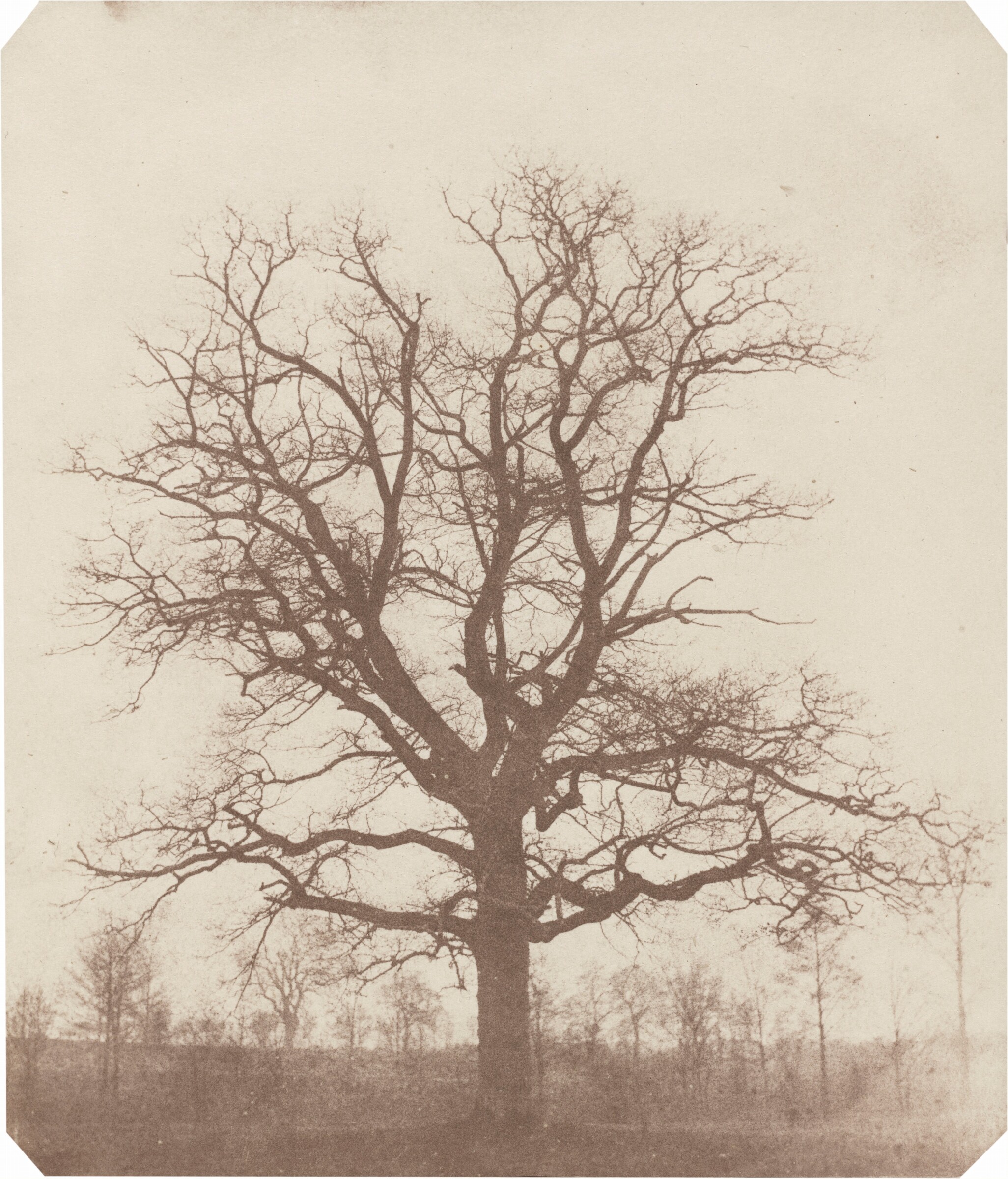
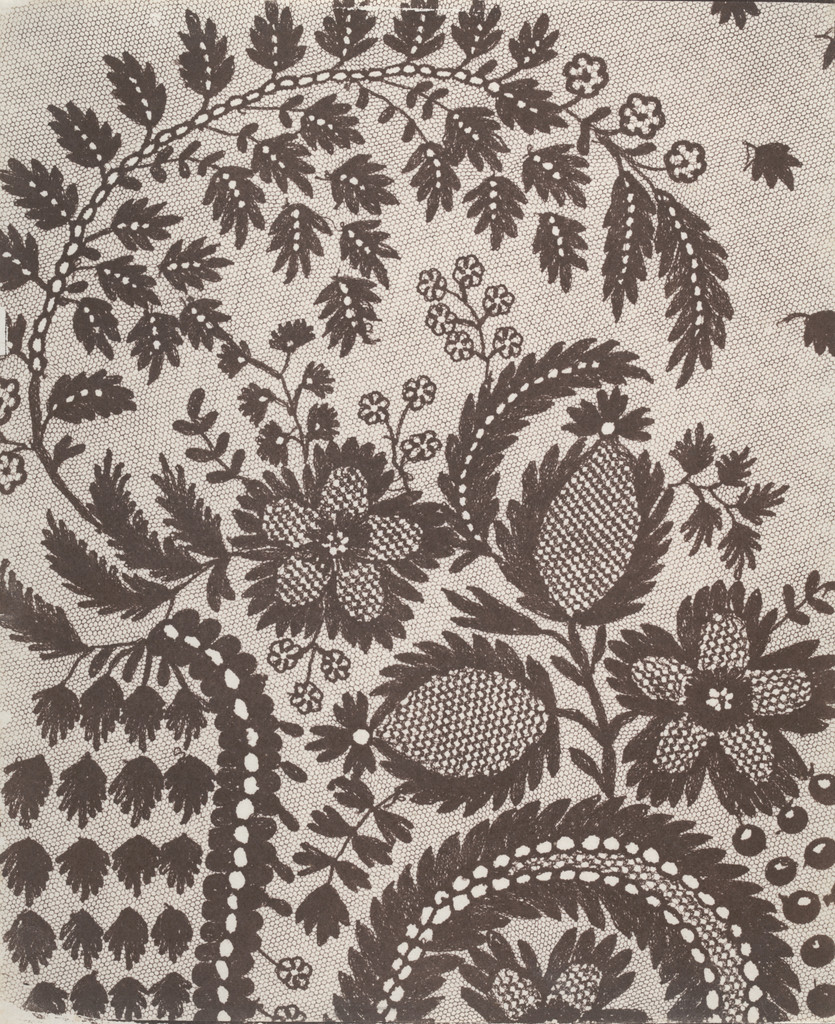

![[Group of Trees from the American Walnut], William Henry Fox Talbot, June 1, 1840](https://media.getty.edu/iiif/image/e2239044-50e4-44d2-be46-db53cdc317f1/full/!1200,1200/0/default.jpg)