Kazimir MalevichRussie, 1879–1935
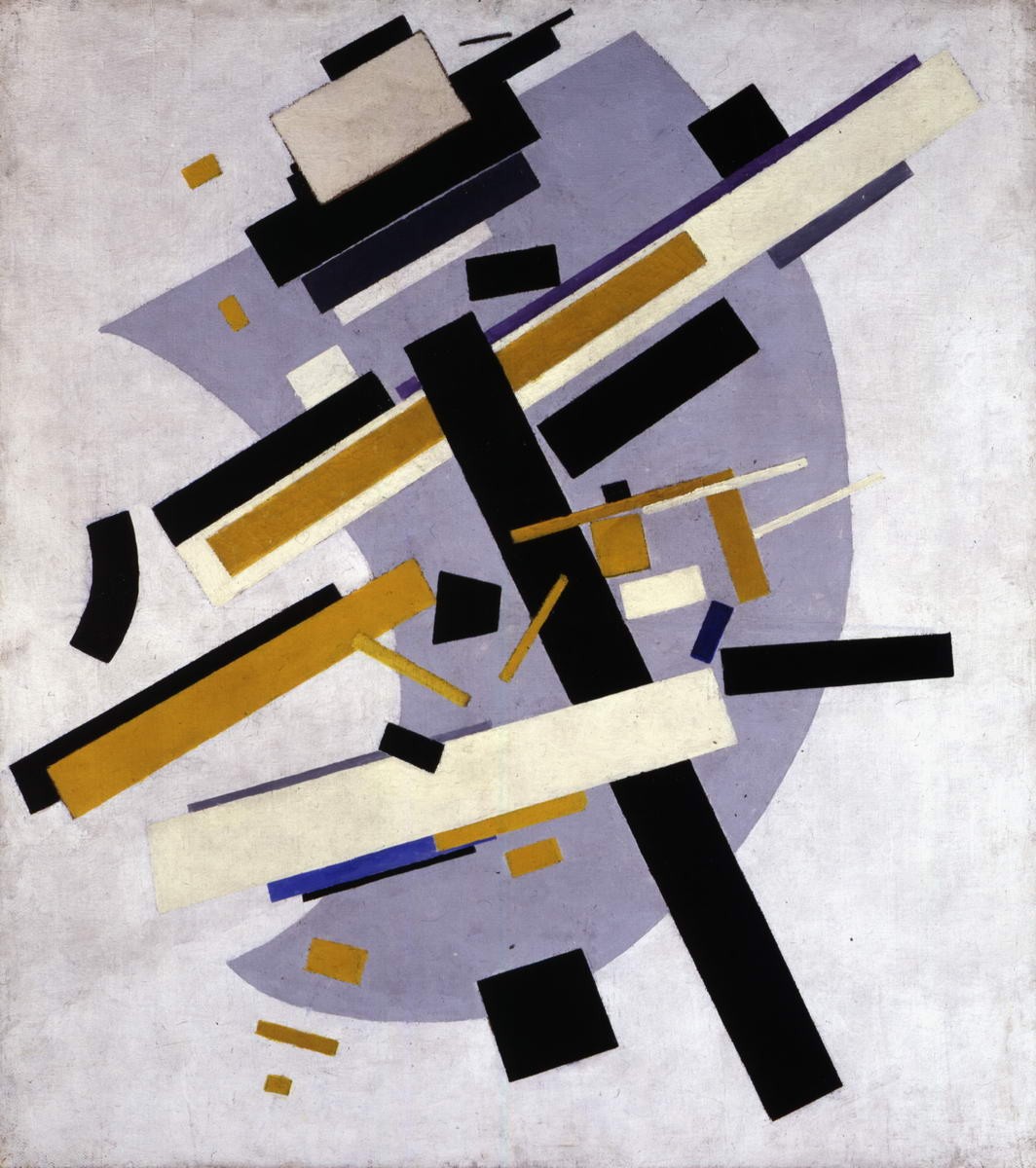
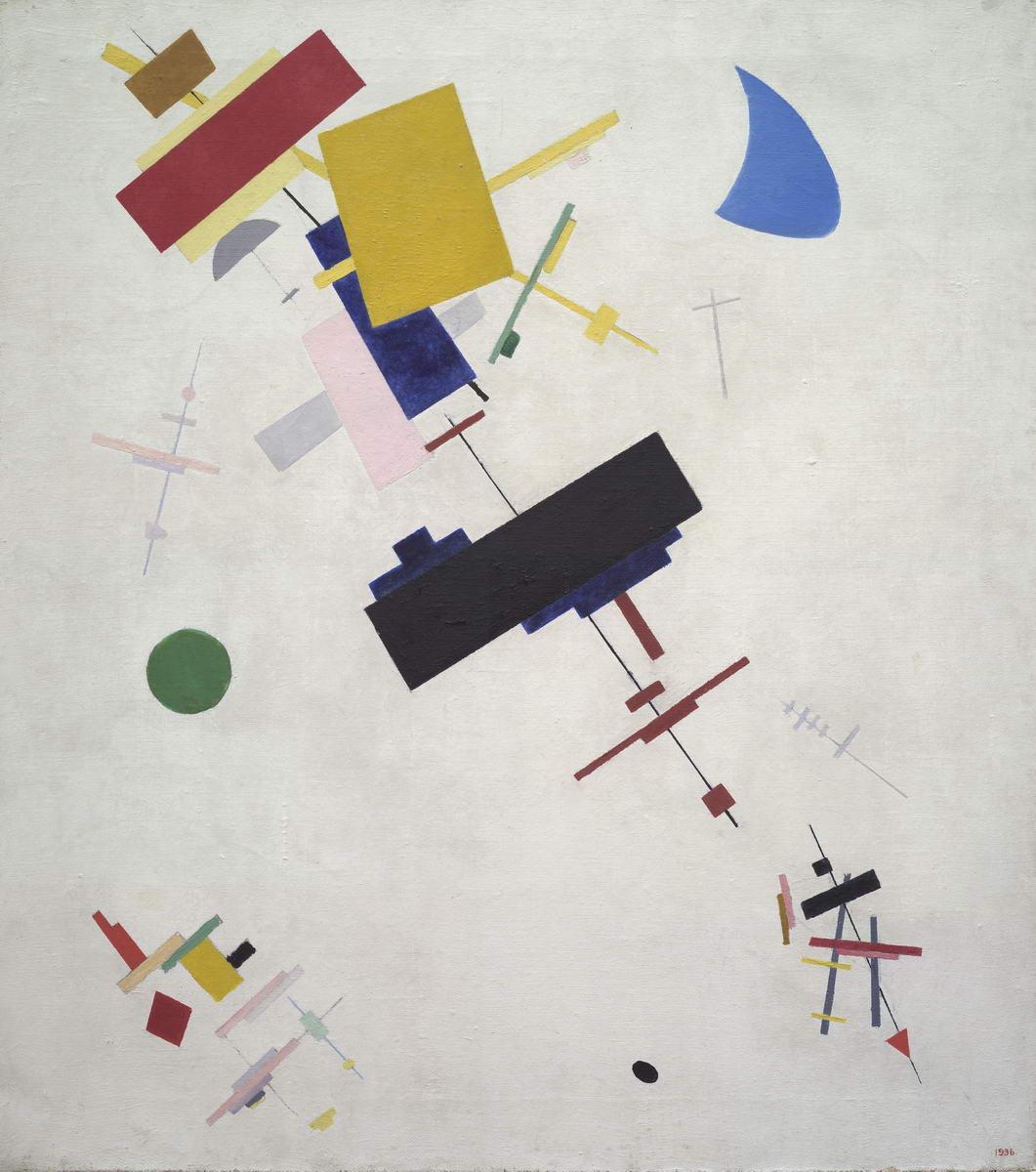
Suprematism
Peut-on la contempler ?
Elle ne reçoit pas en ce moment

Art Institute of Chicago
Chicago, États-Unis
Elle appartient à la collection, mais n’est pas présentée en ce moment.
- Vérifié
- Dans cet état depuis
- Source
- Les données de collection du musée lui-même
Notice
- Numéro d’inventaire
- 2023.3491
Au catalogue
Sources
- Art Institute of Chicago : les données ouvertes du musée · obtenue il y a 8 jours
- Image : Art Institute of Chicago — © the artist or rights holder
Pendant ce temps, chez Kazimir Malevich
La vie entière1913
“Target”, debates and “transrational realism”
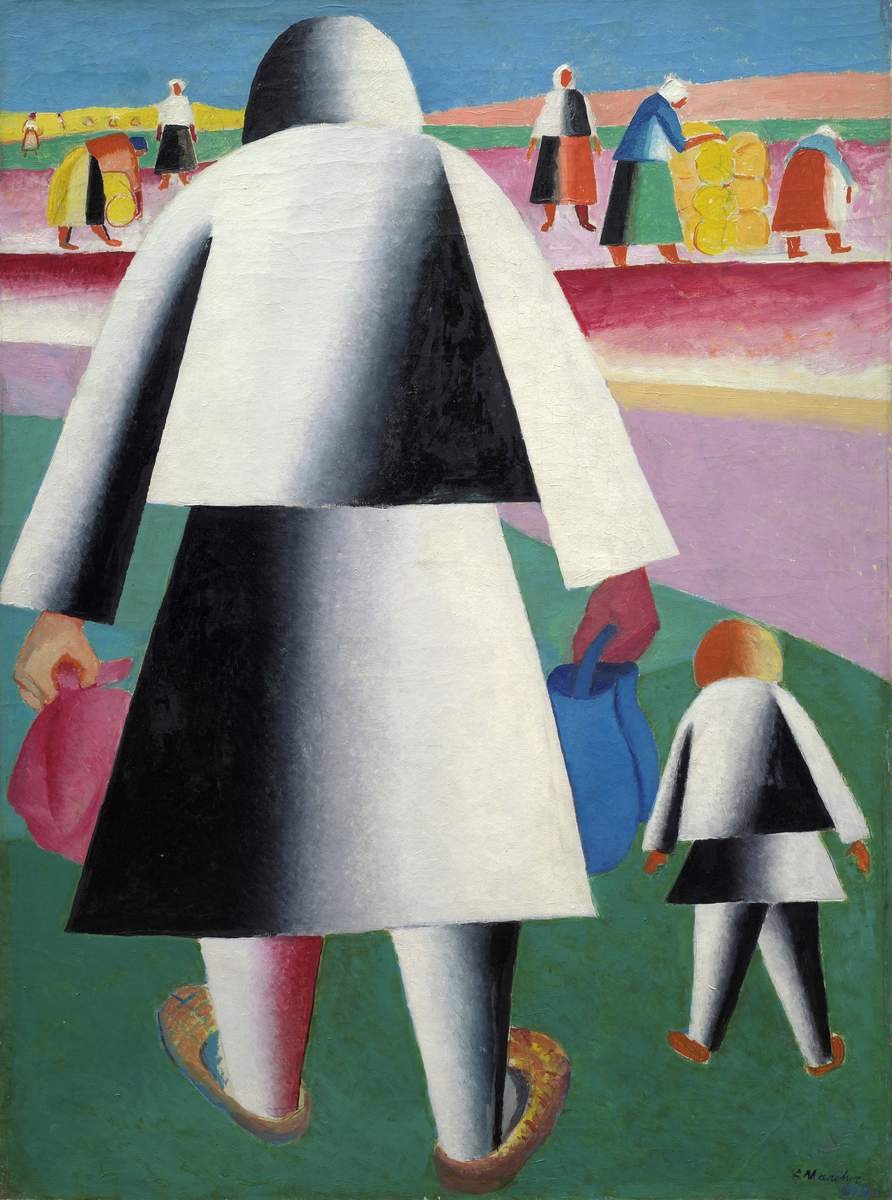
In 1913 Malevich took part in the “Debate on Contemporary Painting” in St Petersburg and in the “First Evening of Speech-Makers in Russia” in Moscow, designed a number of Futurist publications and in March showed “Morning in the Country after Snowstorm” and “Knifegrinder” with Goncharova and Larionov at the “Target” exhibition; at the last “Union of Youth” exhibition he showed, next to neo-primitivist works, paintings he himself called “transrational realism” and “Cubo-Futurist realism”. In the spring he wrote to Matyushin that he had rejected reason because a different kind of reason — transrational — had arisen in him, with its own law, construction and meaning.
summer – autumn 1915
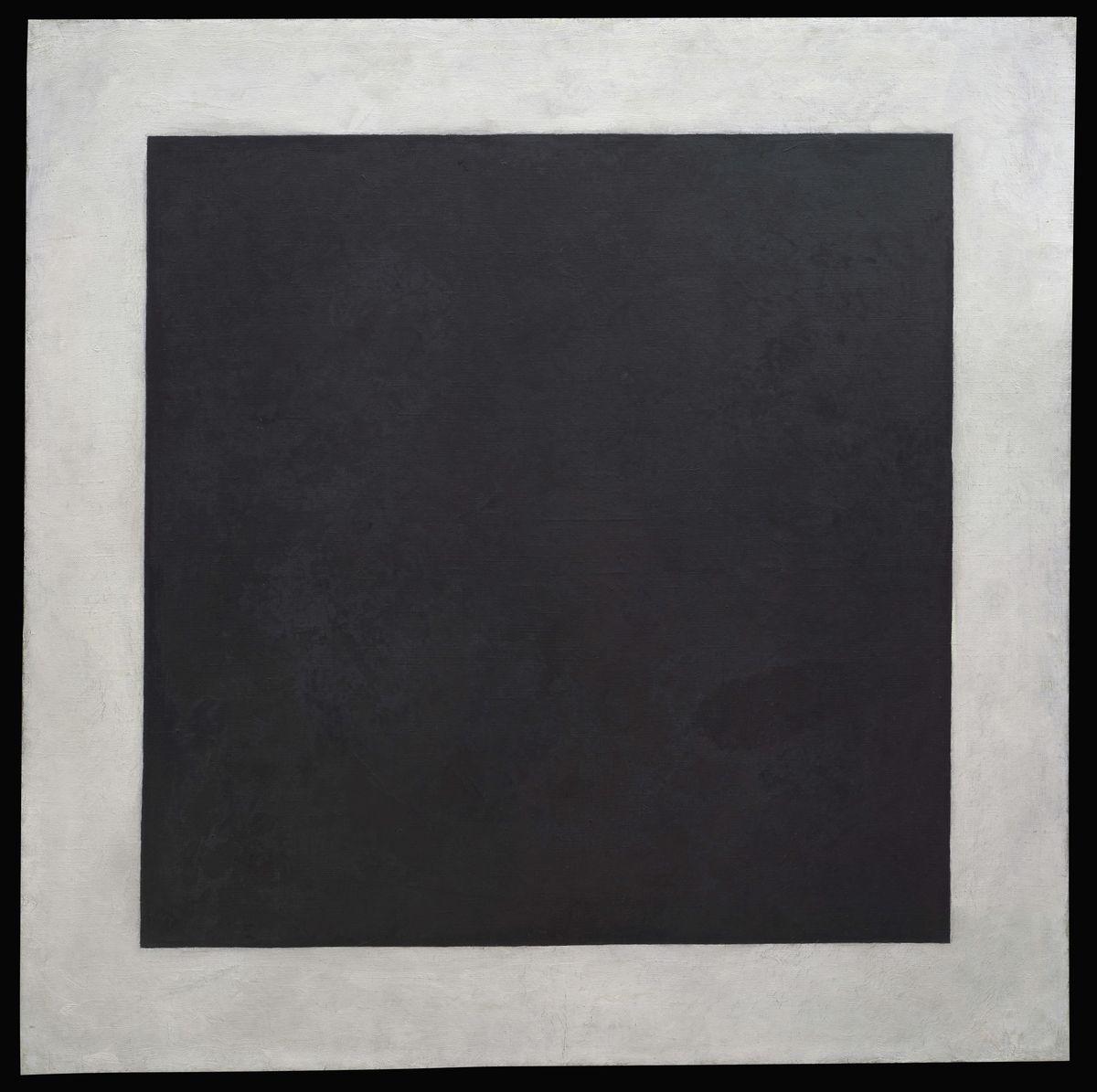
The first “Black Square” and a hurried brochure
In the summer of 1915 Malevich produced his first abstract composition, a black quadrilateral on a white ground. When Ivan Puni visited his studio in September and saw the new work, the artist, afraid that the idea would be copied, composed with Matyushin’s help his first text on Suprematism — the basis of the manifesto “From Cubism to Suprematism”.
19 December 1915
“0,10”: the “Black Square” in the icon corner
On 19 December 1915 (1 January 1916 in the new style), at the “Last Futurist Exhibition of Paintings 0,10” in Nadezhda Dobychina’s Art Bureau in Petrograd, Malevich showed 39 abstract works under the general title “Suprematism of Painting”; he hung the “Black Square” in the upper corner of the room — where an icon hangs in a Russian home. His brochure “From Cubism and Futurism to Suprematism” accompanied the show; in the next room Tatlin exhibited his corner reliefs, and the exhibition was seen by more than six thousand people.
1916
Sixty Suprematist canvases and a lecture with Puni
In 1916 Malevich gave the paper “Cubism — Futurism — Suprematism” at the “Public Popular-Science Lecture of the Suprematists”, organised with Ivan Puni, took part in the “Shop” exhibition and showed 60 Suprematist canvases at the “Knave of Diamonds” exhibition.
1916
Founds the “Supremus” society
In 1916 Malevich organised the “Supremus” society, which included Olga Rozanova, Lyubov Popova, Aleksandra Exter, Ivan Klyun, Vasily Pestel, Nadezhda Udaltsova, Mstislav Yurkevich and others, and prepared a journal of the same name for publication.
May – November 1917
1917: chairman, commissar, guardian of the Kremlin
Demobilised in 1917 (he had been called up in the summer of 1916), Malevich was elected in May to the council of the Union of Painters in Moscow as a representative of the Left Federation, in August became chairman of the Art Section of the Moscow Soviet of Soldiers’ Deputies and worked on a project for a People’s Academy of Arts, and in October was elected chairman of the “Knave of Diamonds”. In November the Moscow Military Revolutionary Committee appointed him commissar for the protection of antiquities and a member of the commission for the protection of artistic treasures, whose duties included guarding the Kremlin’s valuables.