ART WIKI32 963 en salle
CarteCollectionArtistesMuséesExpositionsJournal
Connexion

ART WIKI

Où est accroché le chef-d’œuvre, et quand on vous laisse entrer.

Collections : Art Institute of Chicago, Cleveland Museum of Art, Galerie Tretiakov, Hirshhorn Museum and Sculpture Garden, J. Paul Getty Museum, Metropolitan Museum of Art, Minneapolis Institute of Art, Musée de l'Ermitage, Musée des Beaux-Arts Pouchkine, Musée du Louvre, musée national d'art asiatique, Musée russe, Musées d'Art de Harvard, Museum of Modern Art, National Gallery of Art, National Portrait Gallery, Rijksmuseum Amsterdam, Smithsonian American Art Museum, Statens Museum for Kunst, Victoria and Albert Museum, Villa Getty, Whitney Museum of American Art, Catalogue d’État du fonds muséal de Russie (274 musées), Europeana (19 musées), Wikidata (6 musées), Paris Musées (12 musées) et Joconde, la base des musées du ministère de la Culture (495 musées). Les images appartiennent à leurs ayants droit.

Rubriques

  • Carte
  • Recherche
  • Collection
  • Chefs-d’œuvre
  • Exposées en ce moment
  • Artistes

Et aussi

  • Musées et galeries
  • Expositions
  • Journal
  • D’où viennent les données
  • Confidentialité et cookies
AccueilCarteCatalogue
  1. Collection/
  2. Art Institute of Chicago/
  3. Self-Portrait with a Hat
Self-Portrait with a Hat, Gustave Caillebotte, c. 1879
Gustave Caillebotte, portraitGustave CaillebotteFrance, 1848–1894

Self-Portrait with a Hat

c. 1879 · Graphite on off-white, medium-weight, moderately textured laid paper

Peut-on la contempler ?

Elle ne reçoit pas en ce moment

Art Institute of Chicago

Chicago, États-Unis

Elle appartient à la collection, mais n’est pas présentée en ce moment.

Vérifié
il y a 3 jours
Dans cet état depuis
16 août 2026
Source
Le musée
Sur la cartePage du musée

À propos de l’œuvre

Born into a Parisian upper middle-class family, Gustave Caillebotte was attracted to the innovations of the young artists who became known as the Impressionists. He officially joined the group for their second exhibition, in April 1876, and then organized the exhibition of 1877, where he showed Paris Street; Rainy Day, his masterpiece.

Art Institute of Chicago · CC BY 4.0

Notice

c. 1879
18481894

Au catalogue

Dessins et aquarellesRéalismeImpressionnismeXIXe siècleFrance

Sources

  • Art Institute of Chicago
  • Image : Art Institute of Chicago — CC0 / public domain (AIC image API)

Pendant ce temps, chez Gustave Caillebotte

La vie entière
  1. c. 1876 – 1878

    Writes his will before the age of thirty

    Convinced after René’s death that his own life would be short, Caillebotte wrote his will while still in his twenties, bequeathing a large collection to the French government.

  2. 1877

    Takes charge of the Third Impressionist Exhibition

    By the Third Impressionist Exhibition in 1877 Caillebotte had assumed the leadership role: he secured rental space, selected artists and works and hung the paintings. His involvement eventually declined, but in the end he showed works in five of the eight Impressionist exhibitions.

  3. 1878

    His mother dies: the brothers divide the fortune

    In 1878 the artist’s mother, Céleste Daufresne, died; the surviving sons, Gustave and Martial, divided the family fortune.

  4. after 1878

    Living with his brother Martial: photographs after his paintings

    After their parents’ deaths Gustave lived for a long time with his brother Martial, first in Paris and then in Gennevilliers, where they bought an estate; the brothers shared an interest in faience collecting, philately and sailing, and Martial, a composer and photographer, often reproduced the compositions of his brother’s paintings in his photographs.

  5. 1879

    The Fourth Impressionist Exhibition: 35 works on water and leisure

    In 1879 Caillebotte submitted 35 paintings and pastels on water sports, boating and riverside leisure; “Oarsman in a Top Hat” (Boating Party) was considered one of the best of them, and the show is described as the most important exhibition of his works during his lifetime.

  6. 1881

    Buys a property at Petit-Gennevilliers on the Seine

    In 1881 Caillebotte acquired a property at Petit-Gennevilliers on the banks of the Seine near Argenteuil; it had a shipyard where he could design his own yachts.

Autres œuvres : Gustave Caillebotte

Toutes les œuvres
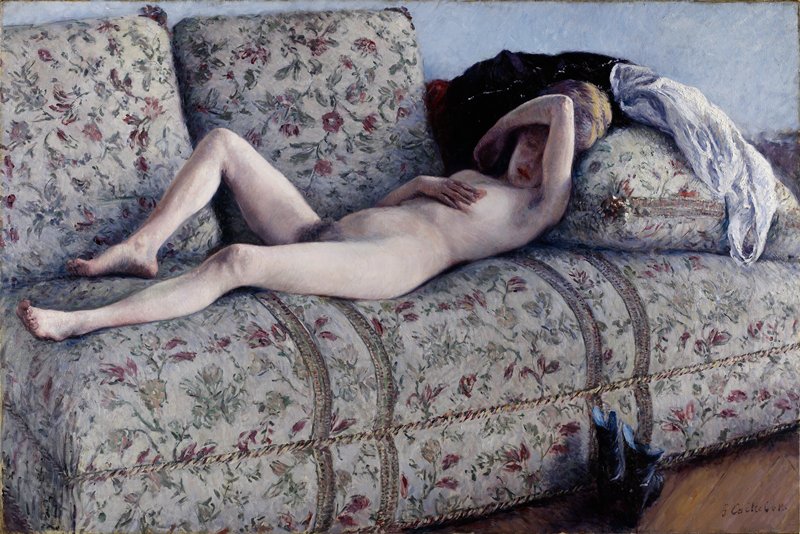
Nude on a Couch, Gustave Caillebotte, c. 1880

Nude on a Couch

c. 1880 · Minneapolis Institute of Art

Paris Street; Rainy Day, Gustave Caillebotte, 1877

Rue de Paris, temps de pluie

1877 · Art Institute of Chicago

Young Man at His Window, Gustave Caillebotte, 1876

Jeune Homme à sa fenêtre

1876 · J. Paul Getty Museum

Skiffs, Gustave Caillebotte, 1877

Skiffs

1877 · National Gallery of Art

Dahlias, Garden at Petit Gennevilliers, Gustave Caillebotte, 1893

Dahlias, Garden at Petit Gennevilliers

1893 · National Gallery of Art

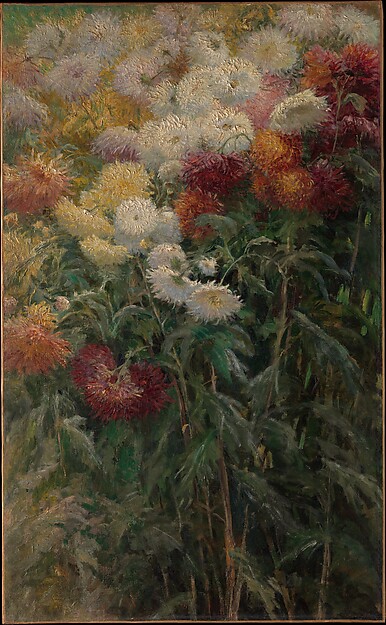
Chrysanthemums in the Garden at Petit-Gennevilliers, Gustave Caillebotte, 1893

Chrysanthemums in the Garden at Petit-Gennevilliers

1893 · Metropolitan Museum of Art

Calf's Head and Ox Tongue, Gustave Caillebotte, c. 1882

Calf's Head and Ox Tongue

c. 1882 · Art Institute of Chicago

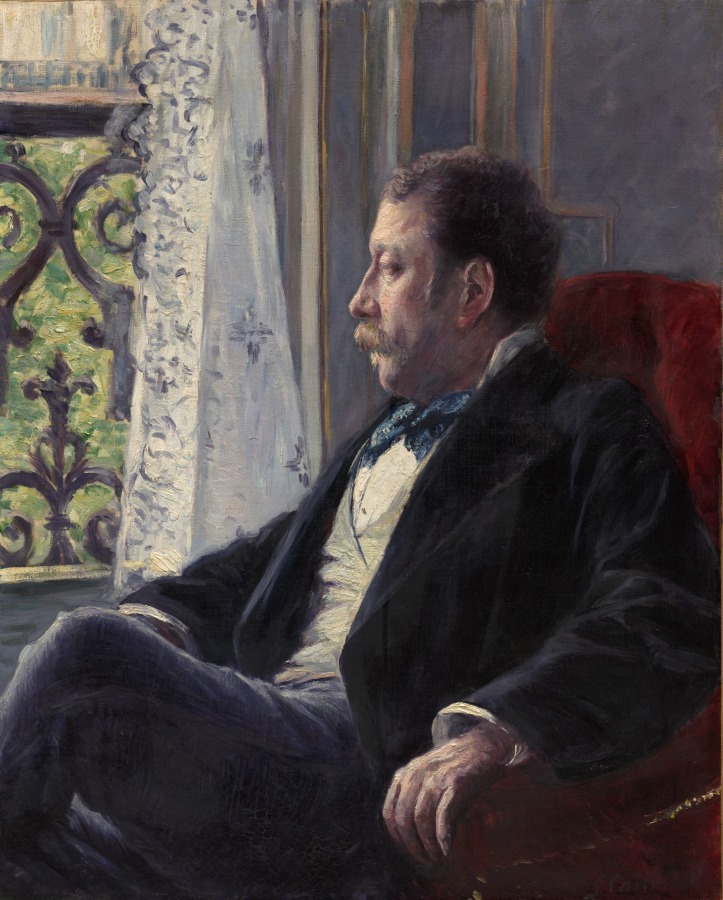
Portrait of a Man, Gustave Caillebotte, 1880

Portrait of a Man

1880 · Cleveland Museum of Art

Sous le même toit : Art Institute of Chicago

Page du musée
The Bedroom, Vincent van Gogh, 1889

Vincent van Gogh

The Bedroom, 1889

A Sunday on La Grande Jatte — 1884, Georges Seurat, 1884–86, border added 1888–89

Georges Seurat

Un dimanche après-midi à l'Île de la Grande Jatte, 1884–86, border added 1888–89

Paris Street; Rainy Day, Gustave Caillebotte, 1877

Gustave Caillebotte

Rue de Paris, temps de pluie, 1877

Two Sisters (On the Terrace), Pierre-Auguste Renoir, 1881

Pierre-Auguste Renoir

Les Deux Sœurs, 1881

The Basket of Apples, Paul Cézanne, c. 1893

Paul Cézanne

La Corbeille de pommes, c. 1893

Stacks of Wheat (End of Summer), Claude Monet, 1890–91

Claude Monet

Stacks of Wheat (End of Summer), 1890–91

American Gothic, Grant Wood, 1930

Grant Wood

American Gothic, 1930

Nighthawks, Edward Hopper, 1942

Edward Hopper

Nighthawks, 1942