 Tilman RiemenschneiderAllemagne, 1460–1531
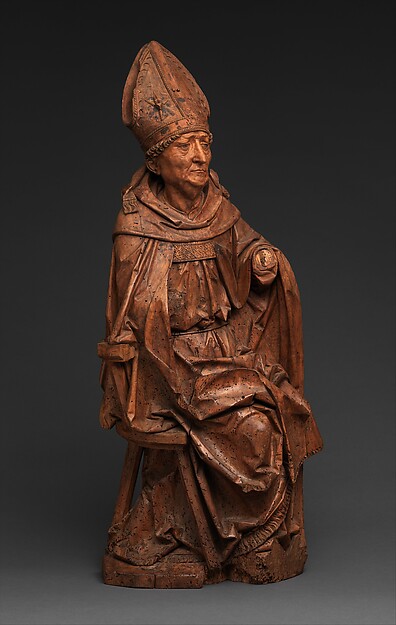
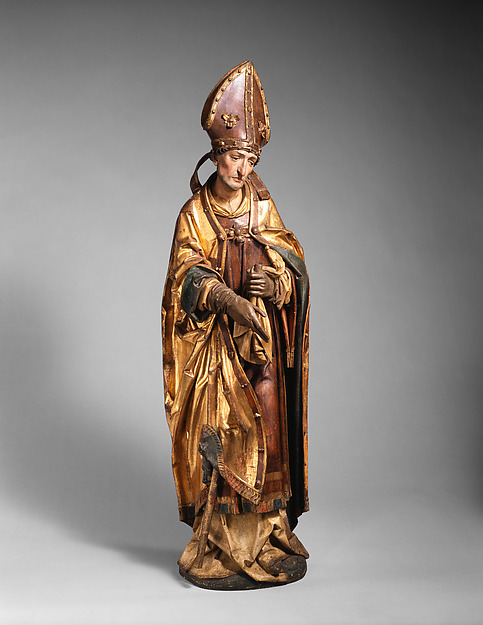
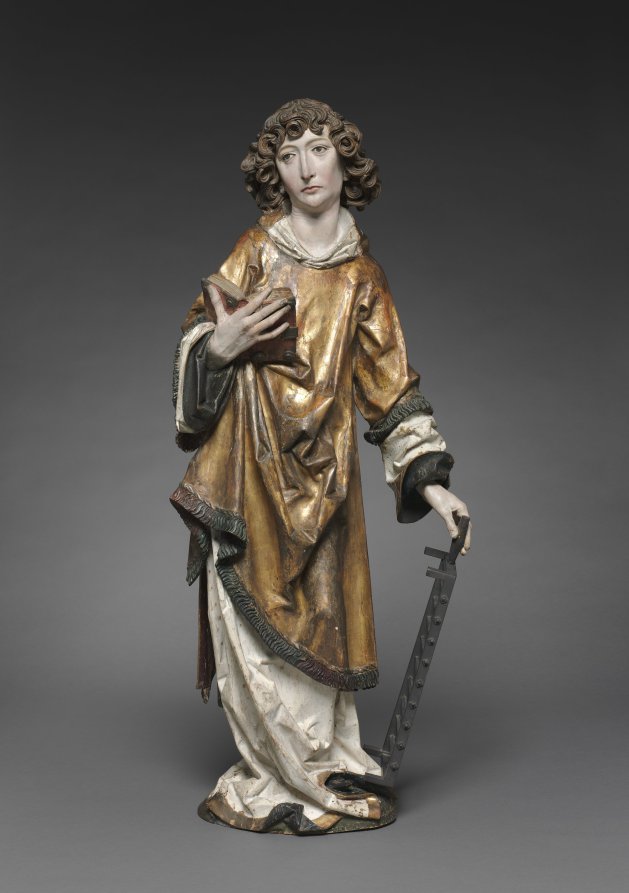
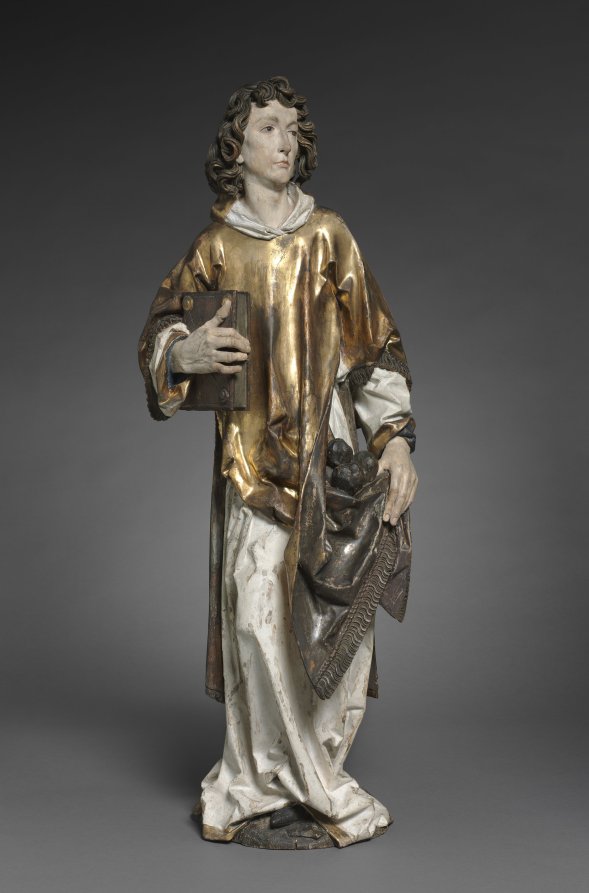
Saint Stephen
Peut-on la contempler ?
Oui, elle reçoit

Présentée au public. Qui s’en porte garant est indiqué ci-dessous.
- Vérifié
- Dans cet état depuis
- Source
- Le musée
À propos de la sculpture
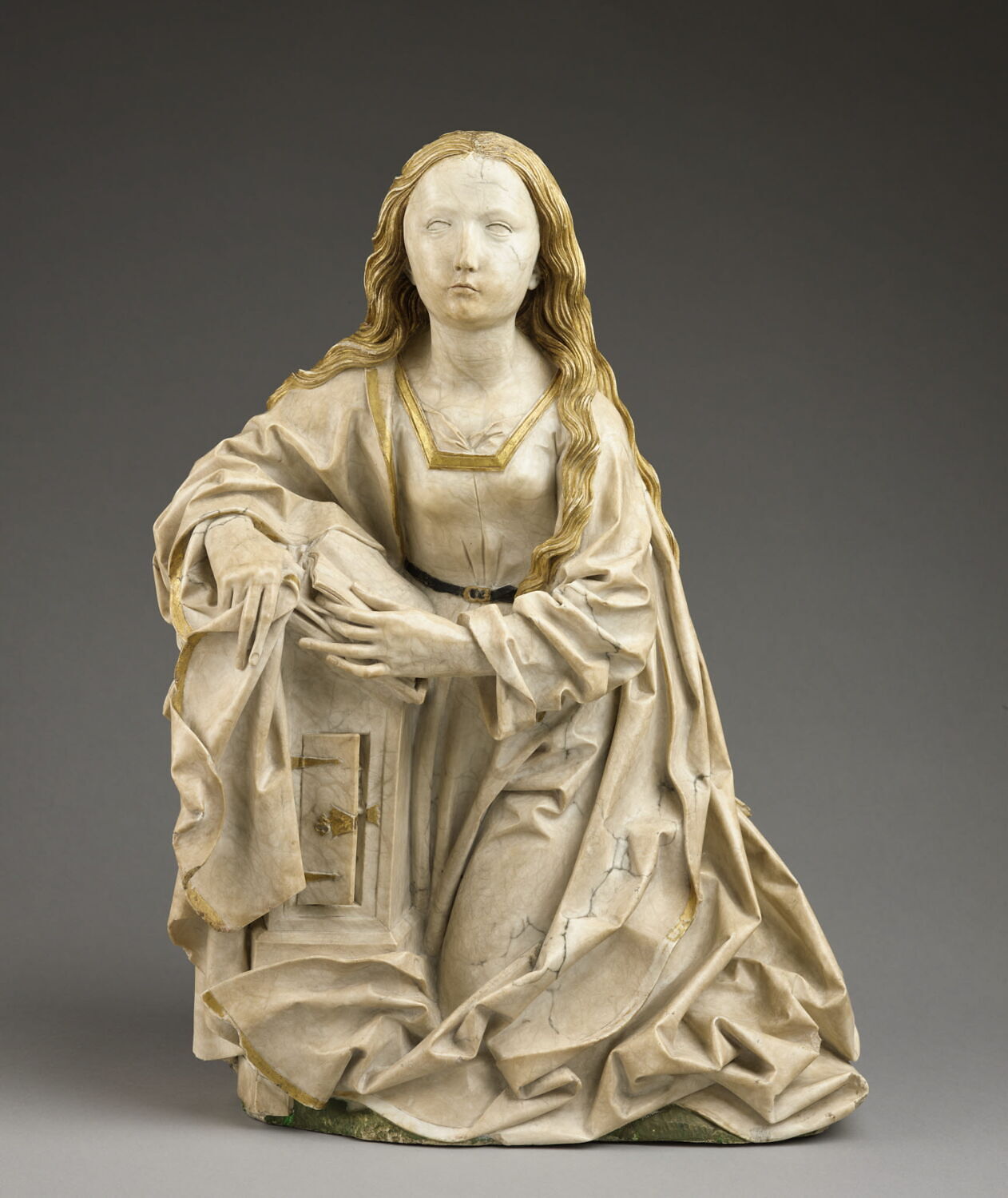
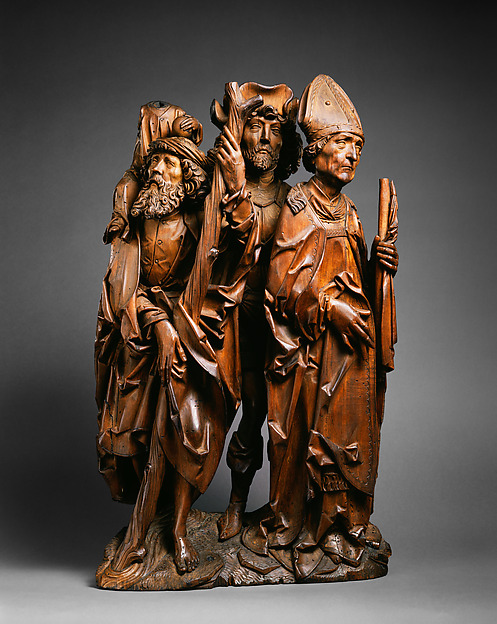
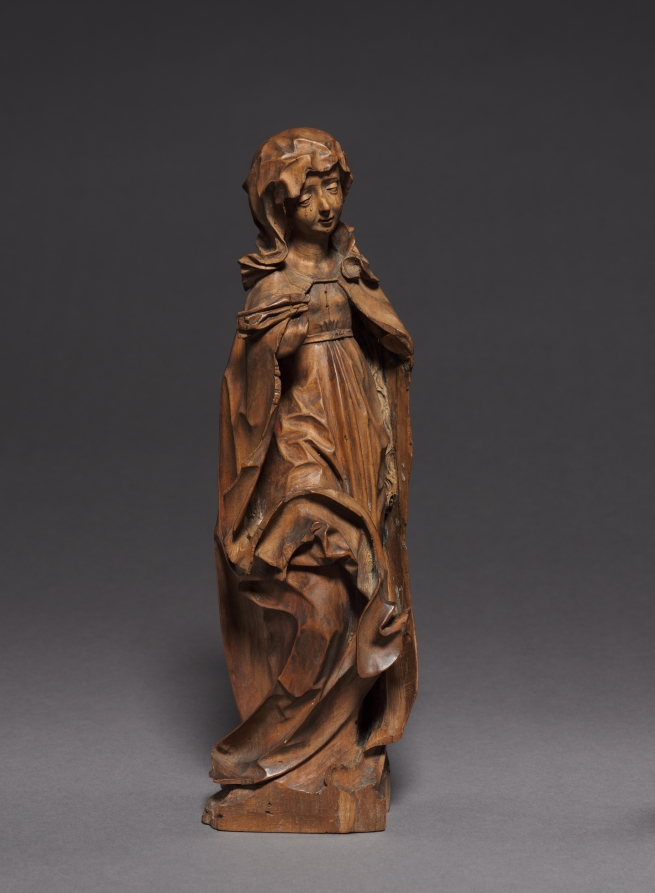
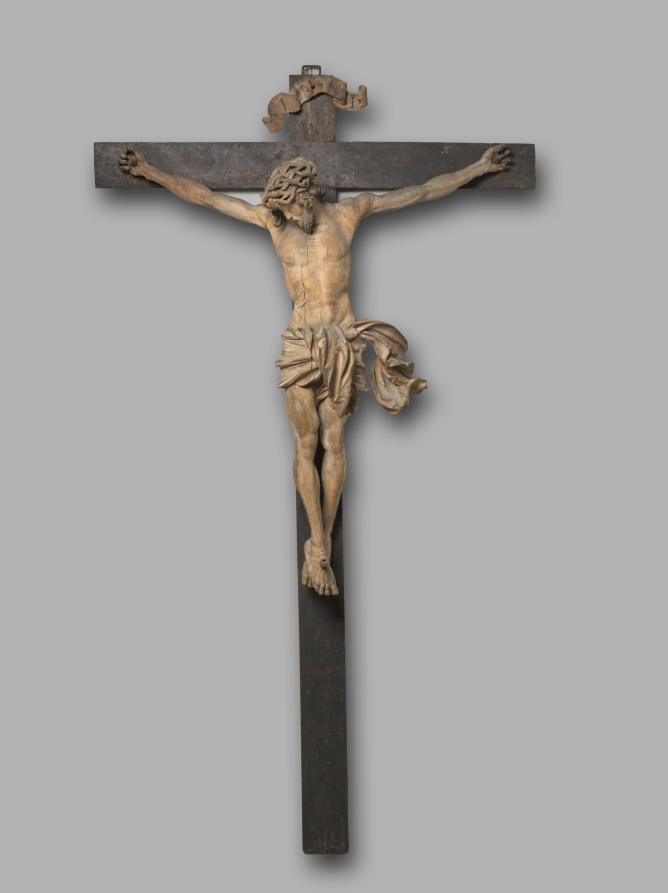
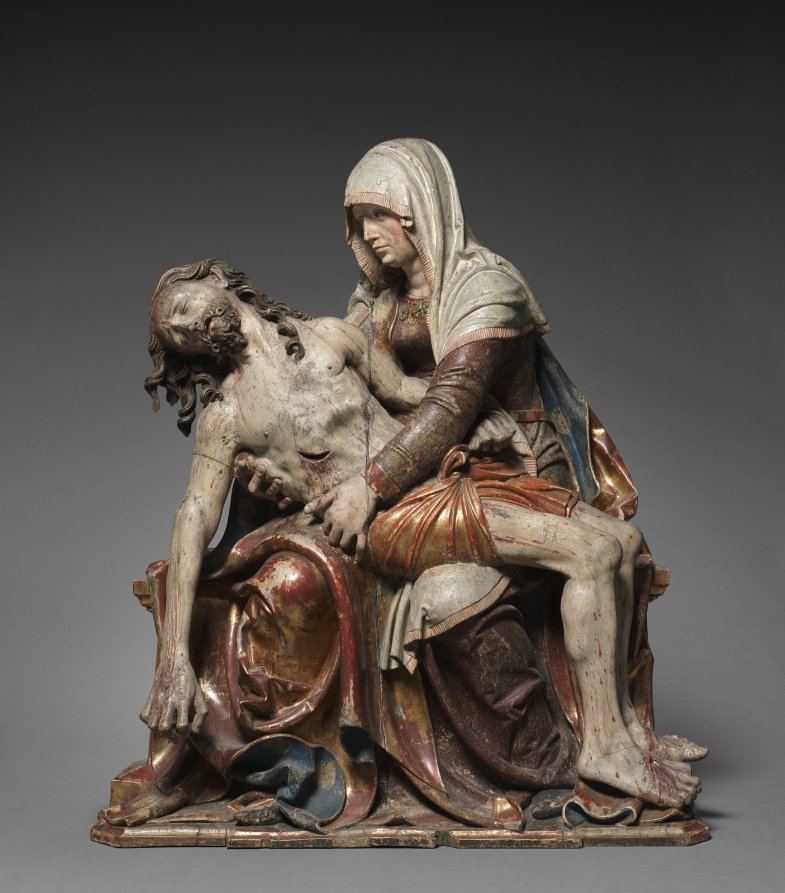
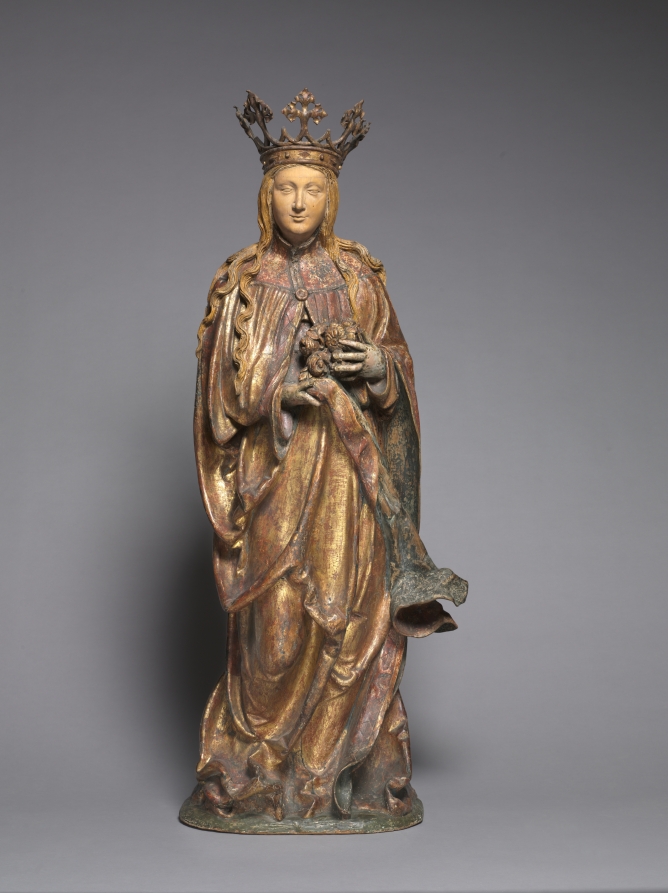
This sculpture, along with that of Saint Lawrence (1959.42) and two others in Germany, are believed to be the remaining fragments of a large altarpiece carved by Riemenschneider for the Dominican convent in Rothenburg in Franconia (demolished in 1813). Saints Stephen and Lawrence both wear the dalmatic to indicate their status as deacons in the early church. Each holds a symbol of his martyrdom; here, Saint Stephen cradles some stones to indicate his death by stoning. Art in Germany through the early 1500s remained firmly anchored in the late Gothic style with its associated interests in realism. Riemenschneider was one of the most prolific and versatile sculptors of this style, a recognized master in both stone and wood. His flourishing workshop employed as many as 40 apprentices in sculpting, woodcarving, and painting. His sculptures are noted for the dreamy, melancholy, and introspective quality in their expressions, as well as their remarkable attention to detail.
Cleveland Museum of Art
Notice
- Numéro d’inventaire
- 1959.43
Au catalogue
Sources
- Cleveland Museum of Art
- Image : Cleveland Museum of Art — Museum open access
Pendant ce temps, chez Tilman Riemenschneider
La vie entièreby 1500
A wealthy citizen with a flourishing workshop
By 1500 his reputation has brought wealth: he owns a number of houses in Würzburg and land with his own vineyards, and his workshop is estimated to have provided work for as many as 40 people.
1500
Son born: Bartlmä Dill Riemenschneider
1501
Twelve apprentices and stonemasons in one workshop
His workshop has twelve apprentices, and woodcarvers and stonemasons work side by side, which in other cities with separate guilds was impossible. Other accounts say twelve apprentices were registered between 1501 and 1517, and that in 1508 he stated that three stone sculptors worked for him.
1504
Elected to the Würzburg town council
He becomes a member of the sub-council (Unterrat) of the town, an office he holds until 1525 (other accounts say for about twenty years); it gives him social status and helps him obtain many large and profitable commissions.