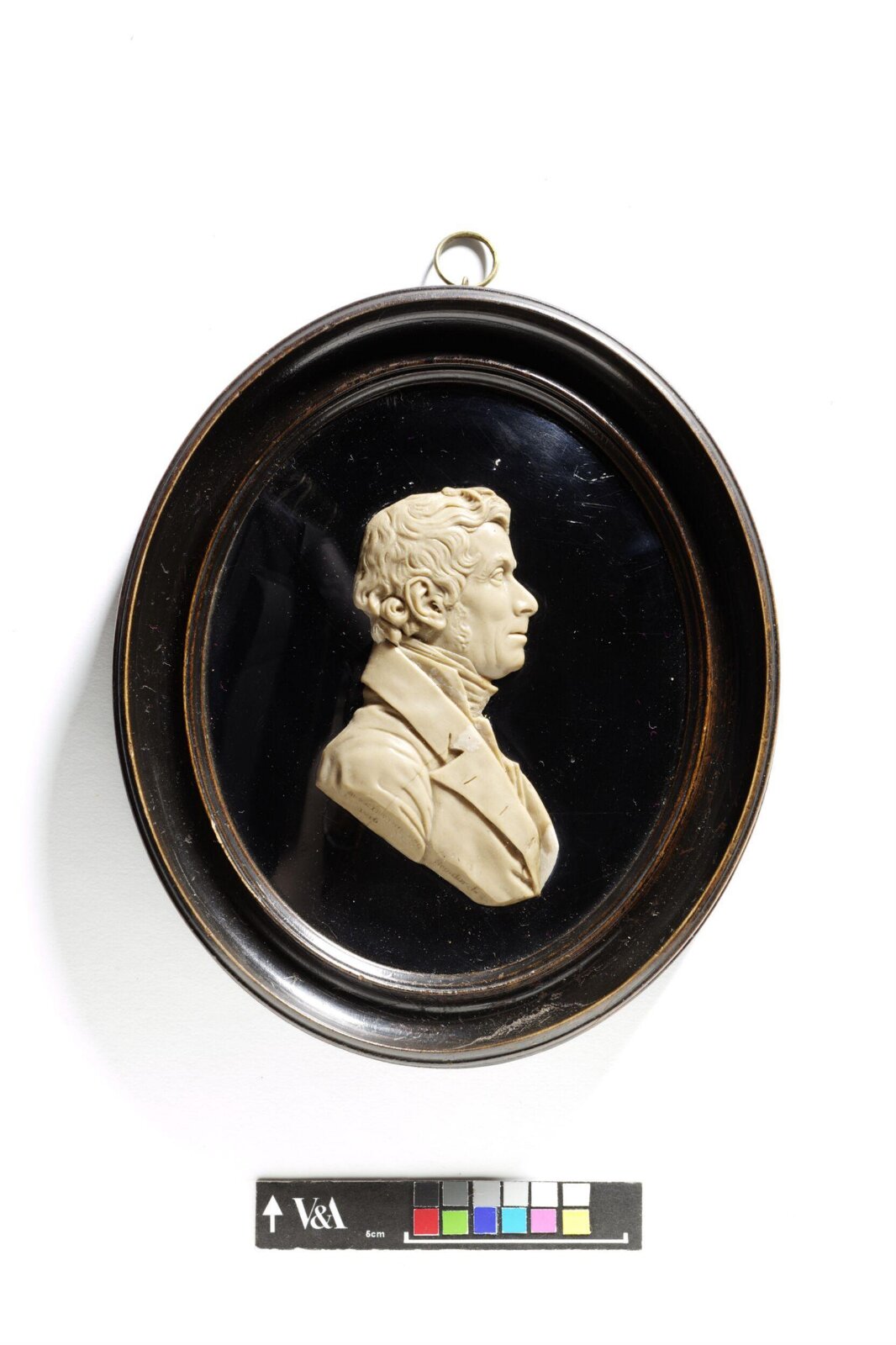
Scoular
Robert Skirving
Peut-on la contempler ?
Elle ne reçoit pas en ce moment

Victoria and Albert Museum
Londres, Royaume-Uni
Elle appartient à la collection, mais n’est pas présentée en ce moment.
- Vérifié
- il y a 9 jours
- Dans cet état depuis
- 25 sept. 2026
- Source
- Les données de collection du musée lui-même
About the sculpture
During the eighteenth and nineteenth centuries, low relief portraits in wax became popular in Britain and they were often exhibited at the Royal Academy, the Society of Artists and elsewhere. Waxes were used in a similar way to prints and medals, in order to disseminate the image of the sitter, or, like miniature paintings or silhouettes as portable mementoes.
The popularity of wax portraits was in part driven by their links with other types of portrait manufacture such as ceramic medallions.
The process of making a portrait in wax would begin with a model in plasticine or soft wax which would be worked using ivory or wooden tools in much the same way as a model in clay. A plaster mould would then be made and molten wax poured into it. The relief would be hand-finished by the artist.
Read on
Robert Skirving was a writer and agriculturist who wrote an account of agriculture in East Lothian from 1821-71. His work charts a period of great change affecting social as well as working practices.
Victoria and Albert Museum
Notice
- Numéro d’inventaire
- A.101-1965
What it shows
Au catalogue
Sources
- Victoria and Albert Museum: the museum's own open data · obtenue il y a 9 jours
- Image : Victoria and Albert Museum — © Victoria and Albert Museum, London