John Singleton CopleyÉtats-Unis, 1738–1815
Robert Hooper
Peut-on la contempler ?
Nous l’ignorons : le musée garde le silence

Smithsonian American Art Museum
Washington, États-Unis
Le propriétaire est connu. Si elle est exposée aujourd’hui, le musée ne le dit pas, et l’on ne nous a pas appris à deviner.
- Dans cet état depuis
- 25 sept. 2026
- Source
- Les données de collection du musée lui-même
About the painting
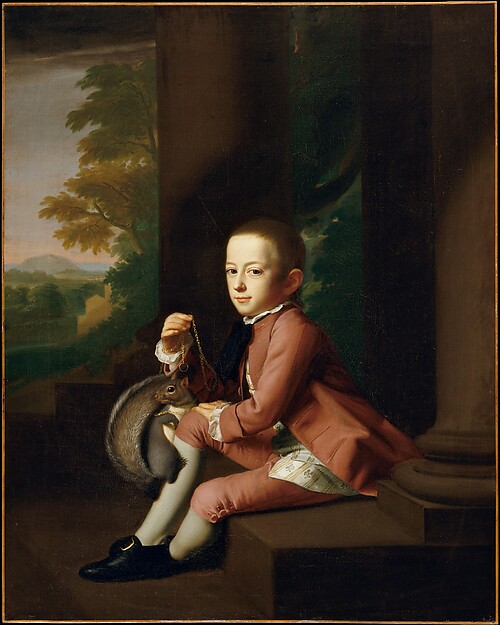
Mr. Hooper was the son of Robert King Hooper, who owned a fishing fleet that worked out of Marblehead, Massachusetts. The younger man already sports the rotund physique that Copley had captured in a portrait of Hooper's father years earlier. Behind him, the sea, visible through an open window, recalls the source of his family’s riches. Robert had graduated from Harvard in 1763, and Copley's painting shows him settling into the comfortable life of a merchant prince.
Smithsonian American Art Museum
Notice
- Numéro d’inventaire
- 2006.12.1
What it shows
Sources
- Smithsonian American Art Museum: the museum's own open data · obtenue il y a 4 jours
- Image : Smithsonian American Art Museum — CC0
Pendant ce temps, chez John Singleton Copley
La vie entière1753–1774 · Lieu de travail
Boston
17 June 1768
Explains to West why he is not yet coming to Europe
Copley writes that he would go only with a very good prospect of doing as well there as at home: his present income of 300 guineas a year is a fair living in America, and his mother and young brother depend on him. West replies on 20 September that he has talked over Copley’s prospects with London artists, who agree that he has nothing to hazard.
16 novembre 1769
Married: Susannah Farnum Clarke
June 1771 – January 1772
A trip to New York: thirty-seven portraits
At the invitation of Myles Cooper, president of King’s College, whose portrait Copley had painted in Boston in 1768, he sets up his easel on Broadway in New York and paints thirty-seven portraits. It is his only American tour away from Boston: most of the Southern portraits attributed to him were in fact made by Henry Benbridge.
1773
His father-in-law is consignee of the Boston Tea Party tea
Richard Clarke, the artist’s father-in-law, was the merchant to whom the tea that provoked the Boston Tea Party was consigned. All of Copley’s family connections were Loyalists, and at a meeting described in his letter of 1 December 1773 he defended his wife’s relatives.
June 1774
Sails from Boston for London
Amid growing unrest on the eve of the War of Independence, and urged on by correspondents in England, Copley sails with many letters of introduction, leaving his mother, wife and children in Henry Pelham’s charge. He never returns to America.