 Sandro BotticelliItalie, 1445–1510
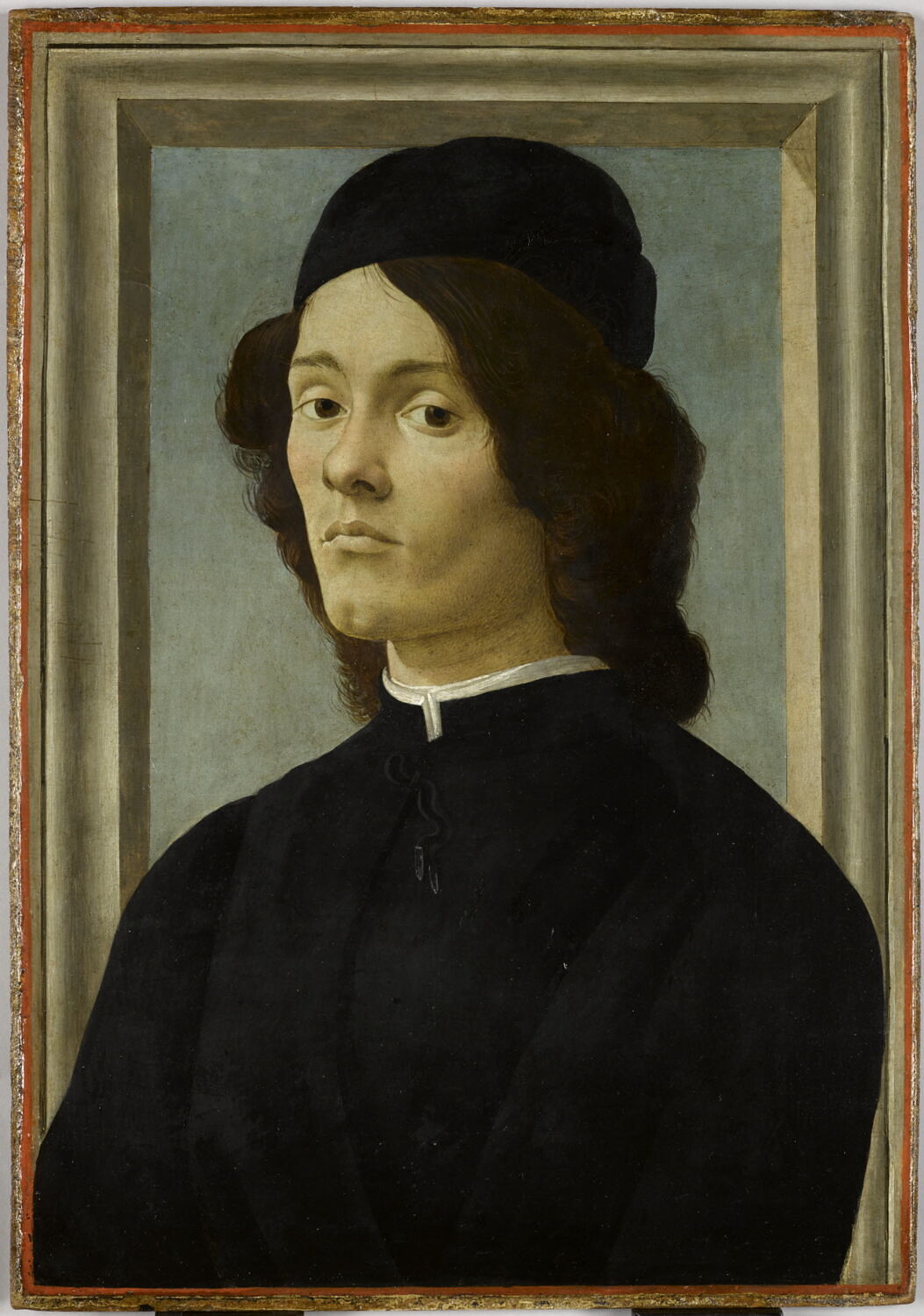
Portrait d'homme
Peut-on la contempler ?
Oui, elle reçoit

Présentée au public.
- Vérifié
- Dans cet état depuis
- Source
- Le musée
À propos du tableau
Le portrait de Jeune homme est une peinture de Sandro Botticelli, une tempera sur bois (57,5 × 44 cm) de la période 1475-1500, conservée au Musée du Louvre à Paris.
Notice
- Numéro d’inventaire
- RF 323
Au catalogue
Sources
- Musée du Louvre
- Image : Musée du Louvre — © 2017 GrandPalaisRmn (musée du Louvre) / Franck Raux
Pendant ce temps, chez Sandro Botticelli
La vie entière1474
Invited to Pisa: the Camposanto frescoes
At the start of 1474 the authorities of Pisa asked Botticelli to join the frescoing of the Camposanto, a large prestigious project carried out mostly by Benozzo Gozzoli. Payments up to September are recorded but no work survives, and whatever he began seems to have been left unfinished; being approached from outside Florence shows his growing reputation.
1478–1479
The Pazzi conspiracy and the fresco of the executions
After the Pazzi conspiracy of 1478, in which Giuliano de' Medici was assassinated, Botticelli painted for Florence's customs house a large fresco of the hanging of the plot's leaders, a “pittura infamante” with which Florence humiliated traitors. It was his first major fresco commission; the figure of Francesco Salviati, Archbishop of Pisa, was removed in 1479 after protests from the Pope.
1480s
Lorenzo's circle: Ficino, Pico, Poliziano
Botticelli frequented Lorenzo the Magnificent's Platonic Academy, where he met the humanists, poets and philosophers Marsilio Ficino, Pico della Mirandola and Angelo Poliziano; the influence of Neoplatonism shows in his secular paintings.
1481
Summoned to Rome: the Sistine Chapel
In 1481 Pope Sixtus IV summoned Botticelli and other prominent Florentine and Umbrian artists to fresco the walls of the newly completed Sistine Chapel; the Florentine contribution is thought to be part of a peace deal between Lorenzo de' Medici and the papacy. Botticelli painted three of the fourteen large scenes — the Temptations of Christ, the Youth of Moses and the Punishment of the Sons of Corah — and a large share of the imagined portraits of popes.
1490–1498
Savonarola's preaching and Botticelli
From 1490 Savonarola preached in Florence; according to Vasari, Botticelli became his follower, gave up painting and fell into hardship. Modern historians reject this, and the extent of the preacher's influence remains uncertain — Botticelli's brother Simone was the clearer follower.
1498
The execution of Savonarola
In 1498 Savonarola was seized, accused of heresy and sentenced to death; these events shook Botticelli deeply.