 Eugène DelacroixFrance, 1798–1863
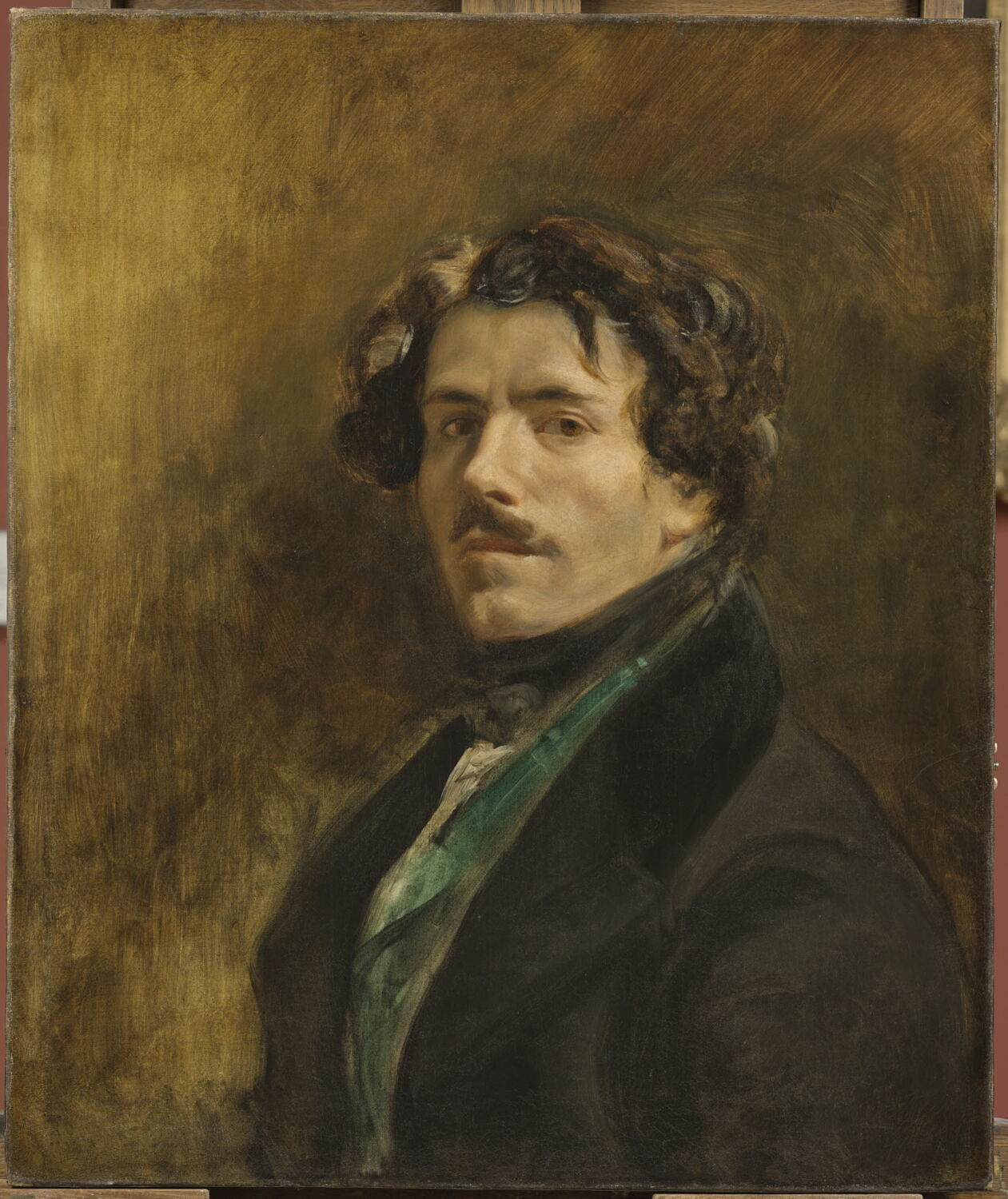
Portrait de l'artiste
À propos du tableau
Autoportrait au gilet vert – ou Portrait de l'artiste – est un tableau du peintre français Eugène Delacroix réalisé dans le deuxième quart du XIXe siècle, sans doute vers 1837. Cette huile sur toile est un autoportrait dans lequel l'artiste se représente en buste sur fond brun, un gilet vert apparaissant sous sa veste noire. Léguée en 1872, l'œuvre est conservée au musée du Louvre, à Paris.
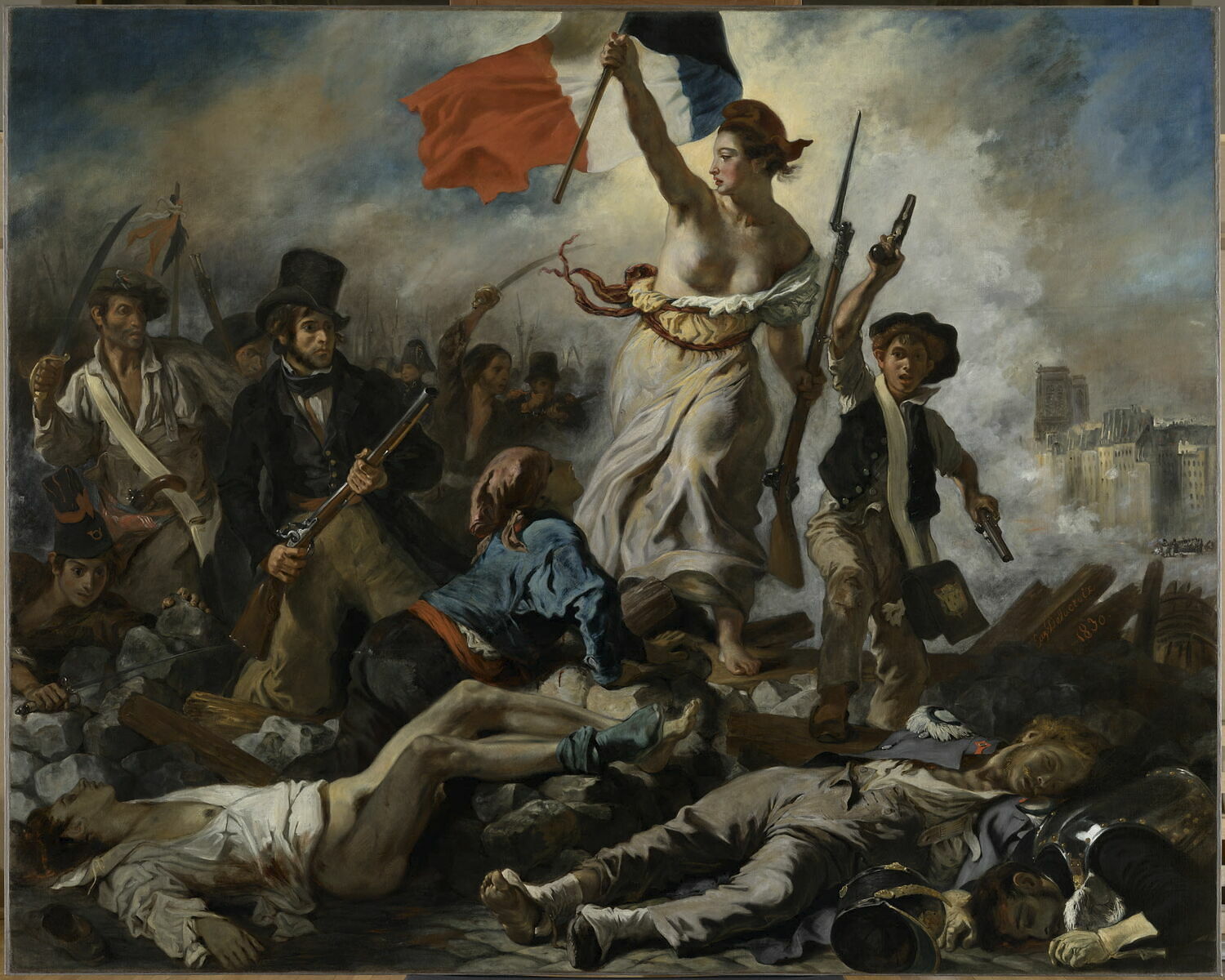
La tête de Delacroix telle qu'il la donne à voir dans cet Autoportrait apparaît légèrement modifiée aux côtés de deux figures issues de son chef-d'œuvre, La Liberté guidant le peuple, sur le billet de 100 francs Delacroix, créé en 1978 et émis en 1979.
Notice
- Numéro d’inventaire
- RF 25
Pendant ce temps, chez Eugène Delacroix
La vie entière1824
Success of "The Massacre at Chios" at the Salon
Shown at the Salon of 1824, The Massacre at Chios, devoted to the tragedies of the Greek War of Independence, brought Delacroix genuine success: the authorities recognized him as the leading painter of the new Romantic style, and the painting was bought by the state.
1825
Journey to England
During a trip to England Delacroix visited Thomas Lawrence and Richard Parkes Bonington; the color and manner of English painting gave impetus to his subsequent work.
1831
"Liberty" at the Salon of 1831
Liberty Leading the People was enthusiastically received by the public at the Salon of 1831 and immediately acquired by the state for 3,000 francs for the throne room of the Luxembourg Palace.
1832
Journey to Spain and North Africa
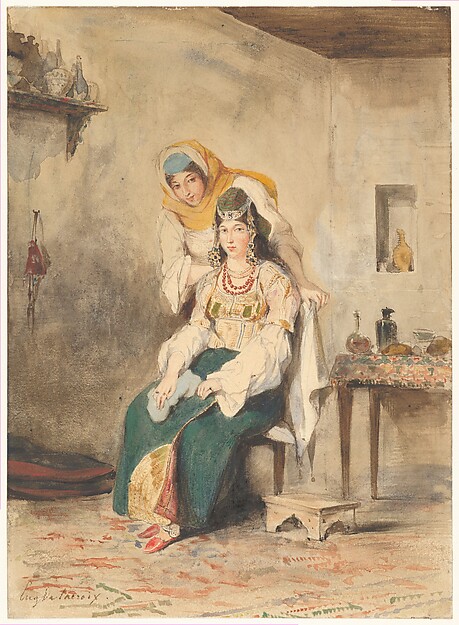
As part of the diplomatic mission of Charles-Edgar de Mornay, Delacroix traveled to Morocco shortly after the French conquest of Algeria. The journey proved a turning point: he made dozens of sketches, and his impressions of North Africa nourished his art for the rest of his life.
1833–1837
Decoration of the Salon du Roi in the Palais Bourbon
From 1833 Delacroix received numerous commissions to decorate the public buildings of Paris; the first was his work on the Salon du Roi in the Chamber of Deputies at the Palais Bourbon, completed in 1837.