 Alessandro AlgardiItalie, 1595–1654
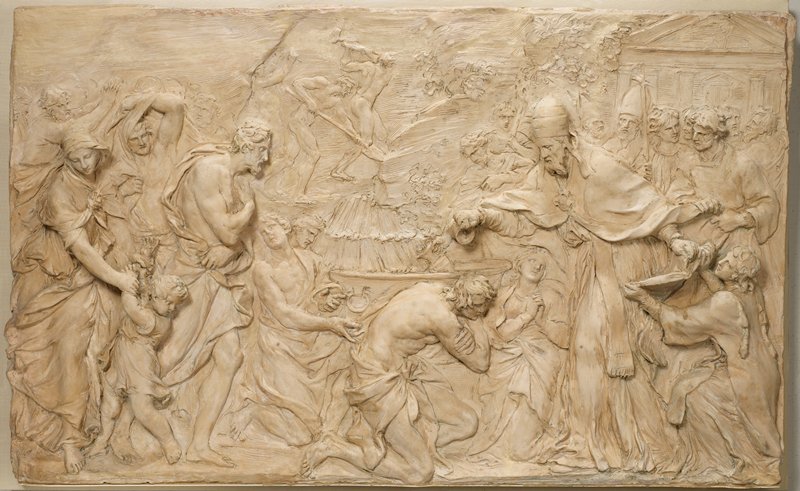
Pope Liberius Baptizing the Neophytes
Peut-on la voir ?
Oui, exposée actuellement
Où est « Pope Liberius Baptizing the Neophytes » aujourd’hui ? Minneapolis Institute of Art, G313, Minneapolis. Oui, exposée actuellement. Vérifié 29 septembre 2026.

Minneapolis, États-Unis
Ouvert· jusqu’à 17:00
Présentée au public.
- Vérifié
- Dans cet état depuis
- Source
- Le musée
À propos de la sculpture
This terra-cotta relief is the only known study in clay for a sculpture decorating the marble fountain of Saint Damasus in the Vatican. The fountain was erected in the 17th century by Pope Innocent X to mark his restoration of aqueducts built for Pope Damasus in the 4th century. The relief shows Damasus’ predecessor, Liberius, baptizing new converts to Christianity. Damasus stands behind him, lifting his mantle.
The easily worked medium of clay allowed Algardi to experiment and refine his ideas before carving the relief in marble. By sculpting the foreground figures almost fully in the round and those more distant in ever shallower relief, he achieved an illusion of depth and volume. Over time, weather and abrasive cleaning have taken a toll on the marble version, but the clay model remains evidence of the artist’s intent.
Minneapolis Institute of Art
Notice
- Numéro d’inventaire
- 59.17
Au catalogue
Sources
- Minneapolis Institute of Art
- Image : Minneapolis Institute of Art — public domain
Dans la vie de Alessandro Algardi
La vie entière1625–1654 · Lieu de travail
Rome
1650
Rencontre avec Vélasquez et commandes d’Espagne
Il fait la connaissance de Diego Vélasquez, qui lui procure des commandes d’Espagne : quatre encadrements de cheminée et les figures de la fontaine de Neptune dans les jardins prennent place au palais royal d’Aranjuez, et le tombeau du comte et de la comtesse de Monterrey au couvent des augustins de Salamanque.
in later years
Un grand atelier, une fortune et des élèves
Dans ses dernières années, il dirige un grand atelier et amasse une fortune considérable. Ses élèves Ercole Ferrata et Domenico Guidi poursuivent sa manière classicisante, tandis qu’Antonio Raggi se forme d’abord auprès de lui ; selon d’autres sources, tous trois seraient ensuite passés chez le Bernin, et ses assistants moins connus comprennent Francesco Barrata, Girolamo Lucenti et Giuseppe Peroni.