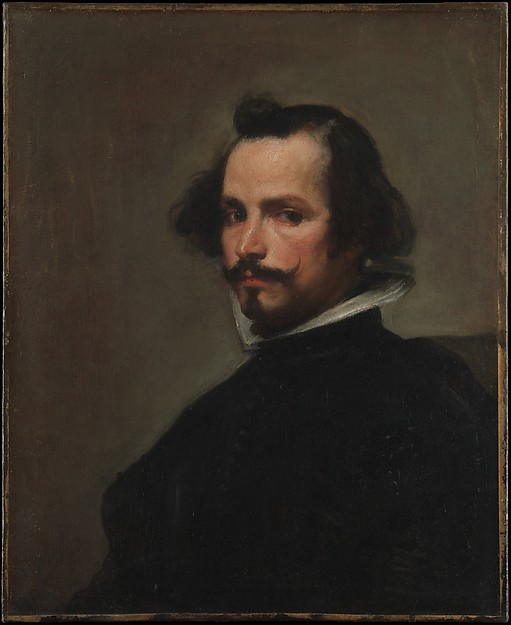
Diego VelázquezEspagne, 1599–1660
Pope Innocent X
Peut-on la voir ?
Inconnu
Où est « Pope Innocent X » aujourd’hui ? Collection: Musée Isabella-Stewart-Gardner, Boston. Inconnu.

Boston, États-Unis
Le propriétaire est connu ; on ignore si l’œuvre est exposée aujourd’hui.
- Dans cet état depuis
- Source
- Le musée
Notice
- Numéro d’inventaire
- P19e26
Au catalogue
Sources
- Wikidata
- Image : Musée Isabella-Stewart-Gardner — Diego Velázquez · Public domain · Wikimedia Commons
Dans la vie de Diego Velázquez
La vie entière1599
Born
17 September 1611
Apprenticed to Francisco Pacheco
A contract formalised Velázquez's six-year apprenticeship with Francisco Pacheco, backdated to 10 December 1610. A learned teacher, Pacheco encouraged his pupils' intellectual development: with him Velázquez studied the classics, proportion and perspective and followed the literary and artistic circles of Seville.
30 August 1623
Philip IV sits for Velázquez for the first time
After the death of the king's favourite court painter, Rodrigo de Villandrando, the Count-Duke of Olivares summoned Velázquez to court. The king sat for him, the portrait pleased, and Olivares ordered the painter to move to Madrid.
6 October 1623
Appointed court painter
Velázquez was appointed court painter in place of the late Villandrando at twenty ducats a month, plus fees for his pictures. The king repeated to him Alexander the Great's promise to Apelles: “No one but you shall paint me from now on.”
July 1629
First journey to Italy
With the king's leave Velázquez left Madrid together with General Spinola, newly appointed to command Spain's forces in Italy. Suspicious Italians took Olivares's protégé for little short of a Spanish spy, but his own aim was “to perfect his professional skill”.
6 août 1660
Died