Peter Paul RubensFlandre, 1577–1640
Minerve protégeant la paix de Mars
Minerva Protects Pax from Mars
Peut-on la voir ?
Inconnu
Où est « Minerve protégeant la paix de Mars » aujourd’hui ? Collection: National Gallery, Londres. Inconnu.

Londres, Royaume-Uni
Le propriétaire est connu ; on ignore si l’œuvre est exposée aujourd’hui.
- Dans cet état depuis
- Source
- Le musée
À propos du tableau
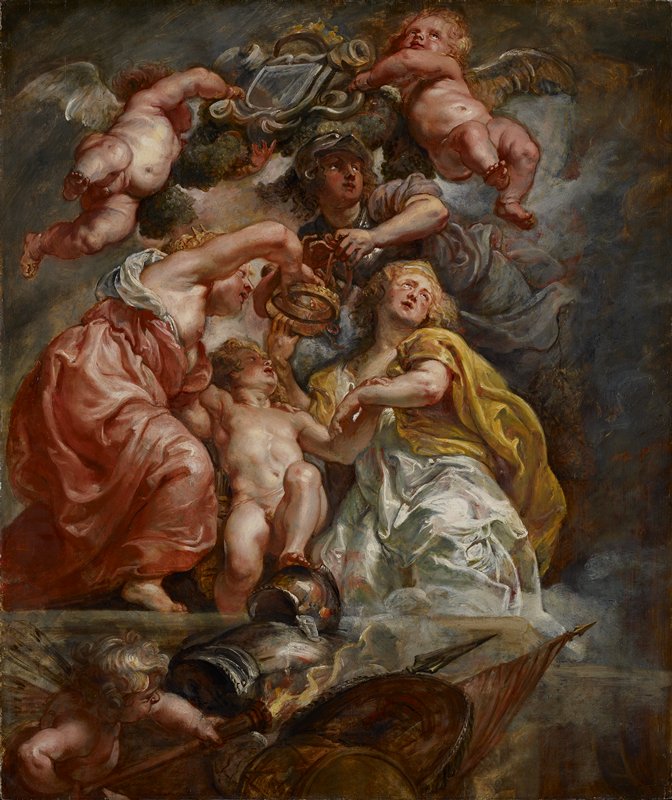
Minerve protégeant la Paix de Mars ou Paix et Guerre est un tableau de Pierre Paul Rubens. Il le réalisa à Londres entre 1629 et 1630, lors d'une mission diplomatique des Pays-Bas espagnols auprès de Charles Ier d'Angleterre. Il est conservé à la National Gallery de Londres.
Cette peinture mythologique montre Minerve (déesse de la guerre, de la sagesse et de l'artisanat) combattant Mars, avec une figure nue de la Paix au centre.
Notice
- Numéro d’inventaire
- NG46
Au catalogue
Sources
- Wikidata
- Image : National Gallery — Peter Paul Rubens · Public domain · Wikimedia Commons
Dans la vie de Peter Paul Rubens
La vie entière1627–1630
Diplomatic Missions between Spain and England
Rubens was active as a diplomat, shuttling between the courts of Spain and England in an effort to achieve peace between the Catholic Spanish Netherlands and the Protestant Dutch Republic; he also made several trips to Holland.
1628–1629
Eight Months in Madrid, Friendship with Velázquez
During an eight-month stay in Madrid, Rubens, in addition to diplomatic negotiations, executed important works for Philip IV, studied and copied Titian anew, and became friends with the court painter Diego Velázquez.
1629 – April 1630
Diplomatic Journey to London
After a brief stay in Antwerp, Rubens traveled to London, where he remained until April 1630, continuing the peace negotiations between Spain and England.
1630
Marriage to Helena Fourment
Four years after the death of Isabella Brant, the 53-year-old Rubens married the 16-year-old Helena Fourment; she became the artist's muse and the inspiration for the sensuous figures in many of his paintings of the 1630s, including The Three Graces and The Judgment of Paris.
1630
Knighted by Charles I
King Charles I of England knighted Rubens, adding a heraldic lion to his personal coat of arms; a few months later Philip IV confirmed his knightly status.
6 décembre 1630
Married: Helena Fourment