
 Henry MooreAngleterre, 1898–1986
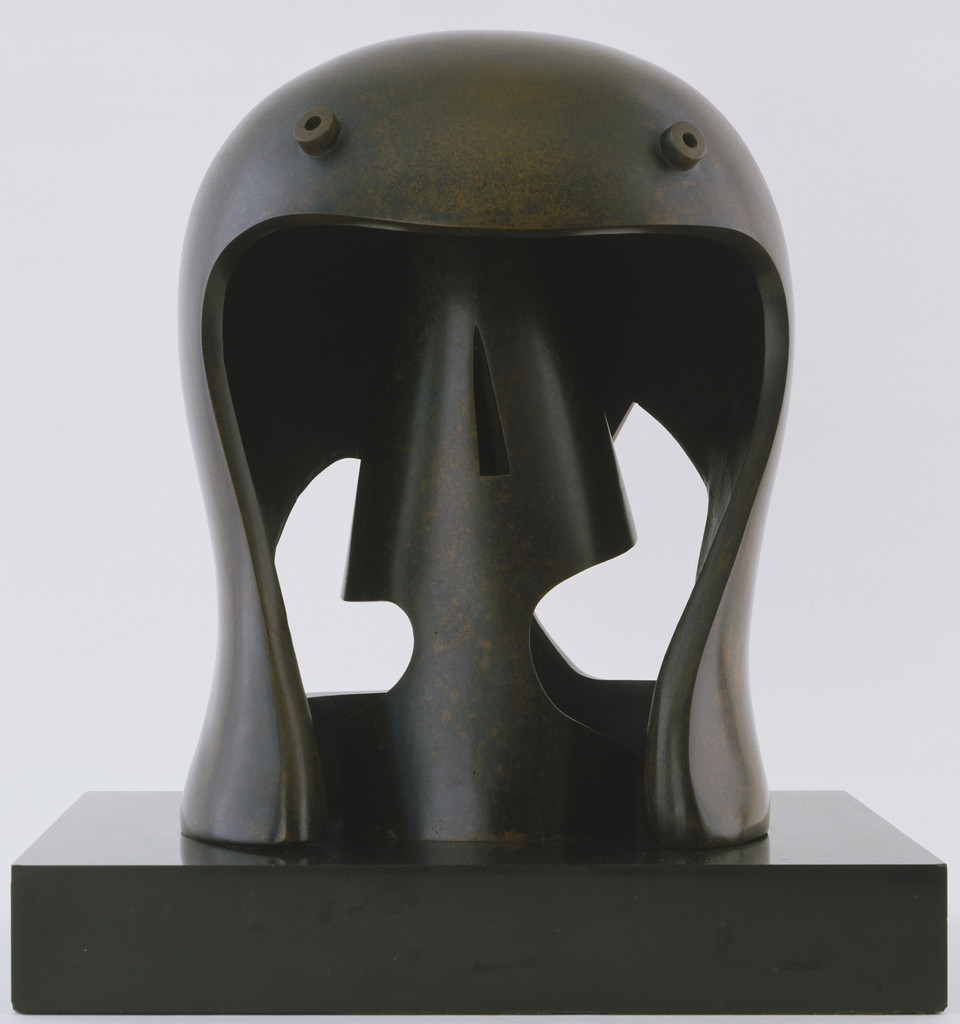
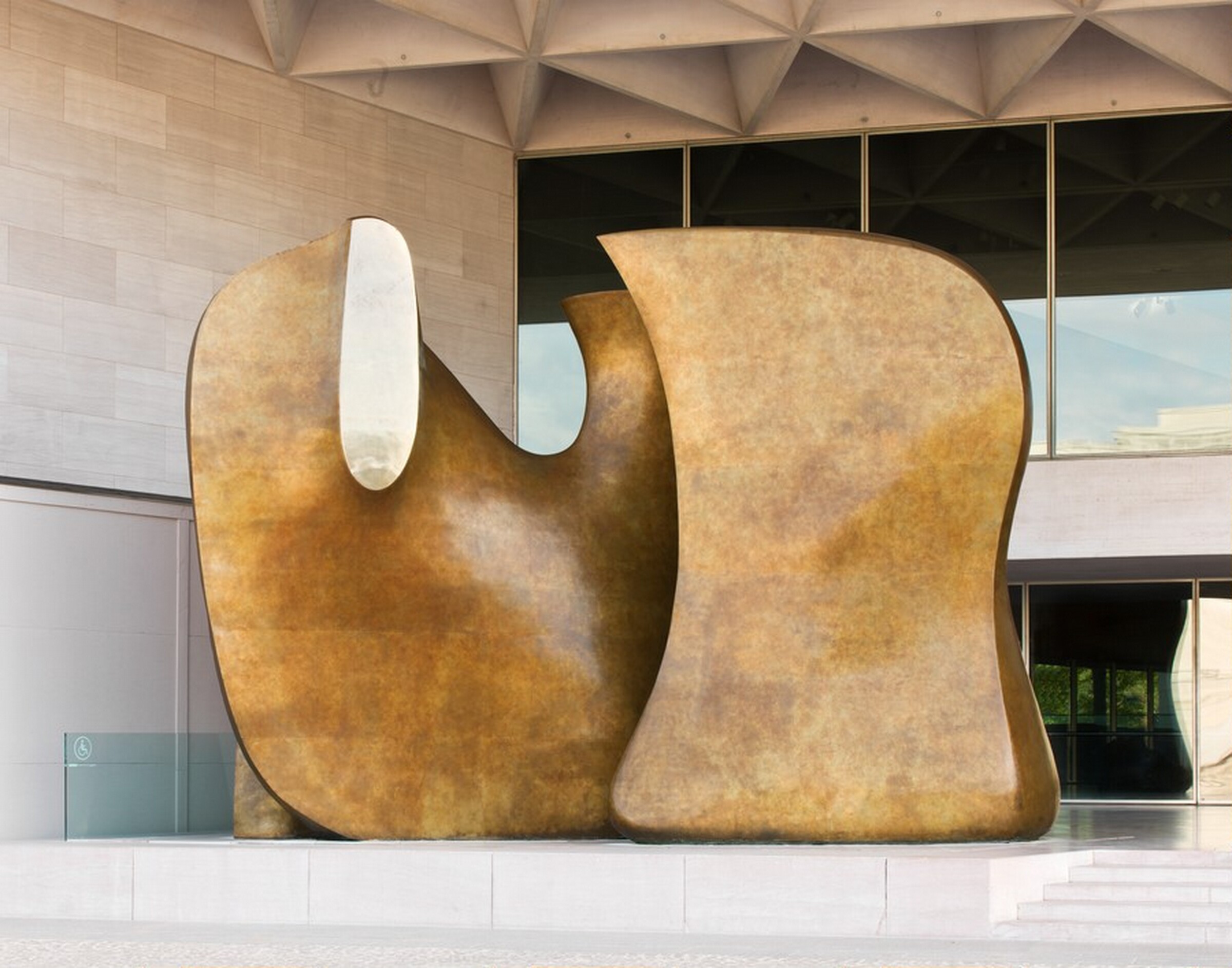
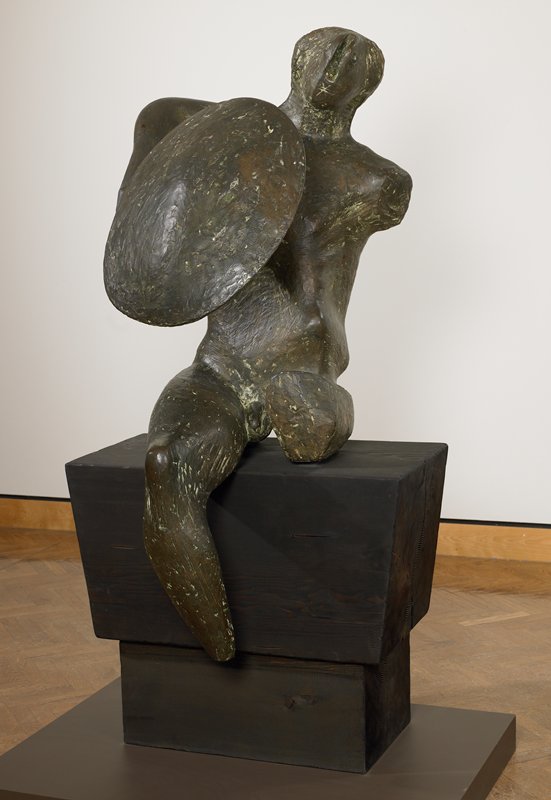
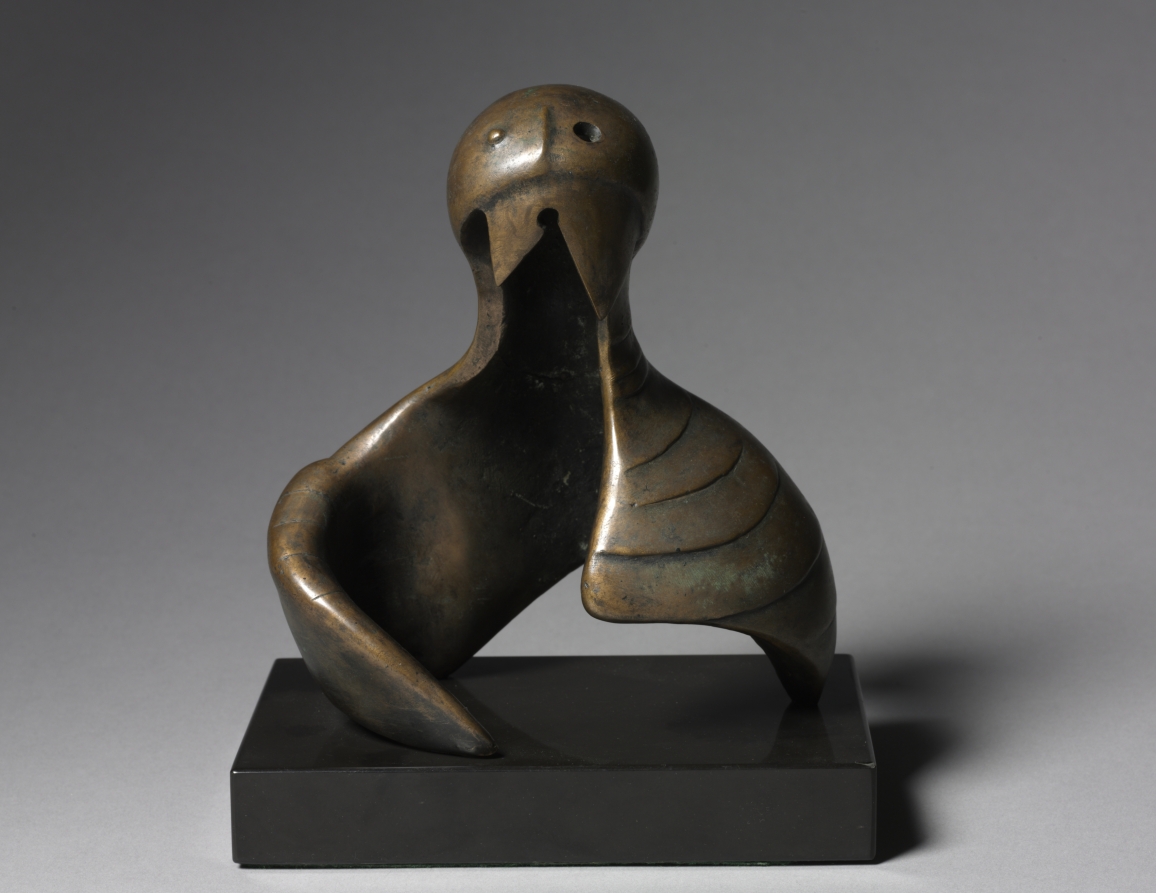
Minerva, Prometheus, and Pandora
Peut-on la contempler ?
Elle ne reçoit pas en ce moment

Washington, États-Unis
Elle appartient à la collection, mais n’est pas présentée en ce moment.
- Vérifié
- Dans cet état depuis
- Source
- Le musée
Notice
- Numéro d’inventaire
- 1964.8.1285
Ce qu’elle montre
Au catalogue
Sources
- National Gallery of Art
- Image : National Gallery of Art — © the artist or rights holder
Pendant ce temps, chez Henry Moore
La vie entière1940–1986
A bomb in Hampstead: the move to Hoglands
In September 1940 bomb shrapnel hit the Moores’ Hampstead home and they left London for Hoglands, a farmhouse in the hamlet of Perry Green near Much Hadham in Hertfordshire. It remained Moore’s home and workshop for the rest of his life; though he grew wealthy he never felt the need to move to larger premises.
1948
The Venice Biennale prize
In 1948 Moore won the International Sculpture Prize at the Venice Biennale.
1950s
Assistants at Much Hadham
In the 1950s the scale of Moore’s sculptures grew so much that he took on a growing number of assistants at Much Hadham, among them Anthony Caro, Roland Piché, Maurice Lowe and Richard Wentworth.
1951
Turns down a knighthood
In 1951 Moore declined a knighthood, feeling that it would make him seem an establishment figure and might cut him off from fellow artists with similar aims. He later accepted the Order of the Companions of Honour (1955) and the Order of Merit (1963).
1951
“Reclining Figure: Festival” at the Festival of Britain
At the 1951 Festival of Britain Moore exhibited Reclining Figure: Festival, a plaster typical of his later manner: an abstract female figure intercut with voids.
1952
“Geometry of Fear” against Moore’s ideals
At the 1952 Venice Biennale eight new British sculptors showed their Geometry of Fear works as a direct contrast to Moore’s ideals of endurance and continuity; his large bronze Double Standing Figure stood outside the British pavilion, in sharp contrast to the rougher, more angular works inside.



![Ginevra de' Benci [obverse], Leonardo da Vinci, c. 1474/1478](https://api.nga.gov/iiif/8f29e3c9-a289-4d53-abf0-31a66e9e98fa/full/!2400,2400/0/default.jpg)
![Wreath of Laurel, Palm, and Juniper with a Scroll inscribed Virtutem Forma Decorat [reverse], Leonardo da Vinci, c. 1474/1478](https://api.nga.gov/iiif/ff62e8d0-45c4-498f-ad36-6358de827e04/full/!2400,2400/0/default.jpg)


