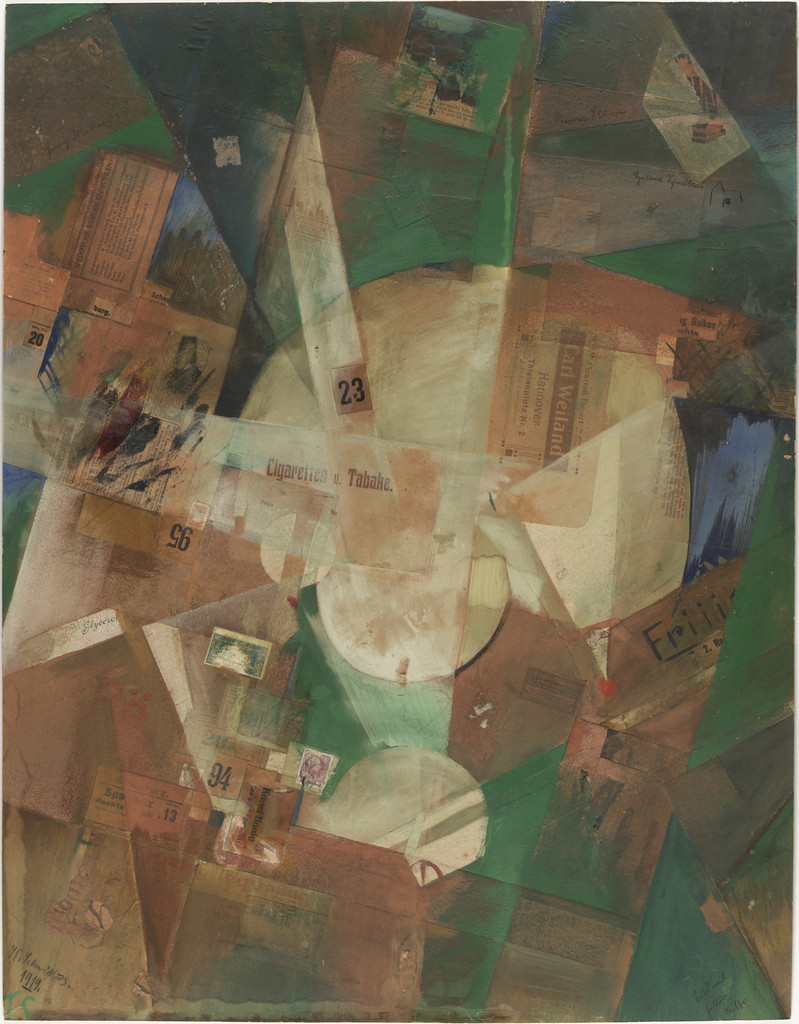
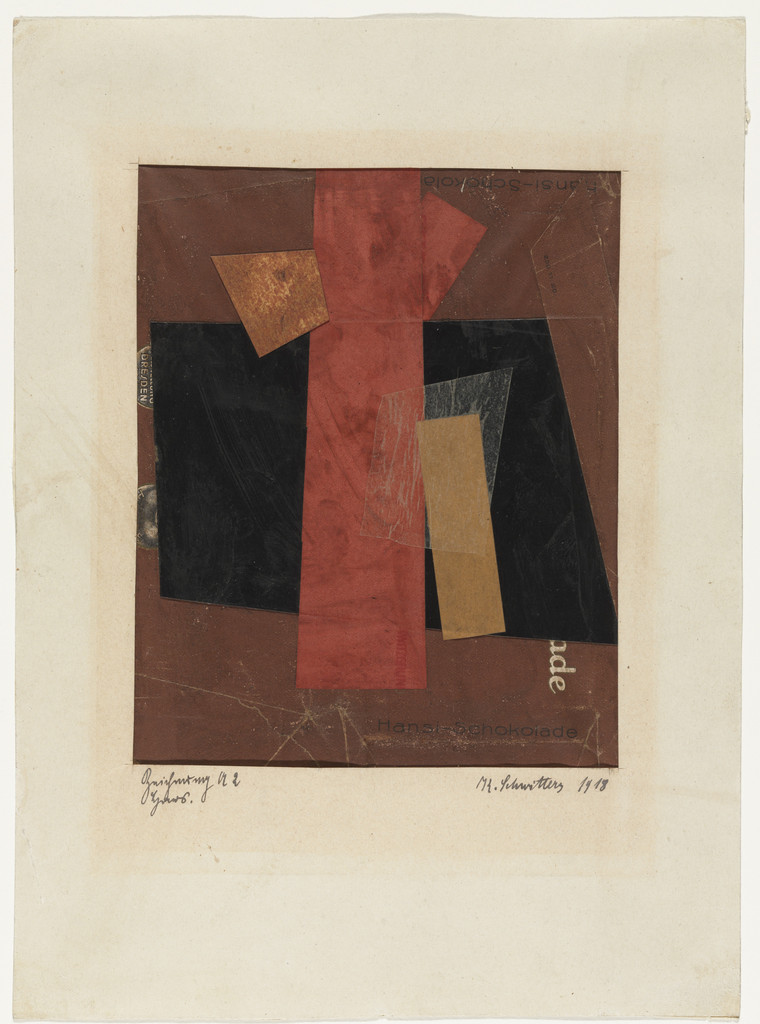
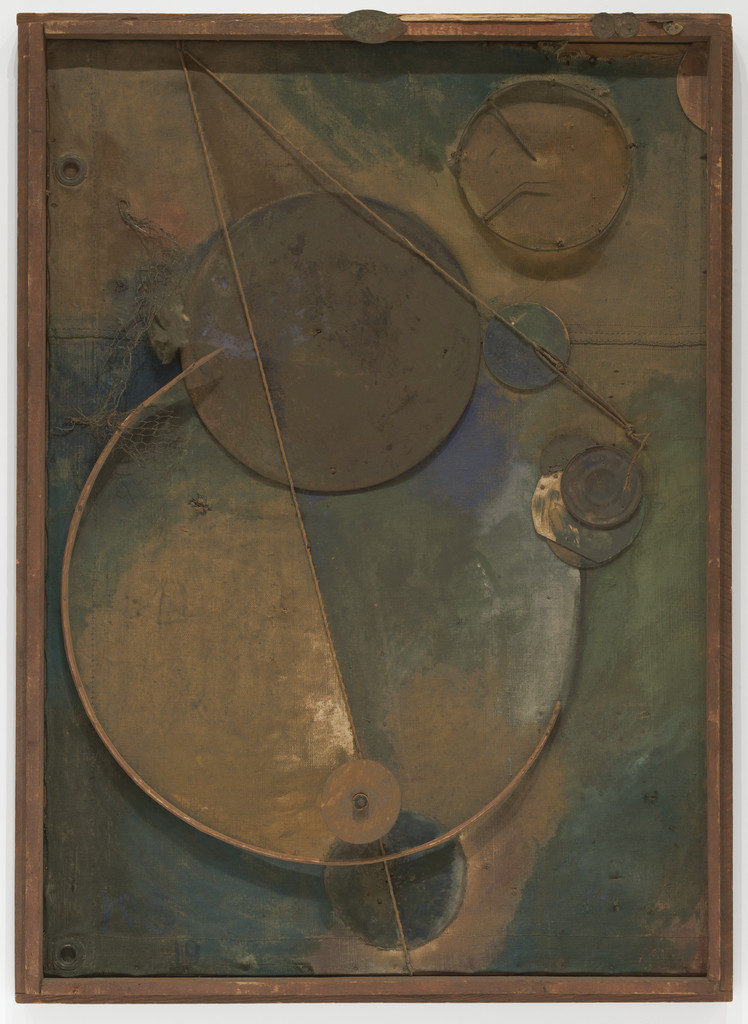
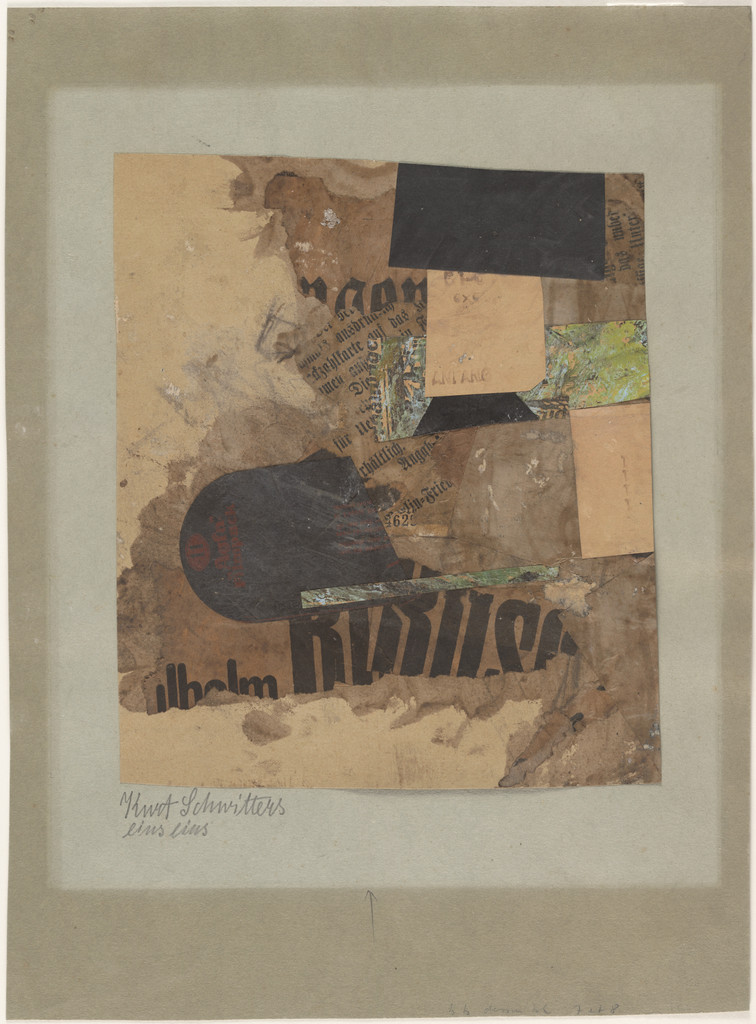
Kurt SchwittersAllemagne, 1887–1948
Merz
Peut-on la contempler ?
Elle ne reçoit pas en ce moment

Art Institute of Chicago
Chicago, États-Unis
Elle appartient à la collection, mais n’est pas présentée en ce moment.
- Vérifié
- avant-hier
- Dans cet état depuis
- 19 août 2026
- Source
- Les données de collection du musée lui-même
Notice
- Numéro d’inventaire
- 2012.92
Au catalogue
Sources
- Art Institute of Chicago: the museum's own open data · obtenue il y a 6 jours
- Image : Art Institute of Chicago — © the artist or rights holder
Pendant ce temps, chez Kurt Schwitters
La vie entière1919–1920
From friendship to a quarrel with Huelsenbeck
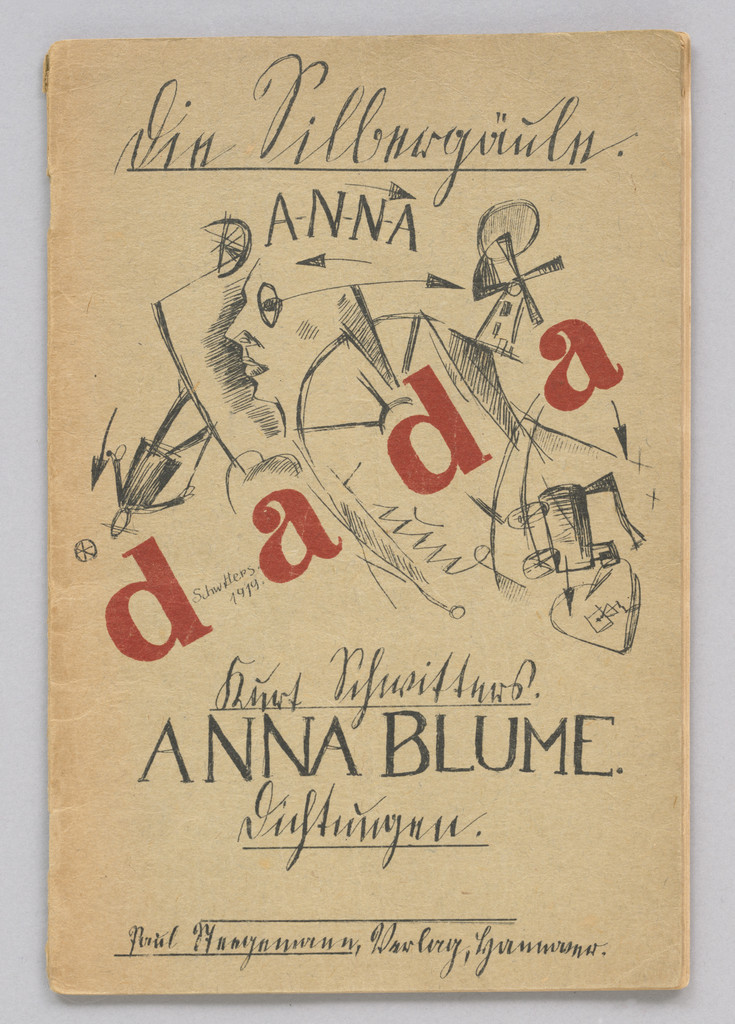
When they first meet in 1919, Richard Huelsenbeck is enthusiastic about Schwitters’s work and promises his help, while Schwitters finds an outlet for Huelsenbeck’s Dada publications; by mid-1920 the two fall out — either over the success of the poem ‘An Anna Blume’, which Huelsenbeck thought un-Dadaist, or over quarrels about Schwitters’s contribution to ‘Dadaco’, a Dada atlas Huelsenbeck was editing.
from 1920
His work is regularly shown in the United States
Thanks to his lifelong patron and friend Katherine Dreier, his work is exhibited regularly in the United States from 1920 onwards.
1920s
Lecture and recital tours across Europe
Together with other members of the international avant-garde — Jean Arp, Raoul Hausmann and Tristan Tzara — he organises and takes part in tours of provocative evening recitals and lectures in Czechoslovakia, the Netherlands and Germany.
1922–1923
Dada evenings in the Netherlands with Van Doesburg
In 1922 Theo van Doesburg organises Dada performances in Amsterdam, Leiden, Utrecht and The Hague: the Dadaists he invites decline, and the programme is carried by Theo van Doesburg, Nelly van Doesburg (performing as Petrò van Doesburg), Schwitters and sometimes Vilmos Huszár. Schwitters’s solo evening takes place on 13 April 1923 in Drachten, where he later stays often with the local painter Thijs Rinsema and makes collages, probably together with him.
1923–1932
Publishes the periodical ‘Merz’
The periodical appears from 1923 to 1932, each issue devoted to a central theme: no. 5 (1923) is a portfolio of prints by Jean Arp, and double issue 8/9 (1924) is edited and typeset by El Lissitzky, whose friendship proves particularly influential and brings Schwitters’s pictures closer to Constructivism. In all, 21 issues appeared; by numbering, the last is no. 24.
after 1924
Runs the advertising agency Merzwerbe
After the demise of the Der Sturm gallery in 1924 he runs an advertising agency, Merzwerbe, whose clients include Pelikan inks and Bahlsen biscuits. Designs, test prints and proof sheets from these jobs often crop up in his Merz pictures.