ART WIKI33 040 en salle
CarteCollectionArtistesMuséesExpositionsJournal
Connexion

ART WIKI

Où est accroché le chef-d’œuvre, et quand on vous laisse entrer.

Collections : Art Institute of Chicago, Cleveland Museum of Art, Galerie Tretiakov, Hirshhorn Museum and Sculpture Garden, J. Paul Getty Museum, Metropolitan Museum of Art, Minneapolis Institute of Art, Musée de l'Ermitage, Musée des Beaux-Arts Pouchkine, Musée du Louvre, musée national d'art asiatique, Musée russe, Musées d'Art de Harvard, Museum of Modern Art, National Gallery of Art, National Portrait Gallery, Rijksmuseum Amsterdam, Smithsonian American Art Museum, Statens Museum for Kunst, Victoria and Albert Museum, Villa Getty, Whitney Museum of American Art, Catalogue d’État du fonds muséal de Russie (274 musées), Europeana (19 musées), Wikidata (6 musées), Paris Musées (12 musées) et Joconde, la base des musées du ministère de la Culture (495 musées). Les images appartiennent à leurs ayants droit.

Rubriques

  • Carte
  • Recherche
  • Collection
  • Chefs-d’œuvre
  • Exposées en ce moment
  • Artistes

Et aussi

  • Musées et galeries
  • Expositions
  • Journal
  • D’où viennent les données
  • Confidentialité et cookies
AccueilCarteCatalogue
  1. Collection/
  2. Victoria and Albert Museum/
  3. Meditation
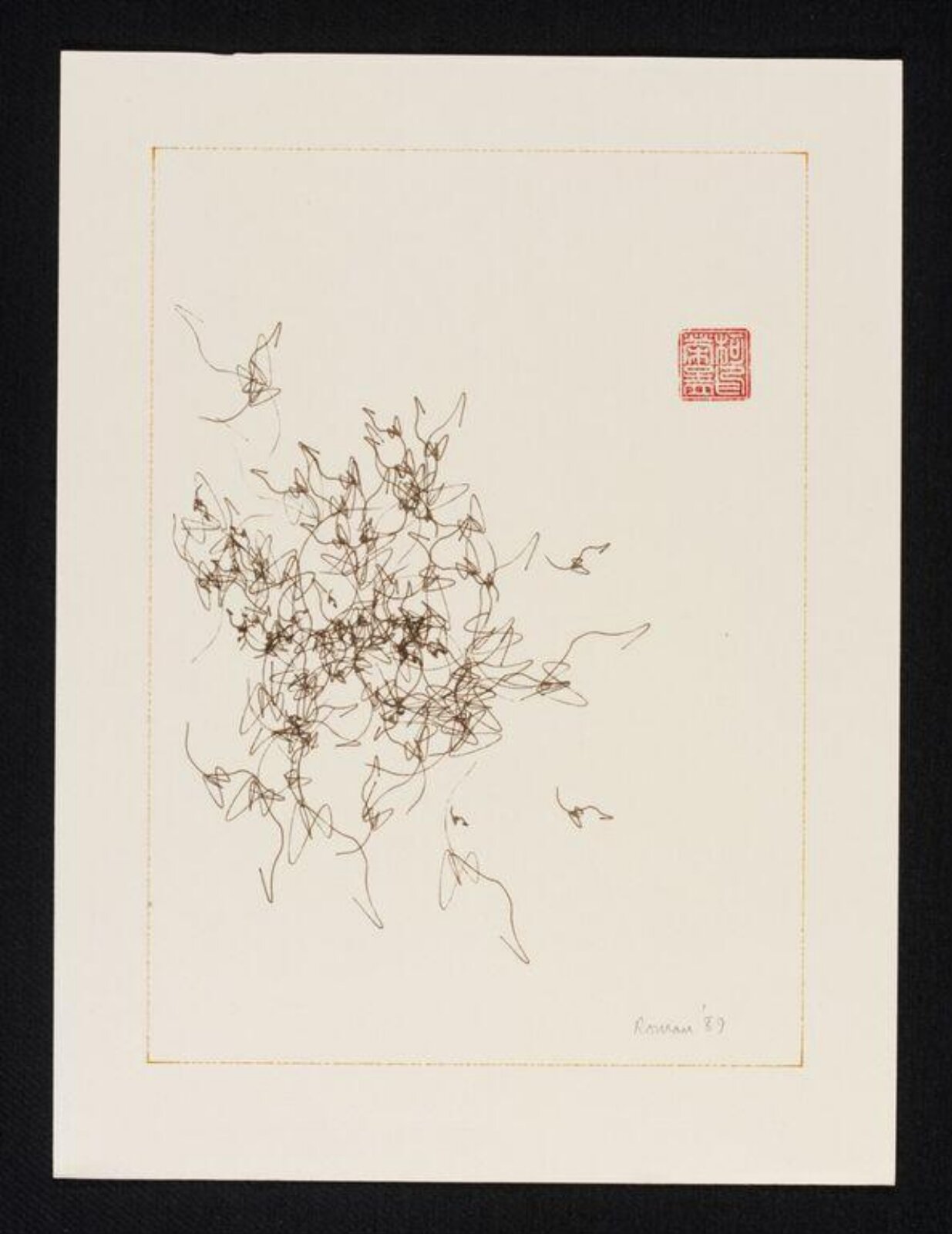
Meditation, Roman Verostko, 1989
RRoman VerostkoÉtats-Unis

Meditation

1989 · Drawing

Peut-on la contempler ?

Elle ne reçoit pas en ce moment

Victoria and Albert Museum

Londres, Royaume-Uni

Elle appartient à la collection, mais n’est pas présentée en ce moment.

Vérifié
il y a 13 jours
Dans cet état depuis
25 sept. 2026
Source
Le musée
Sur la cartePage du musée

À propos de l’œuvre

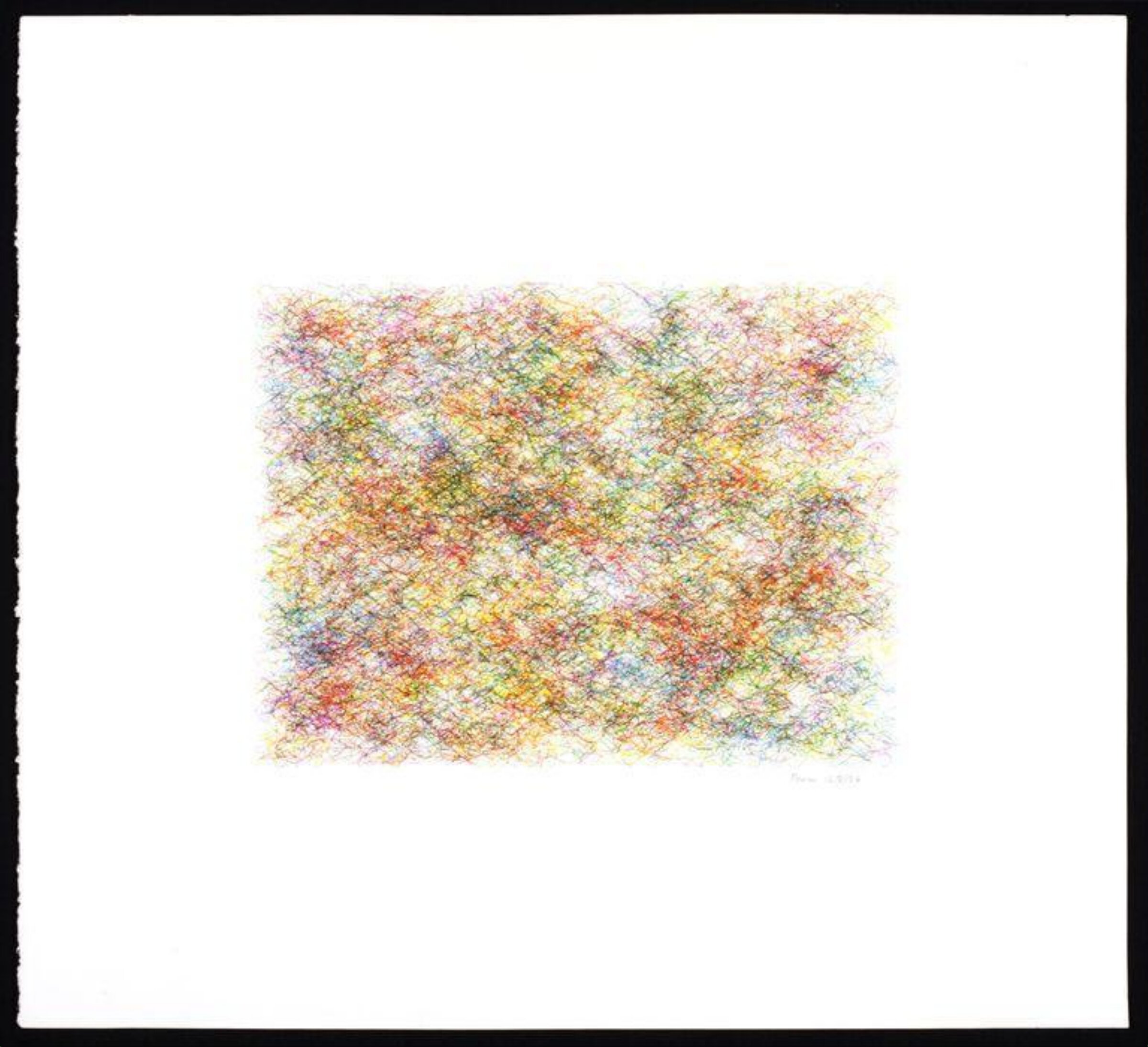
Roman Verostko, born in Western Pennsylvania in 1929, maintains an experimental studio in Minneapolis where he has developed original algorithmic procedures for creating his art. Having been active as an exhibiting artist since 1963, his earliest use of electronics consisted of synchronized audio-visual programs dating from 1967-68. Aware of the awesome power of algorithmic procedure he began experimenting with code and exhibited his first coded art programs in the early 1980's. In 1987 he modified his software with interactive routines to drive paint brushes mounted on a pen plotter’s drawing arm, (see references).

Lire la suite

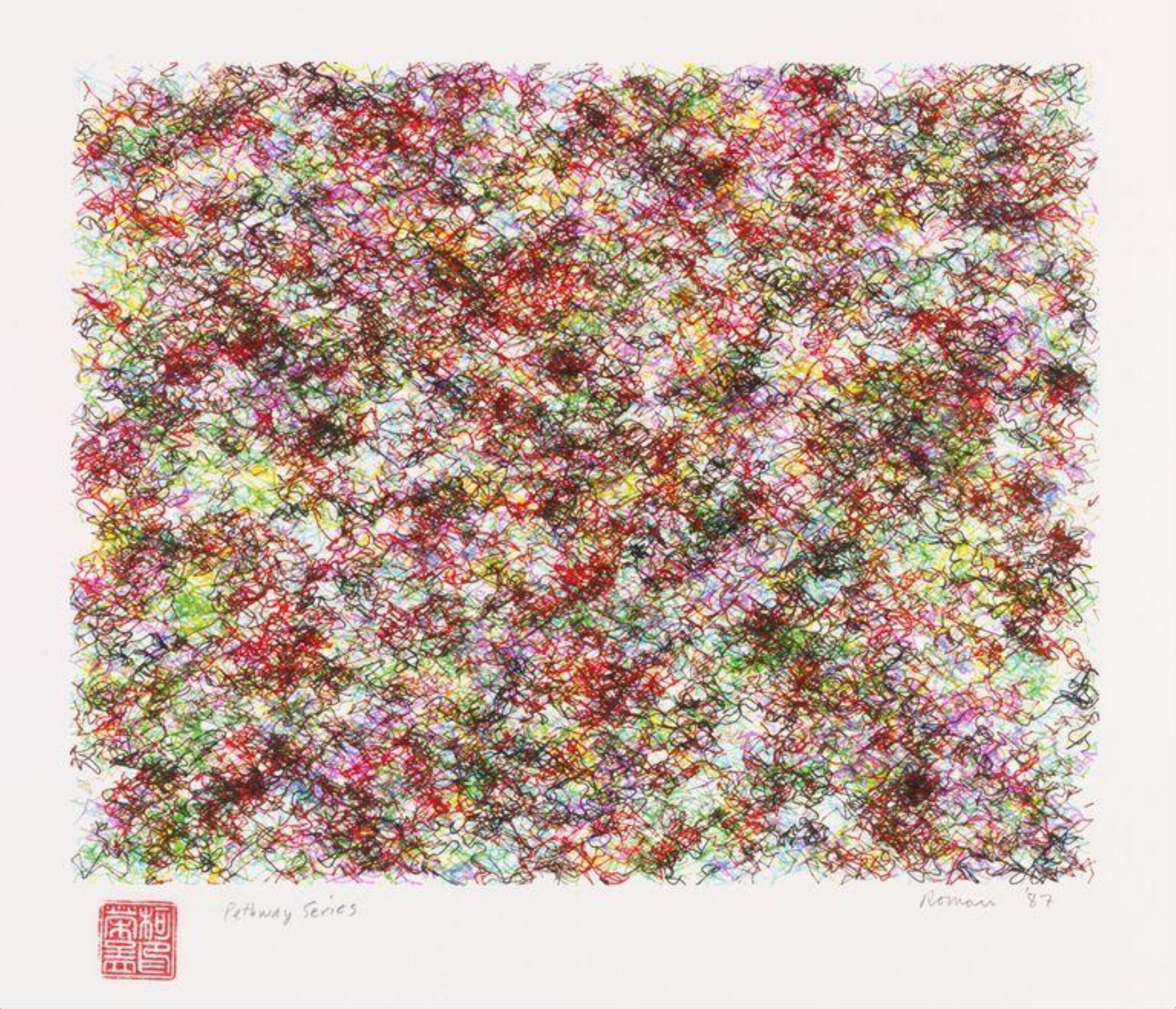
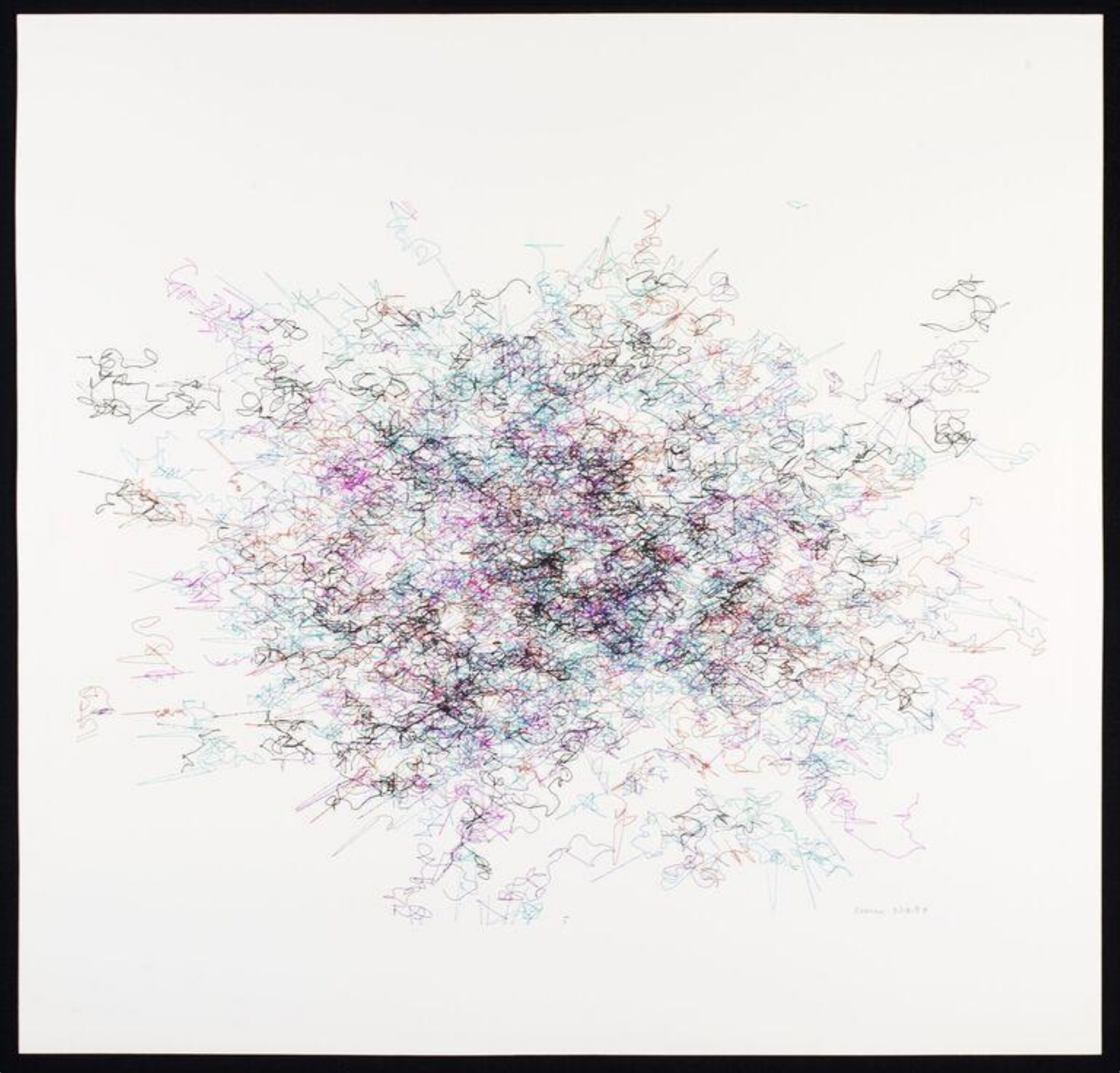
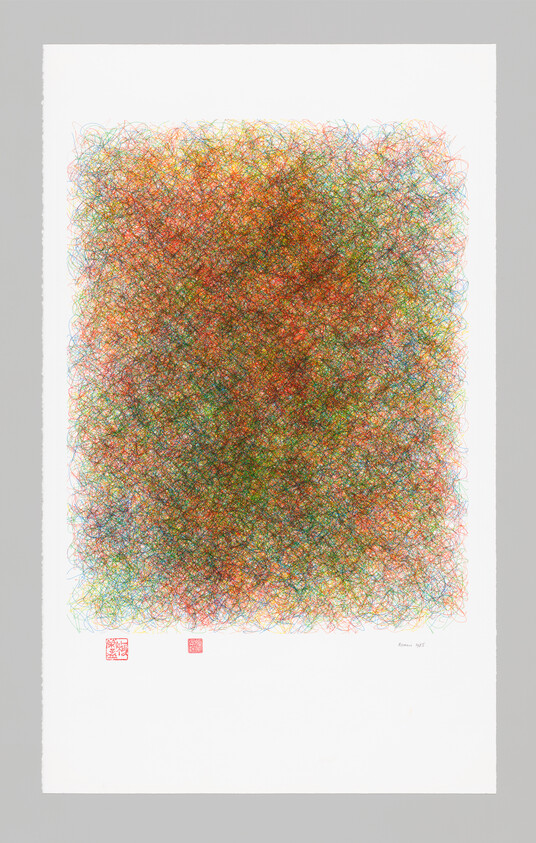
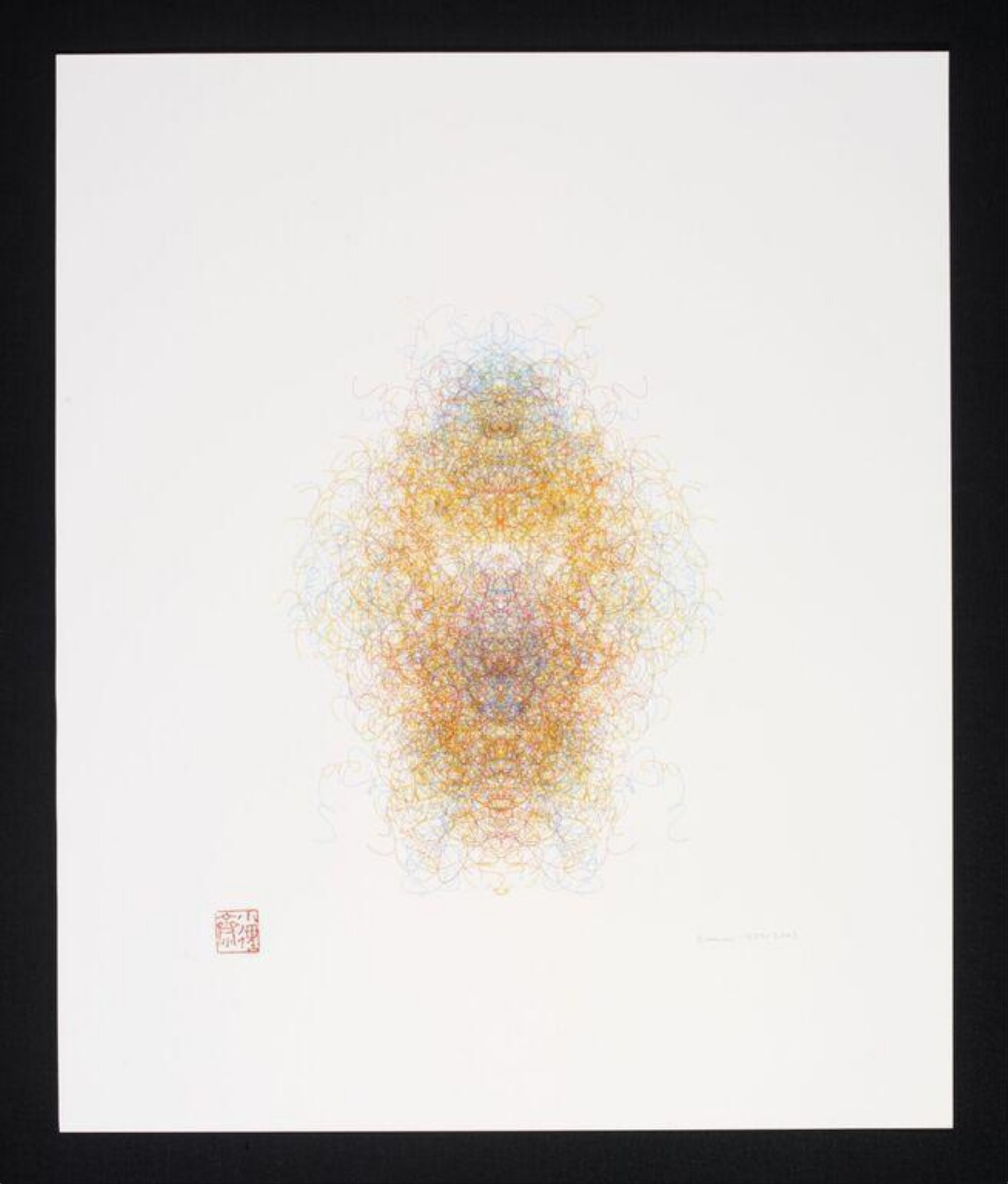
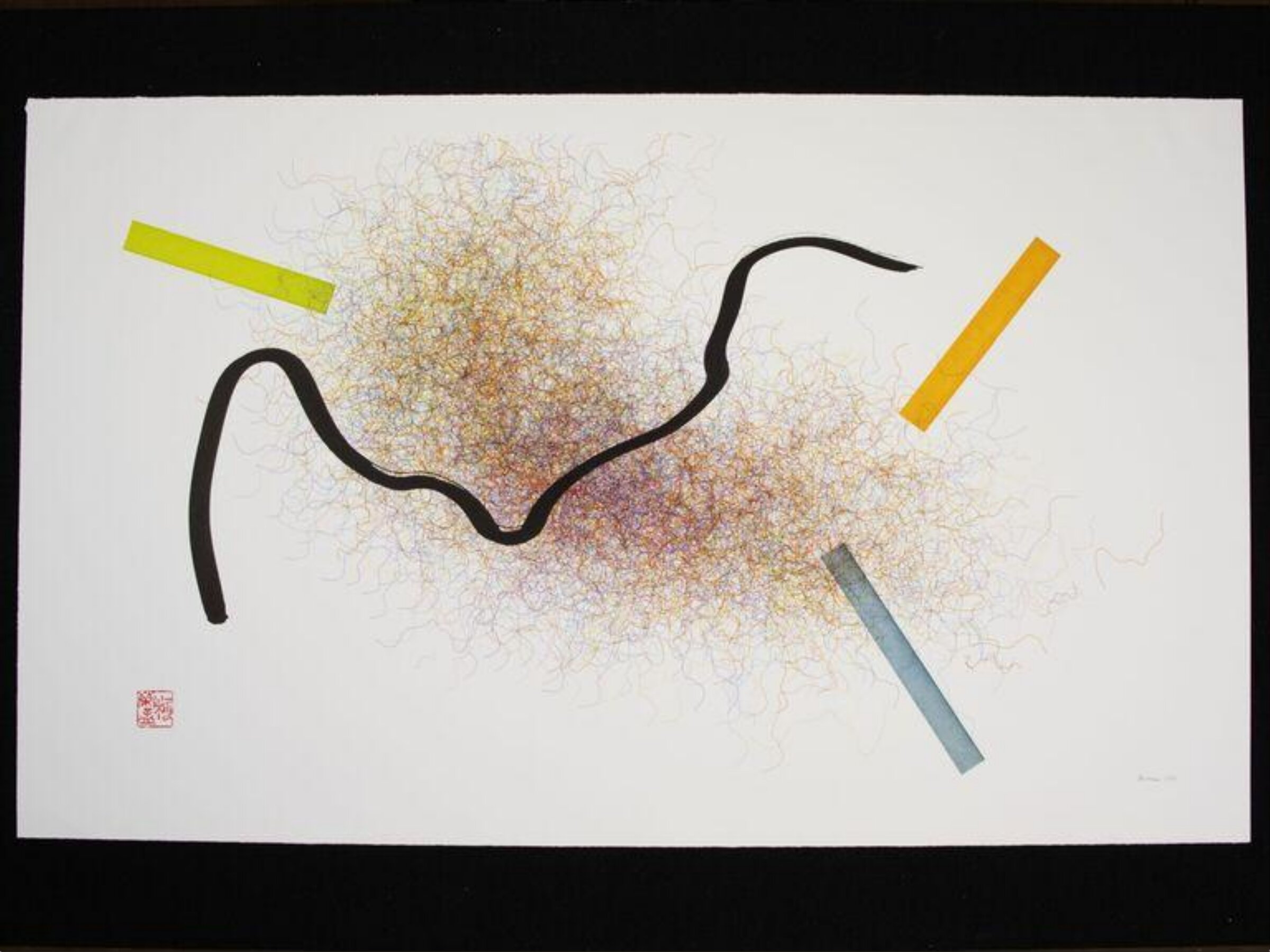
This work is an original drawing which is "one-of-kind". Each line was drawn on a plotter following the instructions given by Roman's program, Hodos. For this special edition, marking the opening of 'Pathways' at Honeywell, Roman prepared a data file to control the parameters. Following a number of experimental runs with program refinements, he made a final setting. The plotter worked around the clock for several days yielding a remarkably rich and varied series of drawings.

The red seal imprint was hand stamped with one of several seals that were made for the artist when he taught in China. The Chinese name, Ke Rong-Meng, was given to the artist by his Chinese teacher. Many of the drawings in this series show a strong structural use of the void in relation to a cluster of drawing activity. This and other features of this series, have an oriental flavour which the artist has consciously used in designing the piece. For the artist this series has been a 'meditation'.

This kind of edition, with each drawing having a unique form, demonstrates how "software art" uses the computer as an information enriched medium. It also clearly demonstrates how "software art" works in a way analogous to "genotype". Roman's software, Hodos, is a code carrying the information necessary to generate a form. While the works realised with this code bear a strong family resemblance, each one has unique, individual qualities. This is why this kind of computer assisted work is called "epigenetic" - its processes are analogous to biological epigenesis. This should not surprise us since biological analogues commonly crop up in relation to software as in the recent spread of software "virus".

(cit.: artist's own statement accompanying the work, Jan 13, 1989, Minneapolis)

Victoria and Albert Museum

Notice

Numéro d’inventaire
E.1089-2008

Au catalogue

Dessins et aquarellesArt contemporainXXe siècleMinneapolis

Sources

  • Victoria and Albert Museum
  • Image : Victoria and Albert Museum — © Victoria and Albert Museum, London
Autres œuvres : Roman Verostko

Toutes les œuvres
Untitled, Roman Verostko, 1967

Untitled

1967 · Non exposée · Victoria and Albert Museum

Untitled, Series: 20 Pathway, Roman Verostko, 1987

Untitled, Series: 20 Pathway

1987 · Non exposée · Whitney Museum of American Art

Untitled, Roman Verostko, 1987

Untitled

1987 · Non exposée · Victoria and Albert Museum

Pathway Series, Roman Verostko, 1987

Pathway Series

1987 · Non exposée · Victoria and Albert Museum

Untitled, Roman Verostko, 1987

Untitled

1987 · Non exposée · Victoria and Albert Museum

Untitled, Series: 11 Pathway, Roman Verostko, 1988

Untitled, Series: 11 Pathway

1988 · Non exposée · Whitney Museum of American Art

Gaia Series, Roman Verostko, 1989-2003

Gaia Series

1989-2003 · Non exposée · Victoria and Albert Museum

Pathway Series, Bird 2, Roman Verostko, 1990

Pathway Series, Bird 2

1990 · Non exposée · Victoria and Albert Museum

Sous le même toit : Victoria and Albert Museum

Page du musée
Bird of Paradise, Hashimoto Chitaka, 2026

Hashimoto Chitaka

Bird of Paradise, 2026

Torsion 2, Taruma Shoko, 2025

Taruma Shoko

Torsion 2, 2025

Fu, Someya Satoshi, 2025

Someya Satoshi

Fu, 2025

Bow Before the Curtain Falls, 2024

Bow Before the Curtain Falls, 2024

Summer, 2024

Summer, 2024

Red Flow, Ishizuka Genta, 2024

Ishizuka Genta

Red Flow, 2024

3D replica of Michelangelo's Prisoner (4117-1854), Factum Arte, 2024

Factum Arte

3D replica of Michelangelo's Prisoner (4117-1854), 2024

Sculpture, ‘Co-Existence – the Man and the Monkey’, Zhao Lin, 2024

Zhao Lin

Sculpture, ‘Co-Existence – the Man and the Monkey’, 2024