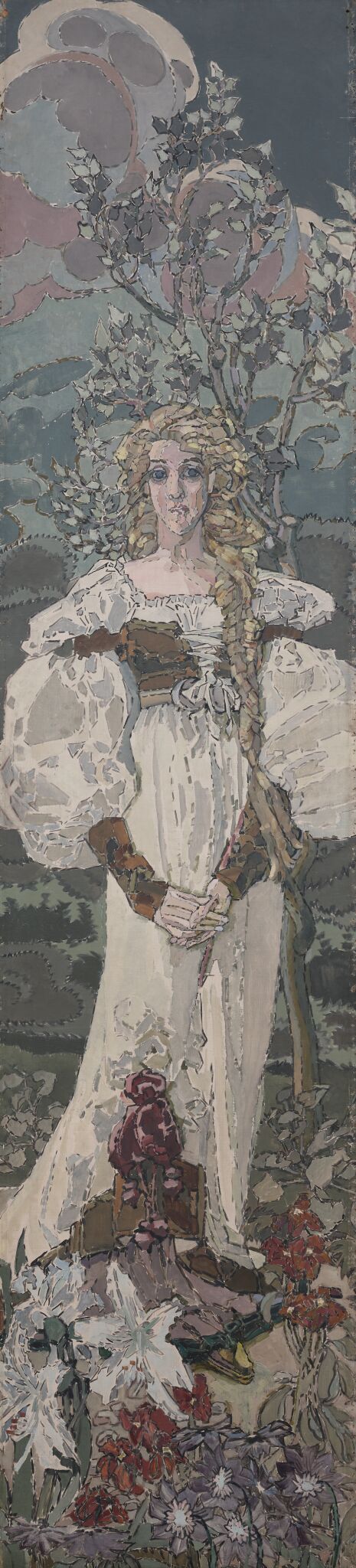
 Mikhail Vrubel1856–1910
Маргарита
Peut-on la contempler ?
Inconnu

Moscou, Russie
Le propriétaire est connu ; on ignore si l’œuvre est exposée aujourd’hui.
- Source
- Le musée
À propos du tableau
Selon le musée — en russe
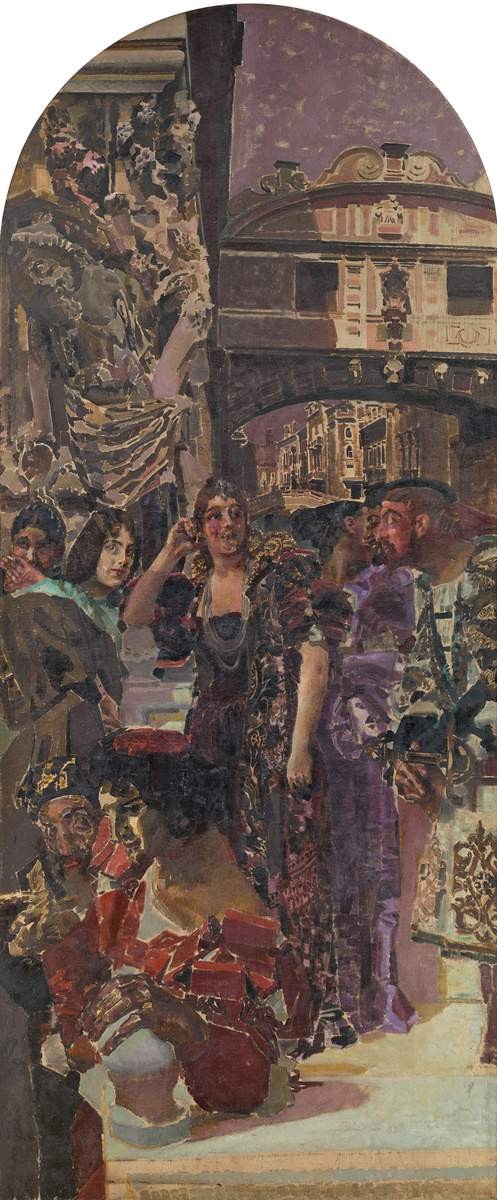
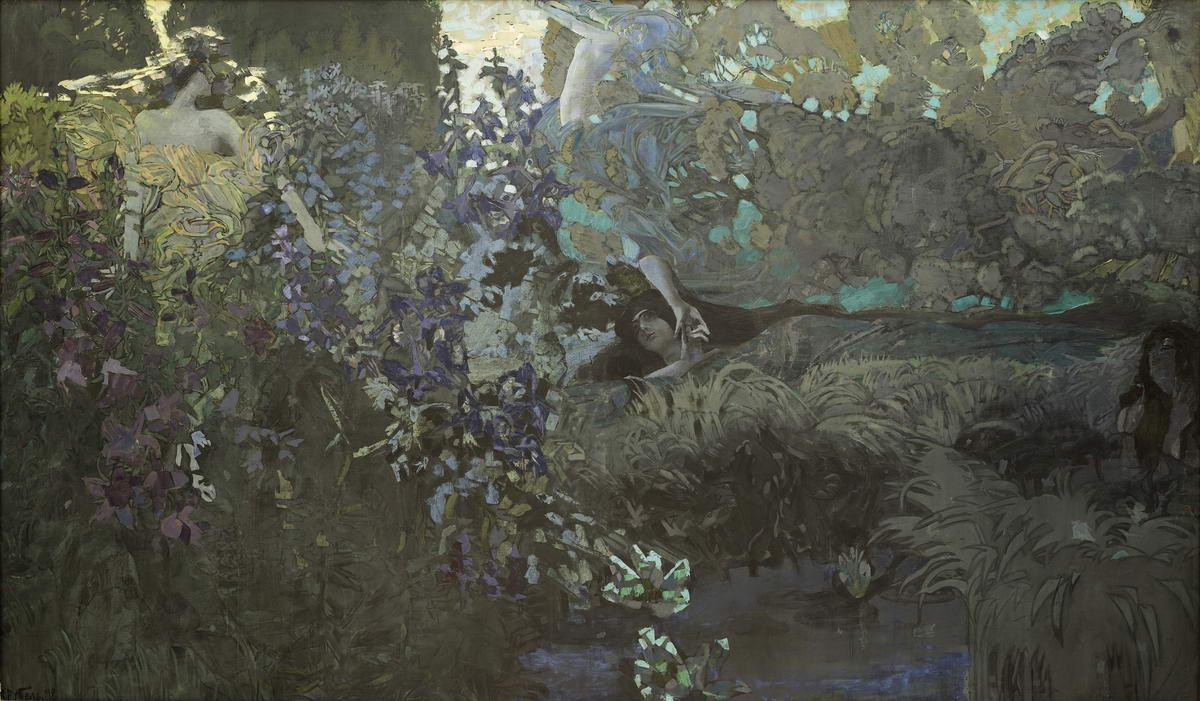
Врубель написал панно «Маргарита» в самом конце XIX века. Большая узкая картина вставлялась в деревянную обшивку стен готического кабинета в доме купца Алексея Викуловича Морозова во Введенском, ныне Подсосенском переулке. Знаменитый архитектор Федор Осипович Шехтель, оформляя заново особняк, принадлежавший еще отцу Морозова, заказал Врубелю пять панно на тему трагедии Гёте «Фауст» и одноименной оперы Шарля Гуно. В залах Третьяковской галереи «Маргарита» экспонируется среди трех других панно Врубеля, украшавших тот же кабинет. Пятое панно «Фауст и Маргарита в саду» не вошло в оформление кабинета, и его нынешнее местонахождение неизвестно.
Lire plus
Для эпохи символизма великий писатель и философ XVIII века Гёте стал культовой фигурой. Завораживающий, прекрасный и опасный мир далекого прошлого, столь отличный от прозаической современной действительности, неодолимо притягивал символистов. В драме «Фауст», основанной на немецкой легенде, Гете повествует о трагическом разрыве между безграничными стремлениями человека и его ограниченными возможностями. Молодой ученый Фауст жаждет все знать, все понять и все почувствовать. Заключив договор с дьяволом, назвавшимся Мефистофелем, Фауст переживает множество приключений и встречает свою любовь – прекрасную и чистую Маргариту. Но встреча, подстроенная дьяволом, не приносит влюбленным счастья. Фауст случайно убивает мать и брата Маргариты, а опозоренная девушка погибает в тюрьме. Символизируя ограниченность человека и трагическую власть неведомых сил, Врубель активно использует контуры, то и дело пытается их разорвать, но они возникают вновь.
На картине Врубеля Маргарита подавлена тяжелыми предчувствиями, печально глядит на нее Фауст с соседнего полотна. Панно «Маргарита» и «Фауст» висели на одной стене кабинета Морозова, разделенные аркой - проходом на второй этаж. Под ней вдоль стены располагалась лестница, поднимавшаяся от подножия картины «Фауст» к панно, изображавшему Маргариту. Чтобы освободить место для ступенек, Врубель написал Маргариту на укороченном холсте.
Образ Маргариты был близок Врубелю. В том же году, когда он создавал панно для особняка Морозова, Врубель женился на замечательной певице Надежде Ивановне Забелла. Драматично и блестяще исполняла она партию Маргариты в опере Гуно. Ее изящное и необычное лицо изображено на многих шедеврах Врубеля, в их числе «Царевна Лебедь», выставленная в том же зале музея.
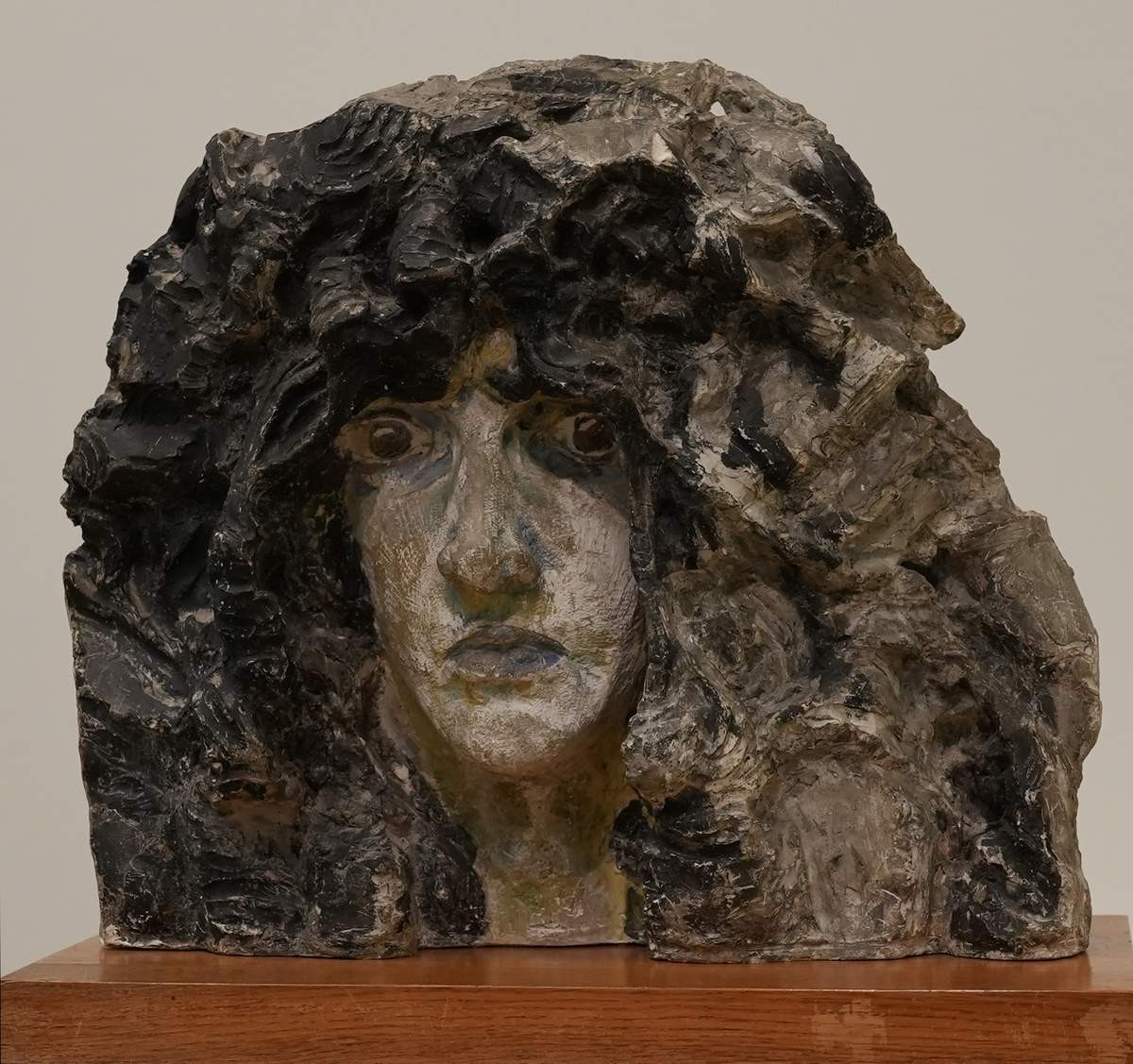
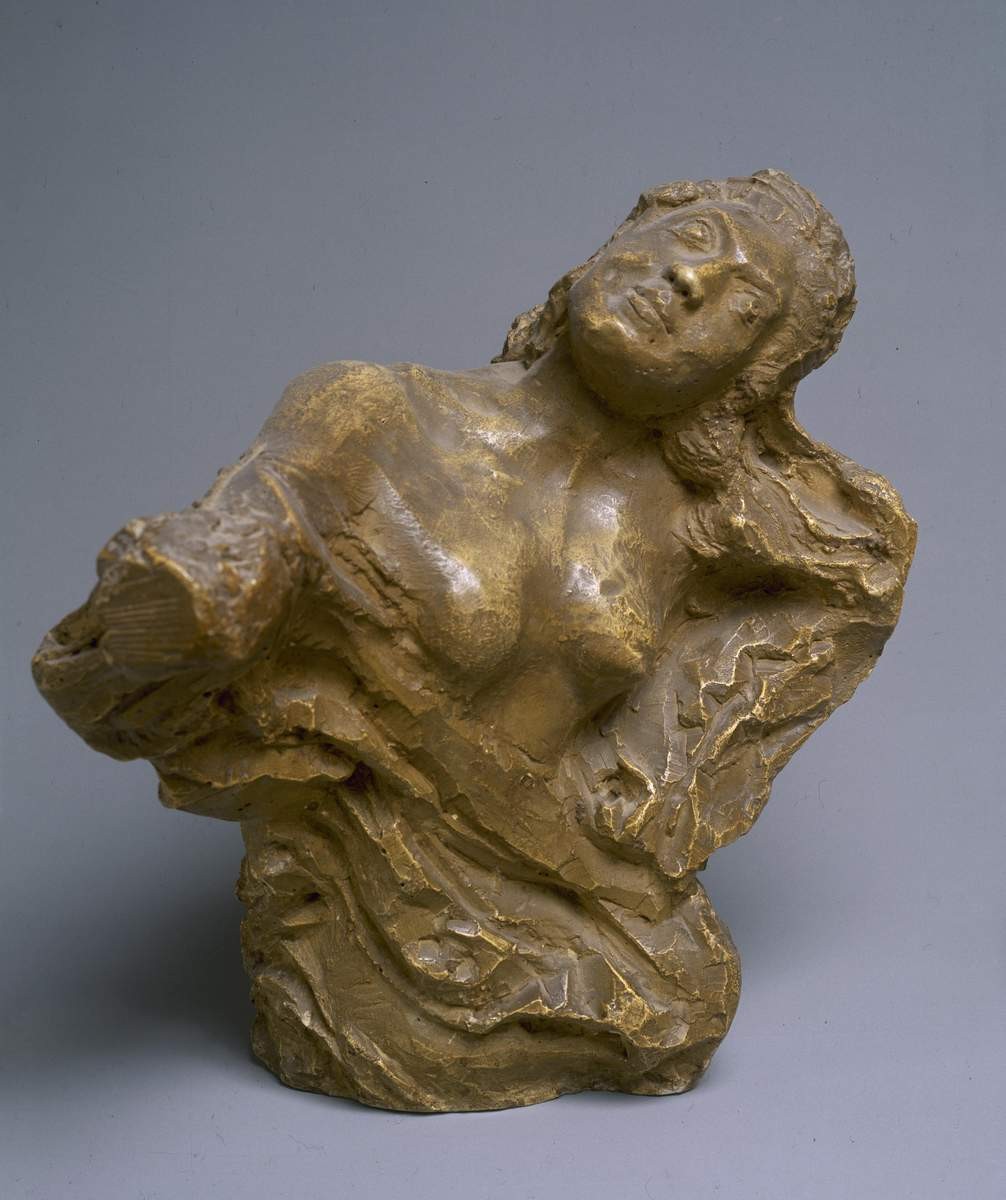
На картине Врубеля Маргарита стоит в характерной позе певицы, ожидающей начала арии, к ее ногам брошены роскошные цветы. Фон картины напоминает театральную декорацию, выполненную в стиле модерн: плоские пятна пастельных и пепельных тонов окружены прихотливыми тягучими контурами, создавая декоративную плоскость. Гений Врубеля не вмещался в рамки одного стиля, однако художник сыграл немалую роль в рождении стиля модерн, тесно связанного с архитектурой и интерьерами. Врубелю доводилось оформлять интерьеры не только в качестве живописца: он создавал и витражи, и декоративную скульптуру, показанную в этом же зале.
Galerie Tretiakov
Notice
- Numéro d’inventaire
- 10990
Au catalogue
Sources
- Galerie Tretiakov
- Image : Galerie Tretiakov — © State Tretyakov Gallery
Pendant ce temps, chez Mikhail Vrubel
La vie entièreearly 1896
Meeting Nadezhda Zabela
In St Petersburg Vrubel stepped in for the ailing Korovin as designer of Humperdinck’s opera “Hansel and Gretel”, which Mamontov was financing, and at a rehearsal he first heard, then saw, the singer of Gretel — Nadezhda Zabela. Rushing up to her in the interval with the cry “What a lovely voice!”, he proposed almost on the day they met, and later told his sister that had she refused, he would have killed himself on the spot.
22 May 1896
The Academy rejects his Nizhny Novgorod panels
Mamontov secured Vrubel a commission for two huge panels for the art section of the All-Russian Exhibition — “Mikula Selyaninovich” and “The Princess of the Dream”, a hundred square metres in three months. But the academician Albert Benois, in charge of the pavilion, demanded sketches, a telegram went to St Petersburg — “Vrubel’s panels are monstrous, they must be removed” — the Academy’s commission ruled them unfit to show, and on 22 May the works were carried out of the pavilion.
1896
Mamontov’s pavilion for the “rejected” panels
Mamontov bought both panels for 5,000 roubles: Polenov and Korovin finished “Mikula”, Vrubel completed “The Princess of the Dream” in a shed at the Abramtsevo pottery, and in time for the imperial couple’s visit on 15–17 July the canvases were shown in a specially built pavilion signposted “Exhibition of decorative panels by the artist M. A. Vrubel, rejected by the jury of the Imperial Academy of Arts” — the words naming the Academy’s jury soon had to be painted over. A newspaper battle followed: Nikolai Garin-Mikhailovsky offered the first balanced analysis of Vrubel’s art, while Maxim Gorky mocked his panels in five articles.
28 July 1896
Marries Nadezhda Zabela in Geneva
Meeting Zabela’s family went badly — the age gap troubled them (he was 40, she 28), and the bride herself knew that Vrubel drank and squandered money — but on 28 July the couple were married in the Cathedral of the Exaltation of the Holy Cross in Geneva. They spent their honeymoon in a guesthouse in Lucerne, where Vrubel went on working on panels for A. V. Morozov’s Gothic study: by the wedding he was literally penniless and had walked from the station to his bride’s.
summer 1898
First symptoms of illness
During a summer stay in Ukraine the first symptoms of his future illness appeared: his migraines grew so severe that he took phenacetin in huge quantities — up to 25 grains or more, according to his sister-in-law. A previously unknown irritability set in too, especially when someone disagreed with his opinion of a work of art.
1898
“Morning” at Diaghilev’s exhibition
In St Petersburg Ilya Repin advised Vrubel not to destroy his panel “Morning”, which a client had turned down, but to show it at an exhibition. So the canvas went into Sergei Diaghilev’s exhibition of Russian and Finnish artists at the museum of the Stieglitz School.