ART WIKI32 963 en salle
CarteCollectionArtistesMuséesExpositionsJournal
Connexion

ART WIKI

Où est accroché le chef-d’œuvre, et quand on vous laisse entrer.

Collections : Art Institute of Chicago, Cleveland Museum of Art, Galerie Tretiakov, Hirshhorn Museum and Sculpture Garden, J. Paul Getty Museum, Metropolitan Museum of Art, Minneapolis Institute of Art, Musée de l'Ermitage, Musée des Beaux-Arts Pouchkine, Musée du Louvre, musée national d'art asiatique, Musée russe, Musées d'Art de Harvard, Museum of Modern Art, National Gallery of Art, National Portrait Gallery, Rijksmuseum Amsterdam, Smithsonian American Art Museum, Statens Museum for Kunst, Victoria and Albert Museum, Villa Getty, Whitney Museum of American Art, Catalogue d’État du fonds muséal de Russie (274 musées), Europeana (19 musées), Wikidata (6 musées), Paris Musées (12 musées) et Joconde, la base des musées du ministère de la Culture (495 musées). Les images appartiennent à leurs ayants droit.

Rubriques

  • Carte
  • Recherche
  • Collection
  • Chefs-d’œuvre
  • Exposées en ce moment
  • Artistes

Et aussi

  • Musées et galeries
  • Expositions
  • Journal
  • D’où viennent les données
  • Confidentialité et cookies
AccueilCarteCatalogue
  1. Collection/
  2. Cleveland Museum of Art/
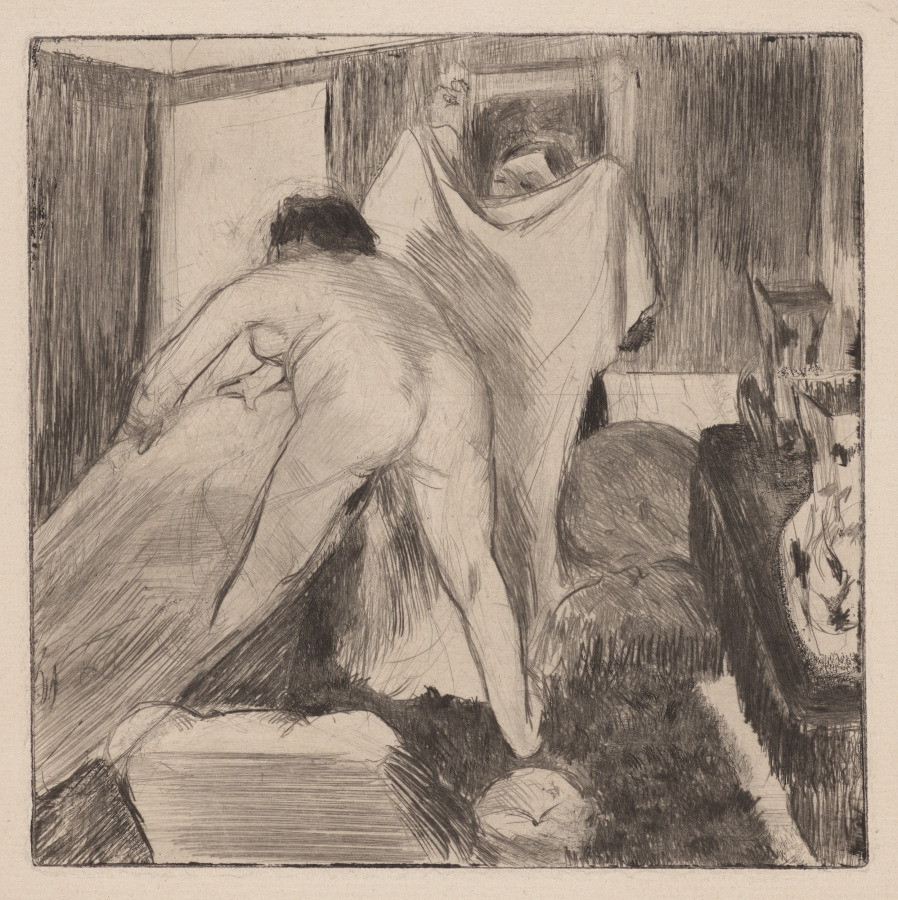
  3. Leaving the Bath
Leaving the Bath, Edgar Degas, 1879–80
Edgar Degas, portraitEdgar DegasFrance, 1834–1917

Leaving the Bath

1879–80 · Print

Peut-on la contempler ?

Elle ne reçoit pas en ce moment

Cleveland Museum of Art

Cleveland, États-Unis

Elle appartient à la collection, mais n’est pas présentée en ce moment.

Vérifié
il y a 3 jours
Dans cet état depuis
19 août 2026
Source
Le musée
Sur la cartePage du musée

À propos de l’œuvre

In Leaving the Bath, a woman is seen from behind as she awkwardly grips a tub while cautiously stepping out of it. Nearby, a maid is mostly obscured by a cloth meant to dry and warm her. Their sketchlike surroundings communicate intimacy and privacy and, in what would become a characteristic aspect of his bather imagery, Edgar Degas places the viewer in a voyeuristic perspective, with the two women unaware of our presence. The artist began to explore etching in the 1850s, registering in the print department of Paris’s Bibliothèque Nationale so that he could closely study the works of past masters such as Rembrandt van Rijn. Degas saw prints as having an important part to play in the Impressionists’ group exhibitions and displayed them alongside paintings there.

Cleveland Museum of Art

Notice

1879–80 · à 45 ans
18341917
Numéro d’inventaire
2025.198

Au catalogue

EstampesPointe sècheRéalismeImpressionnismeXIXe siècleFrance

Sources

  • Cleveland Museum of Art
  • Image : Cleveland Museum of Art — Museum open access

Pendant ce temps, chez Edgar Degas

La vie entière
  1. 1870s

    From “de Gas” back to plain “Degas”

    The archives disproved the legend of an ancient noble line: the artist's paternal ancestors were bakers, and the name “de Gas” was invented by his father, who commissioned a false genealogy. In the 1870s Edgar returned to the plain spelling, Degas.

  2. second half of the 1870s

    Pastel becomes his main medium

    Degas increasingly chose pastel, often combining it with monotype, lithography, etching or gouache. To keep the colour from darkening under ordinary fixatives he devised his own method of fixing and applied pastel in layers.

  3. 1877

    Friendship with Mary Cassatt

    Degas invited Mary Cassatt to show in the third Impressionist exhibition, having admired her portrait “Ida” at the Salon of 1874. He introduced her to pastel and engraving, while she helped him sell paintings and promoted his reputation in the United States.

  4. autumn 1879 – April 1880

    The prints journal: Degas abruptly withdraws

    In the autumn and winter of 1879–1880 Degas and Cassatt worked closely together on a prints journal; he owned a small printing press. In April 1880 Degas abruptly withdrew, and without his support the project folded.

  5. by 1880

    The end of his financial crisis

    By 1880 Degas had fully overcome his financial crisis and become a respected figure in the Paris art world; the Impressionist exhibitions, which proved commercially useful to him, helped.

  6. 1881

    “The Little Dancer of Fourteen Years” on show

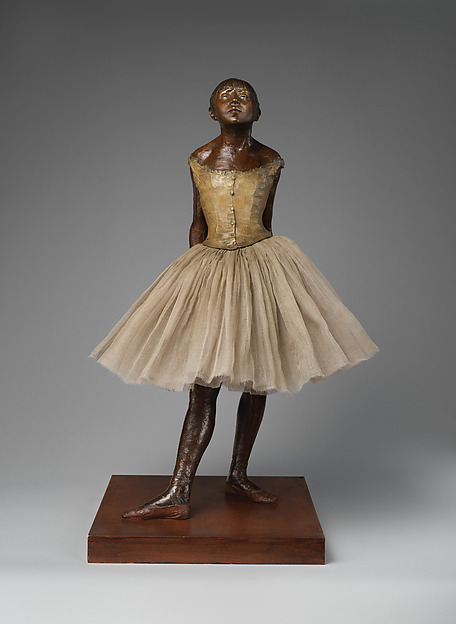
    The nearly life-size wax figure with real hair and a cloth tutu, modelled on Marie van Goethem, provoked a strong reaction: critics found its realism extraordinary, but many denounced the dancer as ugly. It was the only sculpture Degas showed in his lifetime.
Autres œuvres : Edgar Degas

Toutes les œuvres
The Little Fourteen-Year-Old Dancer, Edgar Degas, modeled 1881, cast 1922, modern tutu

The Little Fourteen-Year-Old Dancer

modeled 1881, cast 1922, modern tutu · Metropolitan Museum of Art

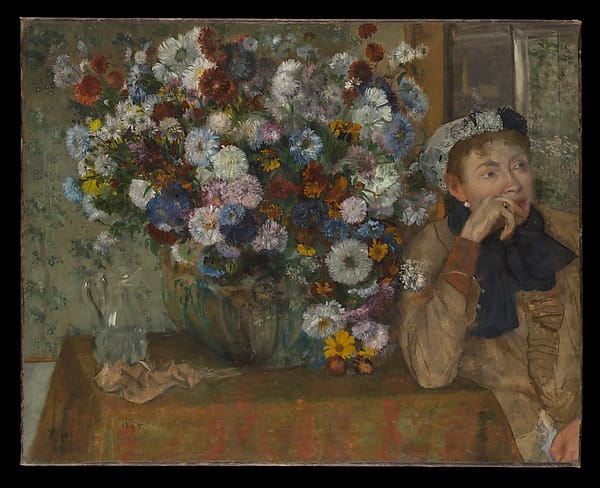
A Woman Seated beside a Vase of Flowers (Madame Paul Valpinçon?), Edgar Degas, 1865

A Woman Seated beside a Vase of Flowers (Madame Paul Valpinçon?)

1865 · Metropolitan Museum of Art

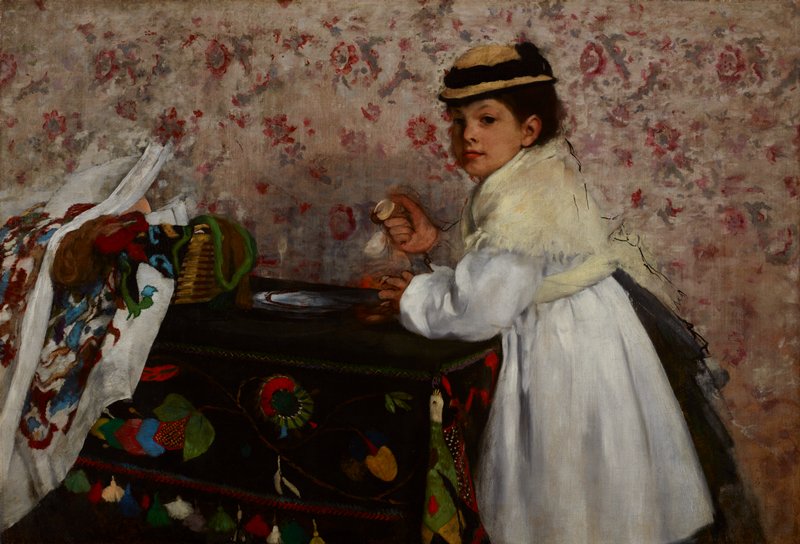
Portrait of Mlle. Hortense Valpinçon, Edgar Degas, c. 1871

Portrait of Mlle. Hortense Valpinçon

c. 1871 · Minneapolis Institute of Art

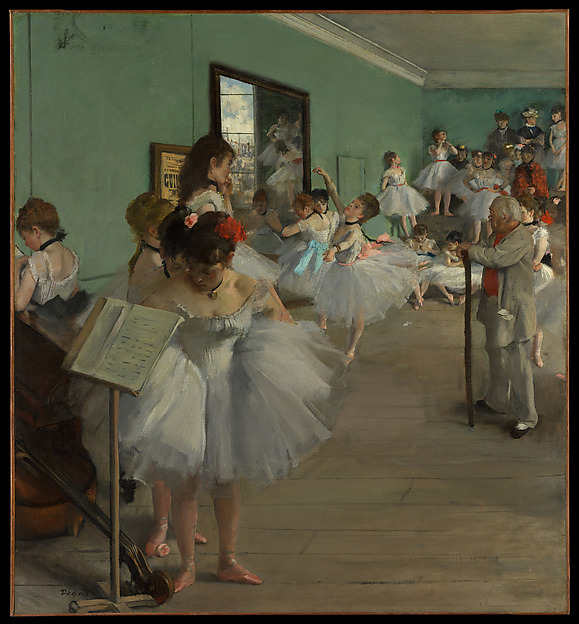
The Dance Class, Edgar Degas, 1874

The Dance Class

1874 · Metropolitan Museum of Art

Woman Having Her Hair Combed, Edgar Degas, ca. 1886–88

Woman Having Her Hair Combed

ca. 1886–88 · Metropolitan Museum of Art

Study in the Nude of Little Dancer Aged Fourteen (Nude Little Dancer), Edgar Degas, original wax c. 1878-1881, cast 1920/1926

Study in the Nude of Little Dancer Aged Fourteen (Nude Little Dancer)

original wax c. 1878-1881, cast 1920/1926 · National Gallery of Art

Horse Galloping on the Right Foot, Edgar Degas, late 1880s

Horse Galloping on the Right Foot

late 1880s · National Gallery of Art

Horse Trotting, the Feet Not Touching the Ground, Edgar Degas, 1870s

Horse Trotting, the Feet Not Touching the Ground

1870s · National Gallery of Art

Sous le même toit : Cleveland Museum of Art

Page du musée
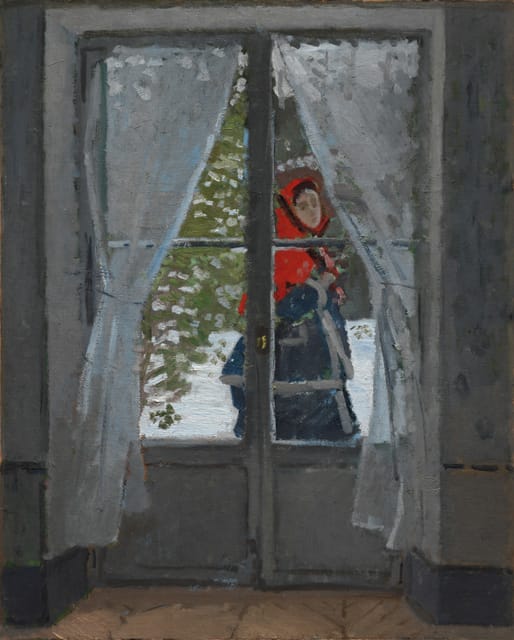
The Red Kerchief, Claude Monet, c. 1868–73

Claude Monet

The Red Kerchief, c. 1868–73

Melencolia I, Albrecht Dürer, 1514

Albrecht Dürer

Melencolia I, 1514

The Virgin and Child with the Pear, Albrecht Dürer, 1511

Albrecht Dürer

The Virgin and Child with the Pear, 1511

The Nativity, Albrecht Dürer, probably c. 1509/1510

Albrecht Dürer

The Nativity, probably c. 1509/1510

The Virgin and Child on a Crescent with a Starry Crown, Albrecht Dürer, 1508

Albrecht Dürer

The Virgin and Child on a Crescent with a Starry Crown, 1508

The Lamentation, Albrecht Dürer, 1507

Albrecht Dürer

The Lamentation, 1507

Large Horse, Albrecht Dürer, 1505

Albrecht Dürer

Large Horse, 1505

Nemesis (The Great Fortune), Albrecht Dürer, c. 1501/1502

Albrecht Dürer

Nemesis (The Great Fortune), c. 1501/1502