 Caspar David FriedrichAllemagne, 1774–1840
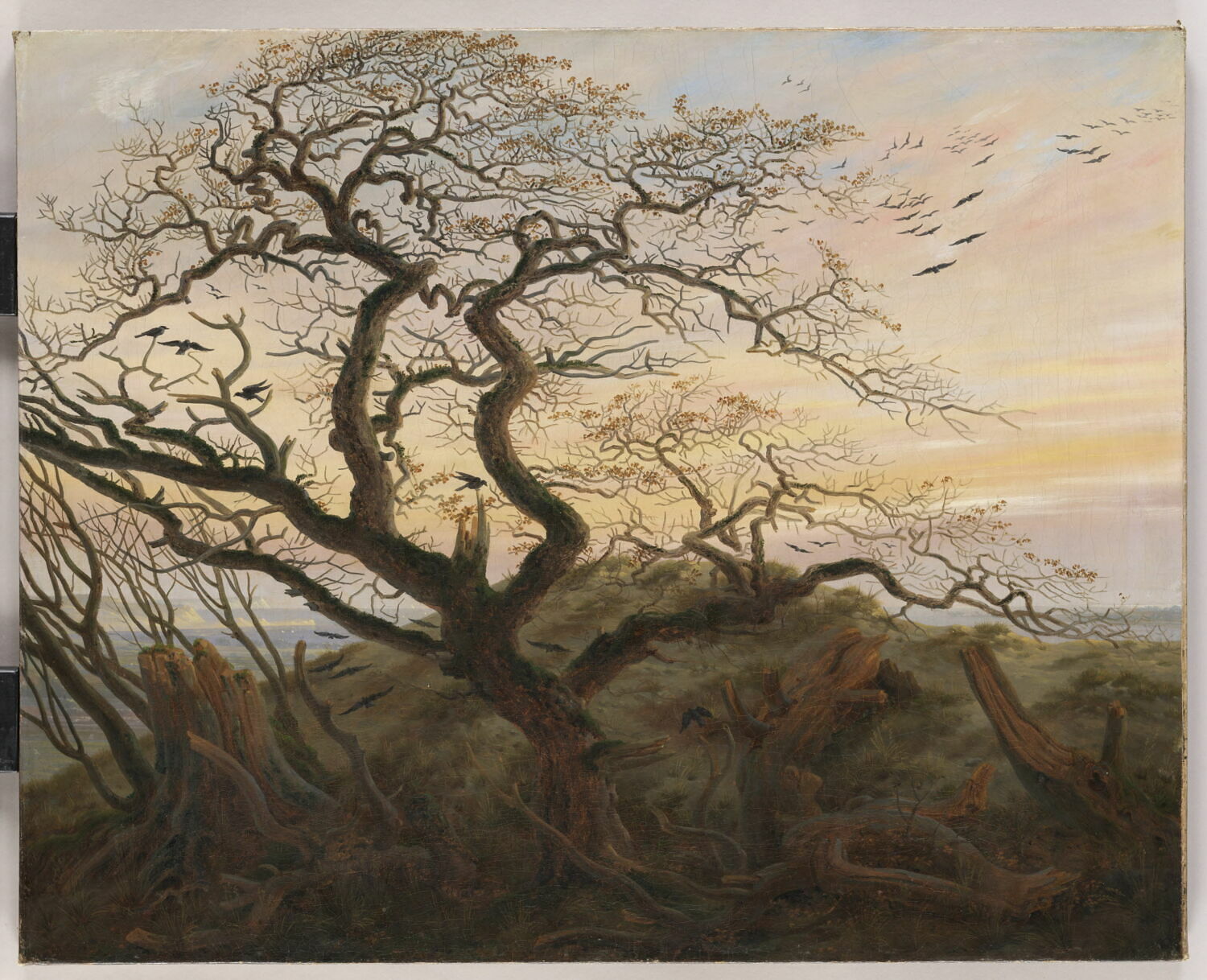
Corbeaux sur un arbre
L'arbre aux corbeaux
Peut-on la voir ?
Oui, exposée actuellement
Où est « Corbeaux sur un arbre » aujourd’hui ? Musée du Louvre, Salle 863, Aile Richelieu, Niveau 2, Paris. Oui, exposée actuellement. Vérifié 26 septembre 2026.

Fermé· ouvre demain à 9:00
Présentée au public.
- Vérifié
- Dans cet état depuis
- Source
- Le musée
À propos du tableau
Corbeaux sur un arbre ou L'arbre aux Corbeaux (en allemand: Krähen auf einem Baum), est un tableau du peintre allemand Caspar David Friedrich, réalisé en 1822.
Notice
- Numéro d’inventaire
- RF 1975 20
Au catalogue
Sources
- Musée du Louvre
- Image : Musée du Louvre — © 2022 GrandPalaisRmn (musée du Louvre) / Franck Raux
Dans la vie de Caspar David Friedrich
La vie entière1820
Grand Duke Nikolai Pavlovich in his studio
At the behest of his wife Alexandra Feodorovna, Grand Duke Nikolai Pavlovich visits Friedrich’s studio and returns to Saint Petersburg with a number of paintings, beginning a patronage that continues for many years.
by 1820
A recluse, “the most solitary of the solitary”
By 1820 Friedrich is living as a recluse, described by friends as the most solitary of the solitary.
1820
The birth of his daughter Emma
The Friedrichs’ first child, a daughter named Emma, is born; they will have three children. The third, Gustav Adolf, is named after the Swedish king Gustavus Adolphus and becomes a notable painter in his own right.
1821
Meets Zhukovsky
In 1821 the Romantic poet Vasily Zhukovsky, an admirer of his work, visits Friedrich’s studio: he buys several paintings and keeps them all his life. The friendship that begins lasts until the artist’s death, and thanks to Zhukovsky Friedrich becomes popular in Russia — today Russian museums hold 17 of his paintings, 15 of them in the Hermitage.
23 décembre 1824
Son born: Adolf Friedrich
1824–1826
Depression and darker motifs
A new bout of depression — earlier ones came in 1799, 1803–1805, around 1813 and in 1816 — brings vultures, owls, graveyards and ruins into his work. From 1826 these motifs become a permanent feature of his output, and his colours grow darker and more muted.