 Thomas CoutureFrance, 1815–1879
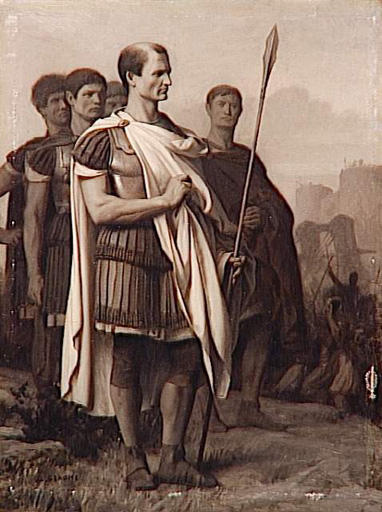
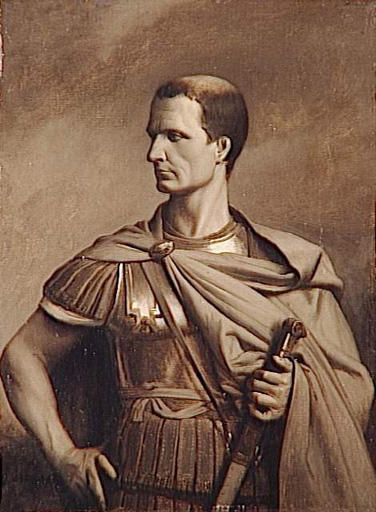
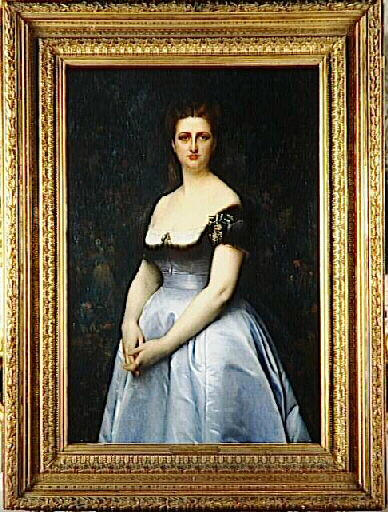
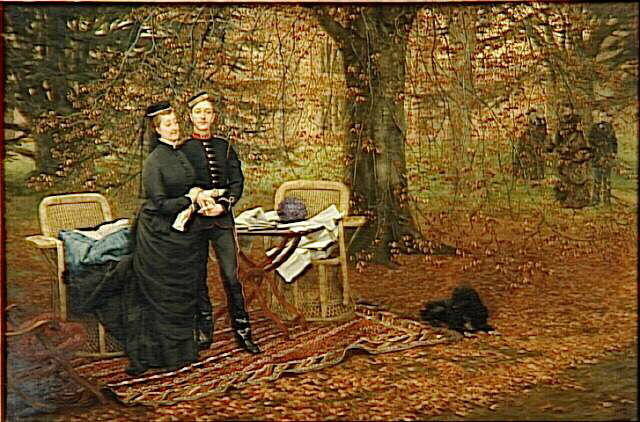
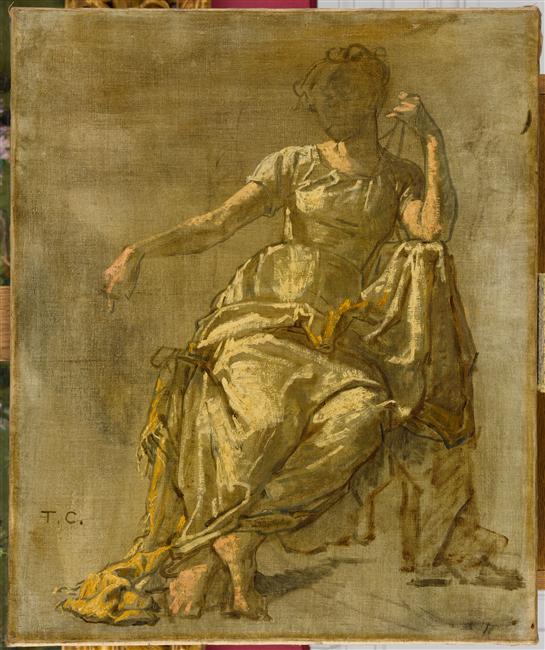
La Noblesse héréditaire
Peut-on la contempler ?
Inconnu
Compiègne, France
Le propriétaire est connu ; on ignore si l’œuvre est exposée aujourd’hui.
- Dans cet état depuis
- Source
- Le musée
Notice
- Numéro d’inventaire
- C 53.030
Ce qu’elle montre
Au catalogue
Sources
- Château de Compiègne
- Image : Château de Compiègne — RMN-Grand Palais ; Franck Raux; Ministère de la Culture (France), base Joconde
Pendant ce temps, chez Thomas Couture
La vie entière21 décembre 1815
Born
1838
His debut at the Paris Salon
In 1838, a year after the Prix de Rome, Couture is shown at the Paris Salon for the first time, with a canvas depicting a Venetian woman after a night orgy.
1847
The Salon of 1847: the triumph of “The Romans of the Decadence”
The picture meets with a resounding success and recognition: Théophile Gautier calls it the most remarkable work of the exhibition. Many find it symbolic that in the hall it takes the usual place of Veronese’s “The Wedding at Cana”, and some opinions favour the French canvas over the Italian classic.
after 1847
Opens an independent atelier in Paris
Soon after this triumph, in the wake of which he called himself the only truly serious artist of his age, Couture opens an independent atelier on the streets of Laval and Pigalle in Paris. It is conceived as a rival to the École des Beaux-Arts: several dozen pupils study there, among them students from the USA and Germany, and Couture wants to train not geniuses but painters who know their craft, demanding individuality from them rather than imitation.
January 1850
Manet becomes his pupil
From January 1850 Couture teaches Édouard Manet for more than six years. In the end Manet broke with his teacher and with academism and became one of the founders of Impressionism.
29 mars 1879
Died