Sonia DelaunayRussie, 1885–1979
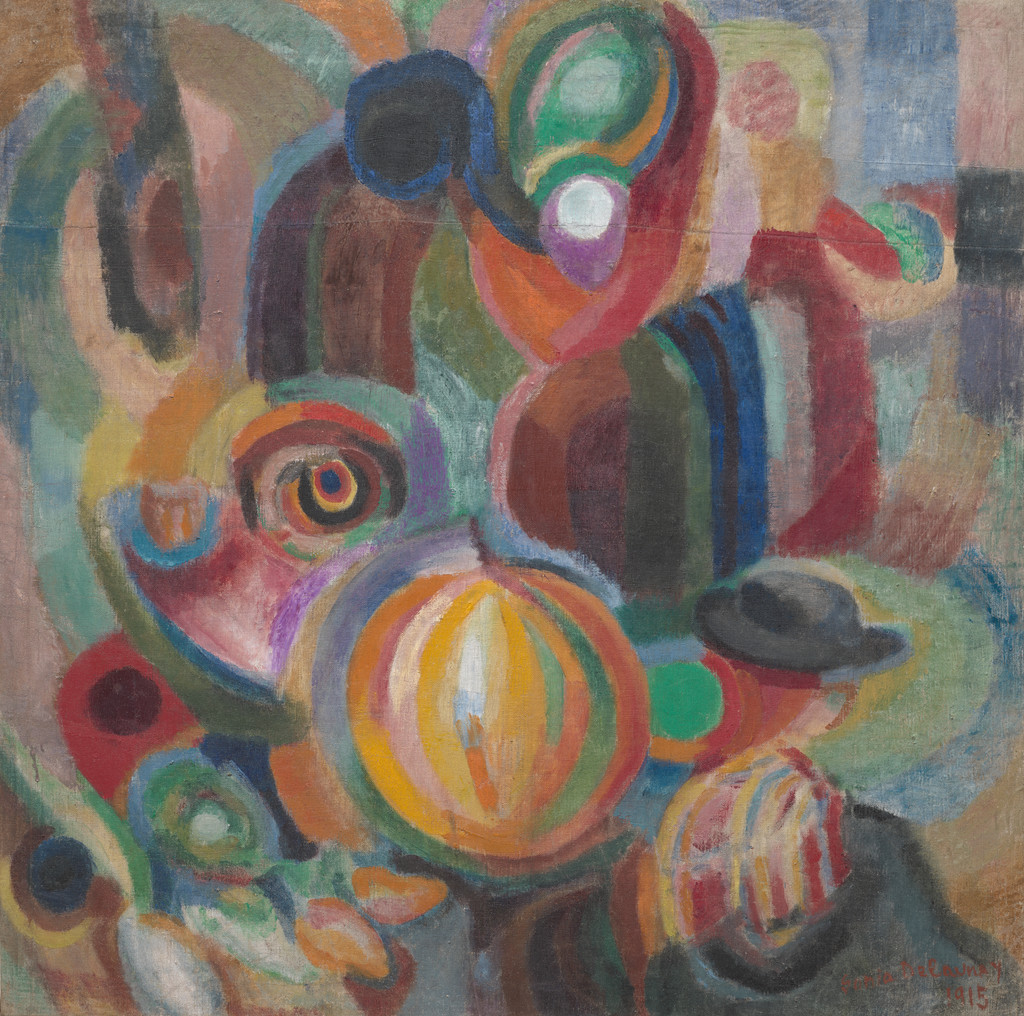
La marchande d'oranges
Peut-on la voir ?
Inconnu
Où est « La marchande d'oranges » aujourd’hui ? Collection: Musée d'Art moderne de Paris, Paris. Inconnu.

Paris, France
Le propriétaire est connu ; on ignore si l’œuvre est exposée aujourd’hui.
- Dans cet état depuis
- Source
- Le musée
Notice
- Numéro d’inventaire
- AMD 322
Au catalogue
Sources
- Musée d'Art moderne de Paris
- Image : Musée d'Art moderne de Paris — Paris Musées / Musée d'Art moderne de Paris / © Pracusa S.A.; Ministère de la Culture (France), base Joconde
Dans la vie de Sonia Delaunay
La vie entière1913
The Autumn Salon in Berlin
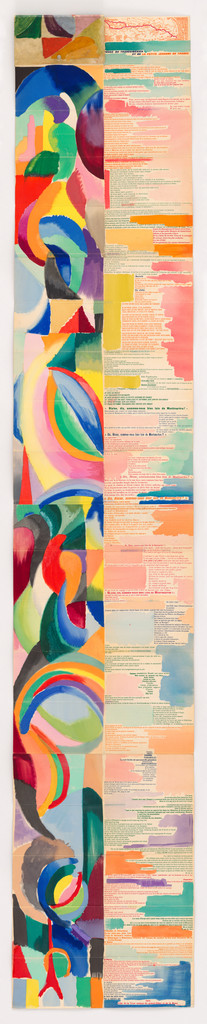
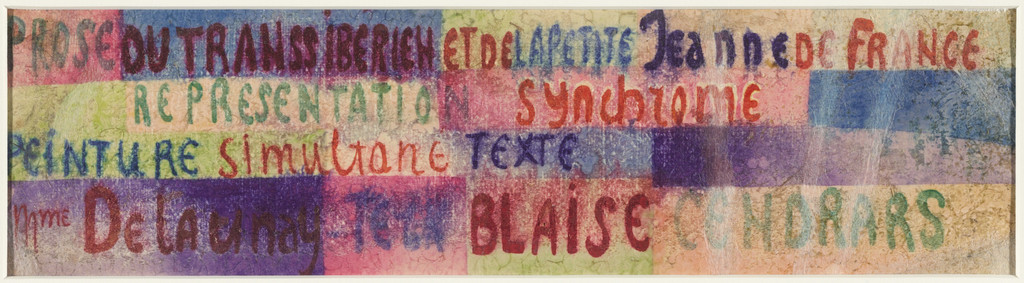
The simultaneous book was shown at the Autumn Salon in Berlin together with Sonia's paintings and applied works, including dresses.
1913
Apollinaire names their painting Orphism
Guillaume Apollinaire gave the name Orphism to the version of Cubism that Sonia and Robert Delaunay developed in their work.
1914
The First World War catches the Delaunays in Spain
The Delaunays travelled to Spain to stay with friends in Madrid; the outbreak of the First World War found Sonia and Robert in Hondarribia, in the Basque Country, with their son still in Madrid, and they decided not to return to France.
1916
Solo exhibition in Stockholm
Sonia Delaunay had a solo exhibition in Stockholm.
1917
The Russian Revolution cuts off her family's money
The Russian Revolution ended the financial support Sonia received from her family in Russia, and a new source of income was needed: in Madrid she decorated the Petit Casino nightclub and founded Casa Sonia, selling her designs for interiors and fashion, with a branch in Bilbao, and became the centre of a Madrid salon.
1917
Meets Diaghilev in Madrid
The Delaunays met Sergei Diaghilev: Sonia designed costumes for his production of “Cleopatra” (sets by Robert) and for “Aida” in Barcelona. She restored Léon Bakst's burnt sets for Fokine's “Cleopatra” for its showing at the London Coliseum in 1918.