ART WIKI32 963 en salle
CarteCollectionArtistesMuséesExpositionsJournal
Connexion

ART WIKI

Où est accroché le chef-d’œuvre, et quand on vous laisse entrer.

Collections : Art Institute of Chicago, Cleveland Museum of Art, Galerie Tretiakov, Hirshhorn Museum and Sculpture Garden, J. Paul Getty Museum, Metropolitan Museum of Art, Minneapolis Institute of Art, Musée de l'Ermitage, Musée des Beaux-Arts Pouchkine, Musée du Louvre, musée national d'art asiatique, Musée russe, Musées d'Art de Harvard, Museum of Modern Art, National Gallery of Art, National Portrait Gallery, Rijksmuseum Amsterdam, Smithsonian American Art Museum, Statens Museum for Kunst, Victoria and Albert Museum, Villa Getty, Whitney Museum of American Art, Catalogue d’État du fonds muséal de Russie (274 musées), Europeana (19 musées), Wikidata (6 musées), Paris Musées (12 musées) et Joconde, la base des musées du ministère de la Culture (495 musées). Les images appartiennent à leurs ayants droit.

Rubriques

  • Carte
  • Recherche
  • Collection
  • Chefs-d’œuvre
  • Exposées en ce moment
  • Artistes

Et aussi

  • Musées et galeries
  • Expositions
  • Journal
  • D’où viennent les données
  • Confidentialité et cookies
AccueilCarteCatalogue
  1. Collection/
  2. Musée Herzog Anton Ulrich/
  3. Junger, sitzender Mann mit Junge
Junger, sitzender Mann mit Junge, Buonarroti Michelangelo, 1550–1585
Michelangelo, portraitMichelangeloItalie, 1475–1564

Junger, sitzender Mann mit Junge

1550–1585 · Print

Peut-on la contempler ?

Inconnu

Musée Herzog Anton Ulrich

Brunswick, Allemagne

Le propriétaire est connu ; on ignore si l’œuvre est exposée aujourd’hui.

Dans cet état depuis
27 sept. 2026
Source
Le musée
Sur la cartePage du musée

Notice

Ce qu’elle montre

JungeEnfantHommeFingerErmahnungSteinblockDer erhobene ZeigefingerAuf einer Erhebung sitzen

Au catalogue

EstampesRenaissanceXVIe siècle

Sources

  • Musée Herzog Anton Ulrich
  • Image : Musée Herzog Anton Ulrich — CC BY-NC-SA 4.0

Pendant ce temps, chez Michelangelo

La vie entière
  1. 1534–1564 · Lieu de travail

    Rome

  2. 1550

    Vasari publishes his biography

    Giorgio Vasari published his Lives, including a biography of Michelangelo, the first Western artist whose biography appeared in his lifetime. Vasari held that his work transcended that of any artist living or dead and was “supreme in not one art alone but in all three”.

  3. 1553

    Ascanio Condivi's biography is published

    His pupil Ascanio Condivi published a book of recollections of the master, with his portrait.

  4. 1554

    Verses on divine love

    Michelangelo's faith deepened towards the end of his life. In a poem of 1554 he wrote that neither painting nor sculpture could any longer calm his soul, now turned towards the divine love that opened its arms on the cross.

  5. February 1564

    His will: “my soul to God, my body to the earth”

    Before his death Michelangelo dictated his will with characteristic brevity: “I give my soul to God, my body to the earth, my possessions to my family.” His nephew Leonardo reached Rome a few days before he died, and Tommaso dei Cavalieri, Daniele da Volterra and his doctors were with him at the end.

  6. 18 février 1564

    Died

Autres œuvres : Michelangelo

Toutes les œuvres
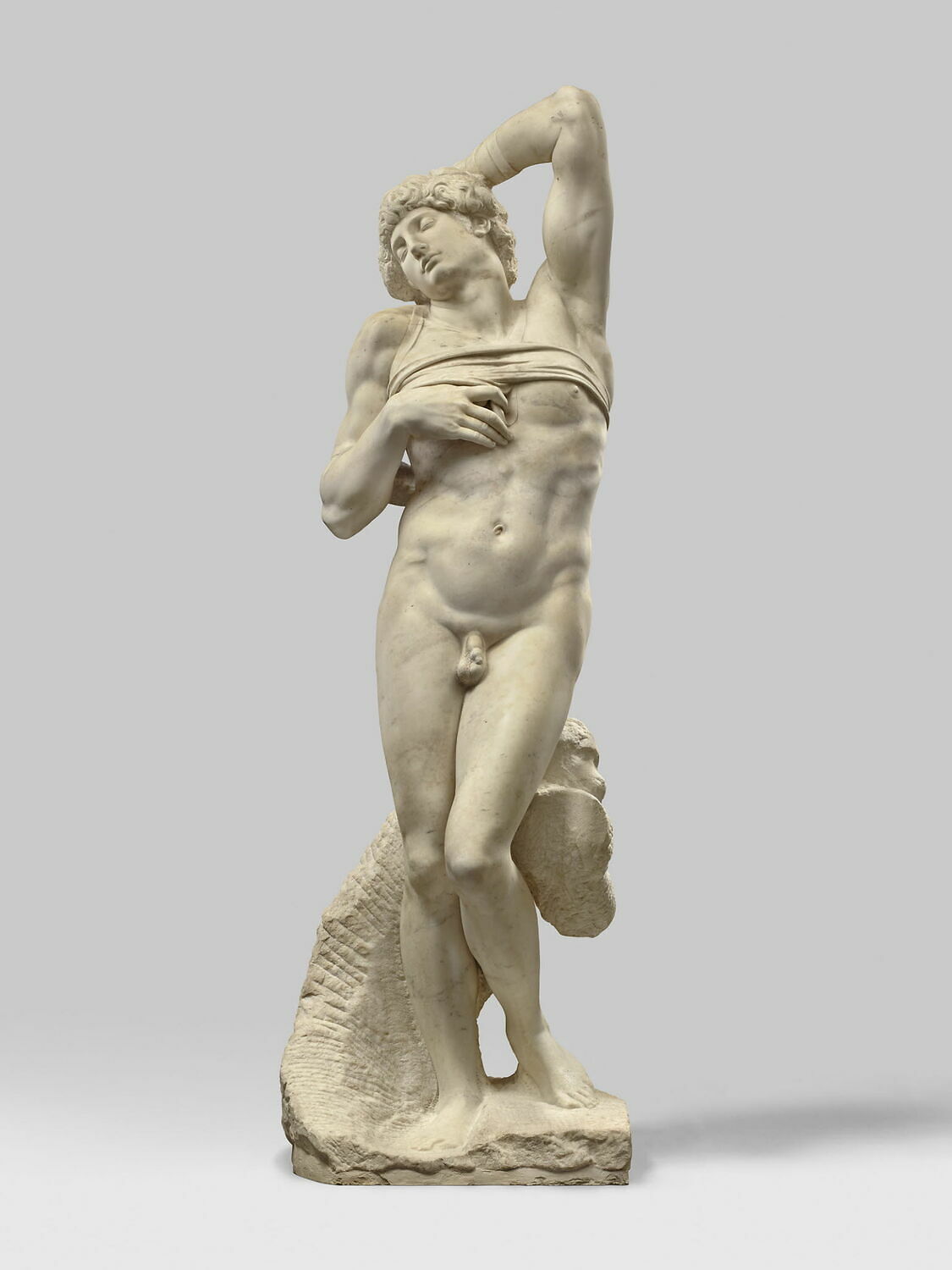
Esclave mourant, Buonarroti, Michelangelo dit Michel-Ange, 1513 - 1515

L'Esclave mourant

1513 - 1515 · Musée du Louvre

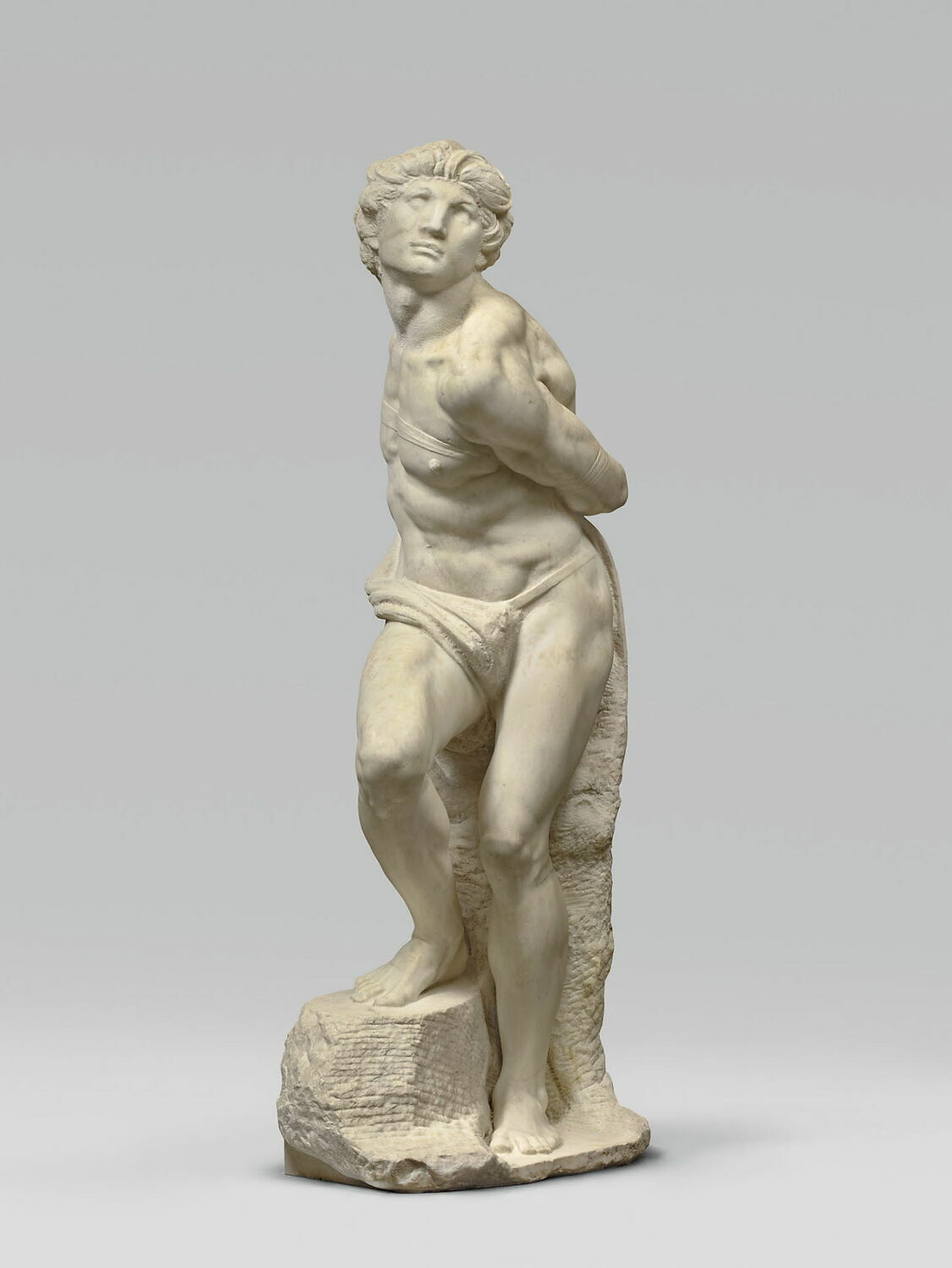
Esclave rebelle, Buonarroti, Michelangelo dit Michel-Ange, 1513 - 1515

L'Esclave rebelle

1513 - 1515 · Musée du Louvre

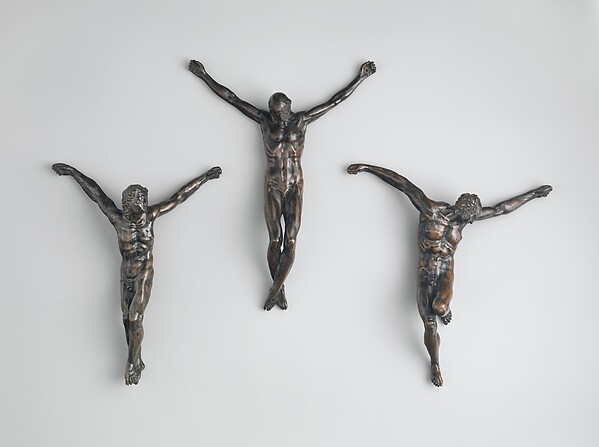
Christ and the Two Thieves Crucified, Michelangelo Buonarroti, ca. 1560–70

Christ and the Two Thieves Crucified

ca. 1560–70 · Metropolitan Museum of Art

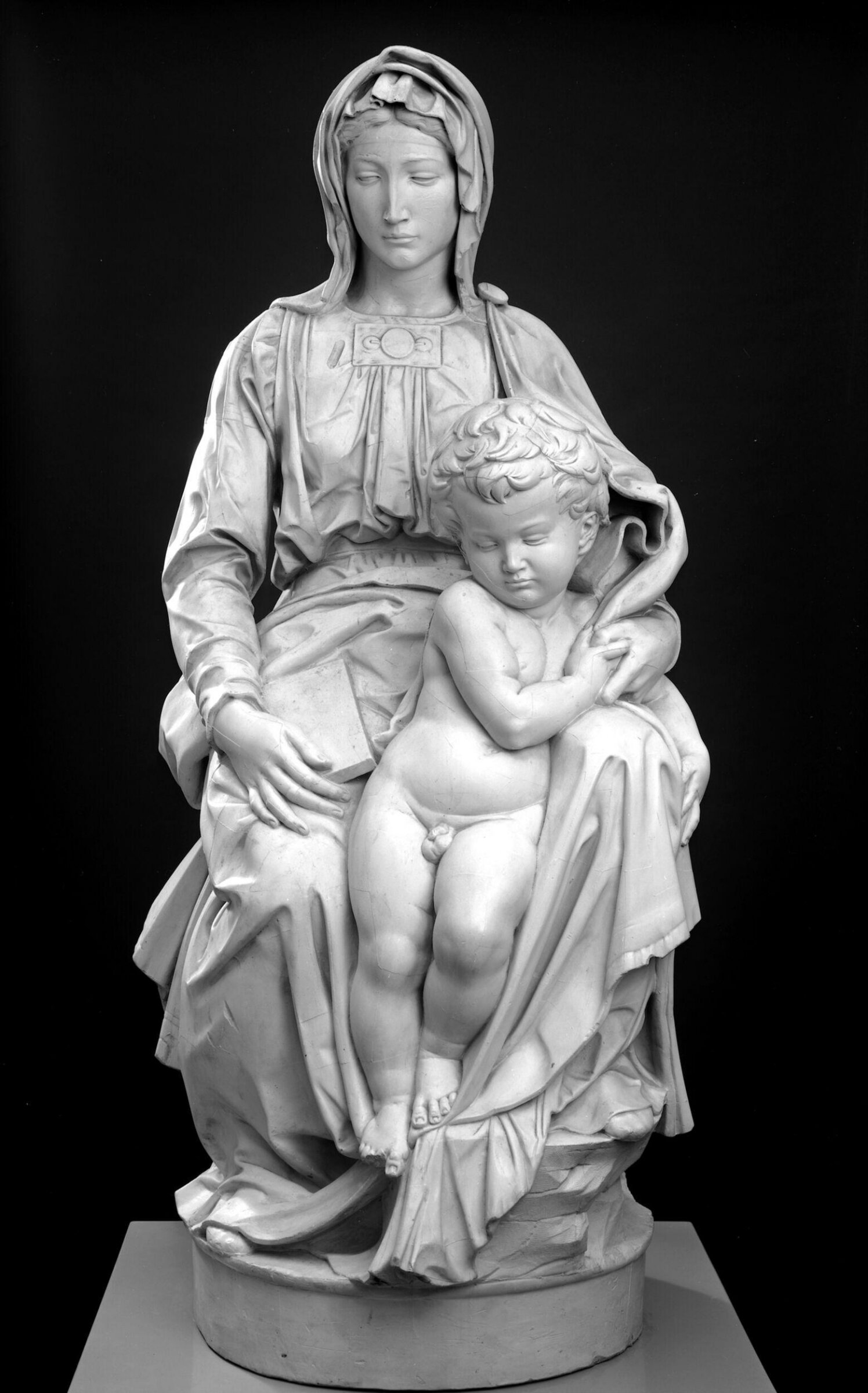
Bruges Madonna, Michelangelo, 1504-6

Bruges Madonna

1504-6 · Victoria and Albert Museum

Design for an Equestrian Statue of Henry II of France, Michelangelo, 1559 - 1564

Design for an Equestrian Statue of Henry II of France

1559 - 1564 · Rijksmuseum Amsterdam

The Prophet Ezekiel, Giorgio Ghisi after Michelangelo, early 1570s

The Prophet Ezekiel

early 1570s · Non exposée · National Gallery of Art

The Eritrean Sibyl, Giorgio Ghisi after Michelangelo, early 1570s

The Eritrean Sibyl

early 1570s · Non exposée · National Gallery of Art

Two Nude Men, Marcantonio Raimondi after Michelangelo

Two Nude Men

Non exposée · National Gallery of Art