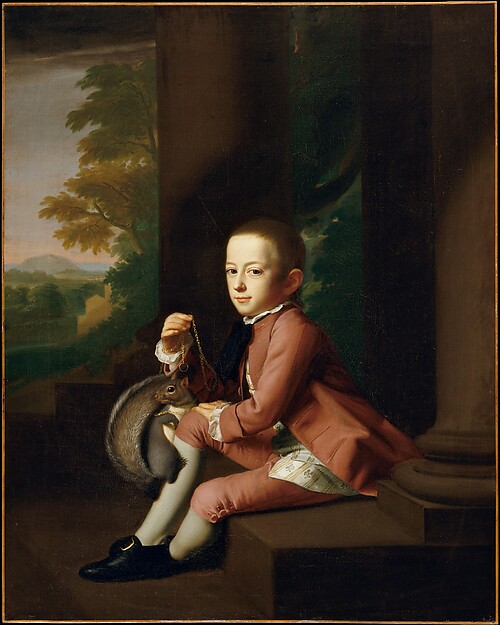
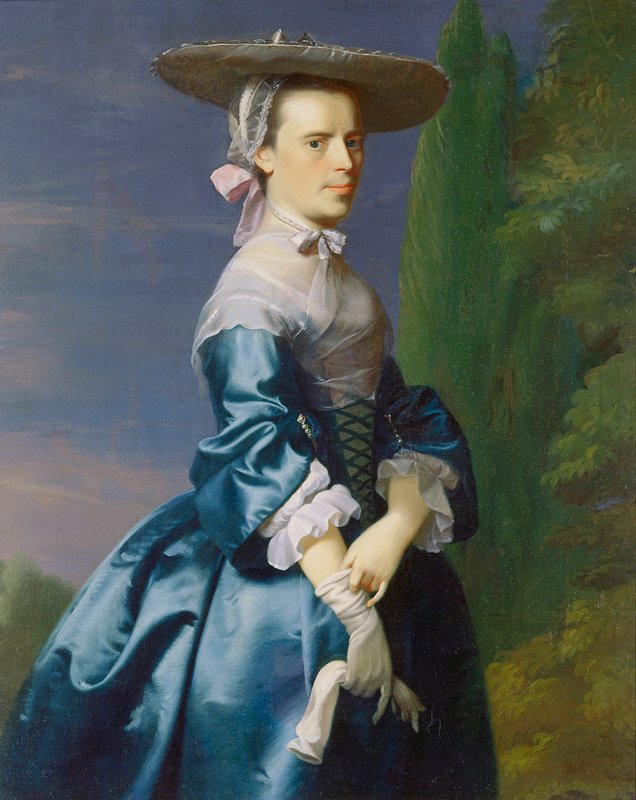
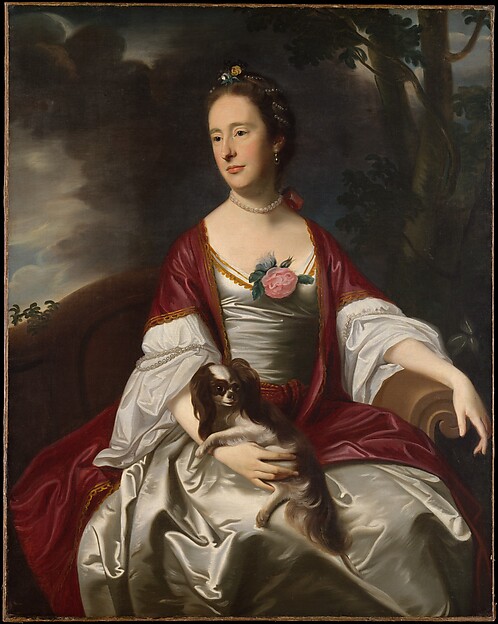
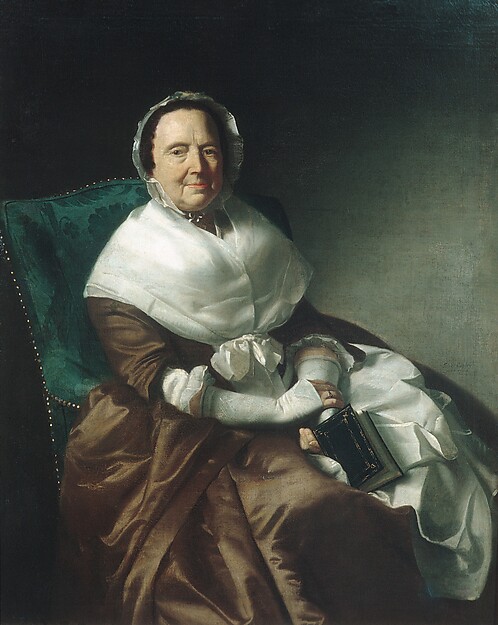
John Singleton CopleyÉtats-Unis, 1738–1815
John Singleton Copley Self-Portrait
Peut-on la contempler ?
Inconnu
National Portrait Gallery
Washington, États-Unis
Le propriétaire est connu ; on ignore si l’œuvre est exposée aujourd’hui.
- Dans cet état depuis
- Source
- Le musée
Notice
- Numéro d’inventaire
- NPG.77.22
Ce qu’elle montre
Au catalogue
Sources
- National Portrait Gallery
- Image : National Portrait Gallery — National Portrait Gallery, Smithsonian Institution (CC0)
Pendant ce temps, chez John Singleton Copley
La vie entière1774–1815 · Lieu de travail
London
second half of the 1770s
A turn to history painting
In London Copley follows the fashion set by West and begins to paint historical pieces as well as portraits; together they create a new kind of history painting with modern subjects, chiefly the deaths of heroes, and scrupulous attention to contemporary detail. His first such work, “Watson and the Shark”, is based on the story of Brook Watson, who as a boy of fourteen was attacked by a shark while swimming in Havana harbour.
1779
Becomes an Academician of the Royal Academy
Copley is elected a full Academician of the Royal Academy of Arts in London, three years after becoming an associate. Other accounts place his election to full membership in 1783.
c. 1781
Chambers rebukes Copley over the private showing of his picture
“The Death of the Earl of Chatham” made Copley’s name as a history painter, but Sir William Chambers, in an open letter, objected to its being shown privately ahead of the Royal Academy exhibition, accusing the artist of purveying it like a raree-show to sell prints or raffle the picture. Copley wrote a caustic reply one morning and threw it into the fire that evening; engravings from the picture later sold well in England and America.
5 December 1782
The Stars and Stripes in Elkanah Watson’s portrait
After listening to George III’s speech formally acknowledging American independence, Copley paints the Stars and Stripes with a bold hand on a ship in the background of Elkanah Watson’s portrait. Watson himself imagined it to be the first American flag hoisted in Old England.