Frank StellaÉtats-Unis, 1936–2024
Ifafa I
Peut-on la contempler ?
Elle ne reçoit pas en ce moment

Art Institute of Chicago
Chicago, États-Unis
Elle appartient à la collection, mais n’est pas présentée en ce moment.
- Vérifié
- Dans cet état depuis
- Source
- Les données de collection du musée lui-même
À propos de l’œuvre
Stella made his first prints in 1967, at the Gemini Graphic Editions Limited workshop founded by Ken Tyler in Los Angeles in 1965. Tyler, the workshop director at Tamarind in 1964-65, has been a constant collaborator with Stella, whose comments about Tyler in 1981 succinctly describe a typical relationship between artists and printers:
He taught me everything I know about printmaking. He probably still does. He knows so much. He tells me how it's done. I say 'Can we do it this way?' And he sees if it can be done, or approximates it, or has a better idea. We keep working away at it. I don't know enough to get it myself.
Stella's V Series comprises eight lithographs based on the stripe paintings of the Notched-V Series (1964-65). The brilliant metallic colors and slick surface Stella employed here exemplify the technical excellence for which Tyler has always been known.
Art Institute of ChicagoCC BY 4.0
Notice
- Numéro d’inventaire
- 1981.385
Au catalogue
Sources
- Art Institute of Chicago: the museum's own open data · obtenue il y a 7 jours
- Image : Art Institute of Chicago — © the artist or rights holder
Pendant ce temps, chez Frank Stella
La vie entière1960s
Travels in the Middle East
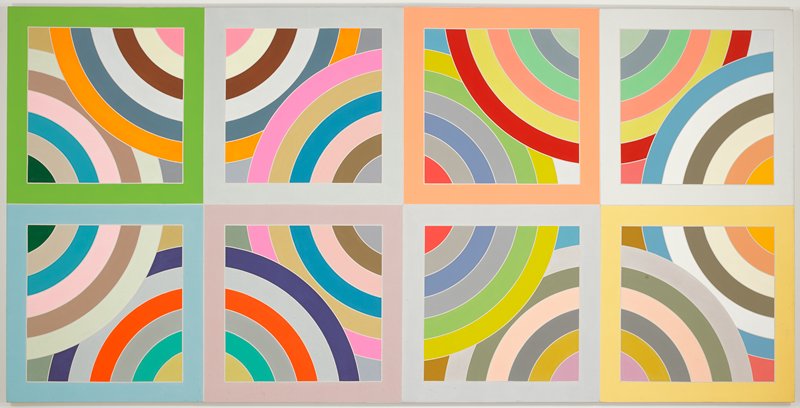
He visits circular-plan cities in the Middle East and is especially intrigued by the arches and decorative patterns he sees in the architecture and art of Iran; these cities will later give their names to works of the Protractor series.
1965–1966
Guggenheim: “The Shaped Canvas” and “Systemic Painting”
His work is included in two exhibitions at the Solomon R. Guggenheim Museum: The Shaped Canvas (1965) and Systemic Painting (1966).
27 juin 1968 – 6 octobre 1968
Exhibition: 4. documenta
1970
Retrospective at the Museum of Modern Art
The Museum of Modern Art in New York presents a retrospective of Stella's work, making him the youngest artist to receive one.
1970
Boycott of the American Pavilion in Venice
Invited to the 35th Venice Biennale, Stella joins a boycott by artists opposed to the US wars in Vietnam and Cambodia and withdraws his works from display at the American Pavilion.
1970s
Introduces relief: “maximalist” painting
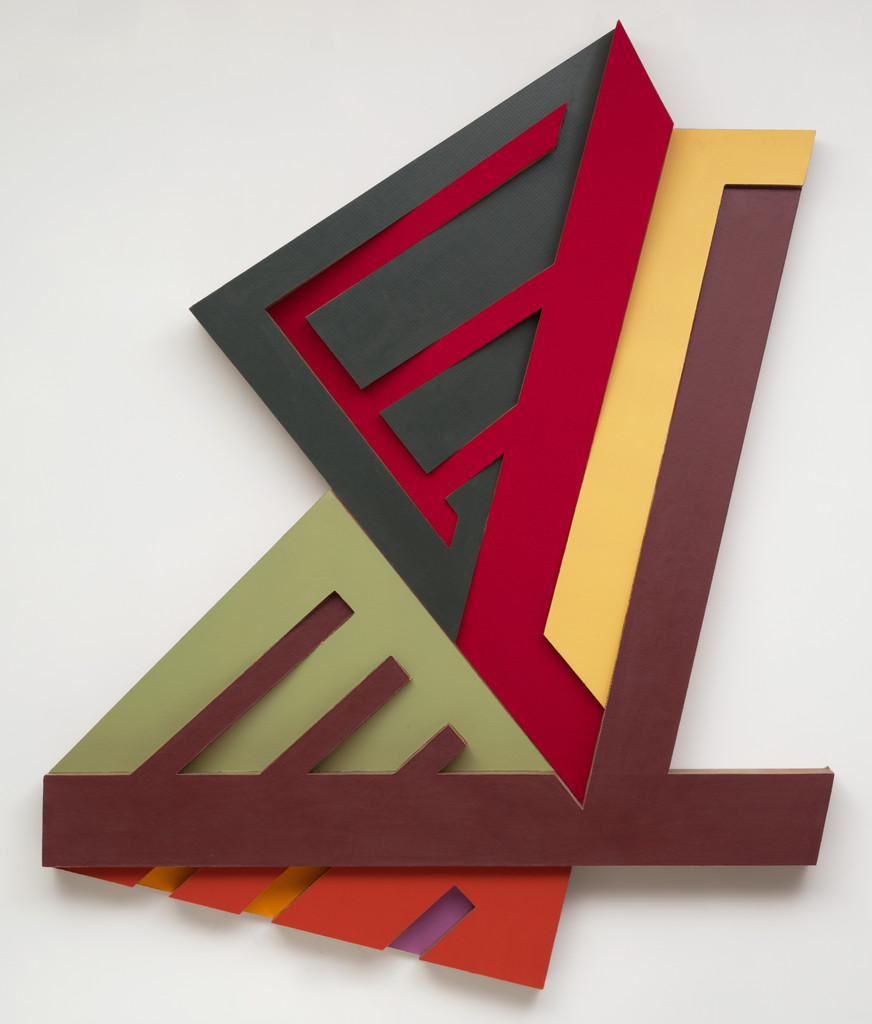
He brings relief into his work and calls such painting “maximalist” for its sculptural qualities; in the Eccentric Polygon series the shaped canvases take on still less regular forms and collage elements appear, such as pieces of canvas glued to plywood, and aluminum then becomes the main support of his paintings.