ART WIKI32 963 en salle
CarteCollectionArtistesMuséesExpositionsJournal
Connexion

ART WIKI

Où est accroché le chef-d’œuvre, et quand on vous laisse entrer.

Collections : Art Institute of Chicago, Cleveland Museum of Art, Galerie Tretiakov, Hirshhorn Museum and Sculpture Garden, J. Paul Getty Museum, Metropolitan Museum of Art, Minneapolis Institute of Art, Musée de l'Ermitage, Musée des Beaux-Arts Pouchkine, Musée du Louvre, musée national d'art asiatique, Musée russe, Musées d'Art de Harvard, Museum of Modern Art, National Gallery of Art, National Portrait Gallery, Rijksmuseum Amsterdam, Smithsonian American Art Museum, Statens Museum for Kunst, Victoria and Albert Museum, Villa Getty, Whitney Museum of American Art, Catalogue d’État du fonds muséal de Russie (274 musées), Europeana (19 musées), Wikidata (6 musées), Paris Musées (12 musées) et Joconde, la base des musées du ministère de la Culture (495 musées). Les images appartiennent à leurs ayants droit.

Rubriques

  • Carte
  • Recherche
  • Collection
  • Chefs-d’œuvre
  • Exposées en ce moment
  • Artistes

Et aussi

  • Musées et galeries
  • Expositions
  • Journal
  • D’où viennent les données
  • Confidentialité et cookies
AccueilCarteCatalogue
  1. Collection/
  2. National Portrait Gallery/
  3. George Peabody
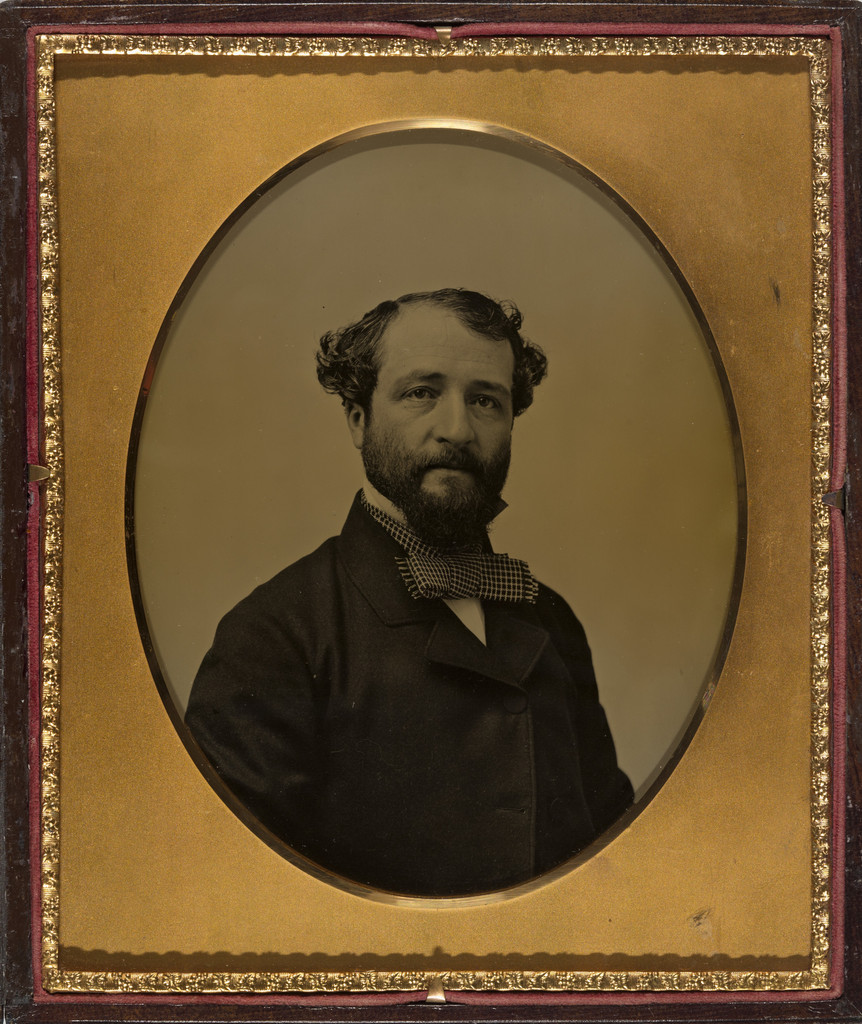
George Peabody, Mathew B. Brady, c. 1860
Mathew B. Brady, portraitMathew B. BradyÉtats-Unis, 1823–1896

George Peabody

c. 1860 · Photograph

Peut-on la contempler ?

Inconnu

NPG
National Portrait Gallery

Washington, États-Unis

Le propriétaire est connu ; on ignore si l’œuvre est exposée aujourd’hui.

Dans cet état depuis
5 oct. 2026
Source
Le musée
Sur la cartePage du musée

Notice

c. 1860
18231896
Numéro d’inventaire
NPG.76.87

Ce qu’elle montre

Business and FinanceSocial Welfare and ReformChainNeckwearMerchantsBusinesspersonJewelryDress accessories

Au catalogue

PhotographiesTirage sur papier saléRéalismeImpressionnismeXIXe siècle

Sources

  • National Portrait Gallery
  • Image : National Portrait Gallery — National Portrait Gallery, Smithsonian Institution (CC0)

Pendant ce temps, chez Mathew B. Brady

La vie entière
  1. 1850s

    His eyesight begins to fail

    In the 1850s Brady’s eyesight begins to deteriorate; this may in part explain why he later rarely visited the battlefields himself and why many images in his collection are thought to be the work of his assistants.

  2. 1861

    Lincoln permits him to photograph the war

    Taken with the idea of documenting the war itself, Brady first asks his old friend General Winfield Scott, and then President Lincoln, for permission to send his photographers to the battle sites; Lincoln agrees in 1861 on condition that Brady finances the project himself. Despite the dangers, the financial risk and his friends’ discouragement, he said he simply had to go.

  3. 1861

    Under fire at Bull Run

    His first popular photographs of the conflict are taken at the First Battle of Bull Run, where he gets so close to the action that he barely avoids capture; later he comes under direct fire at Petersburg and Fredericksburg.

  4. 1861

    Hires photographers with travelling darkrooms

    He employs Alexander Gardner, James Gardner, Timothy H. O’Sullivan, William Pywell, George N. Barnard, Thomas C. Roche and seventeen other men, giving each a travelling darkroom. Brady himself generally resides in Washington, organizing his assistants and rarely visiting the battlefields, so many images in his collection are the work of his assistants.

  5. 1861

    Offers parents portraits of departing soldiers

    When the Civil War begins, sales of cartes de visite to departing soldiers rise briskly; in the New-York Daily Tribune Brady runs an advertisement warning parents that it may soon be too late to capture their sons’ likenesses.

  6. October 1862

    Exhibition “The Dead of Antietam”

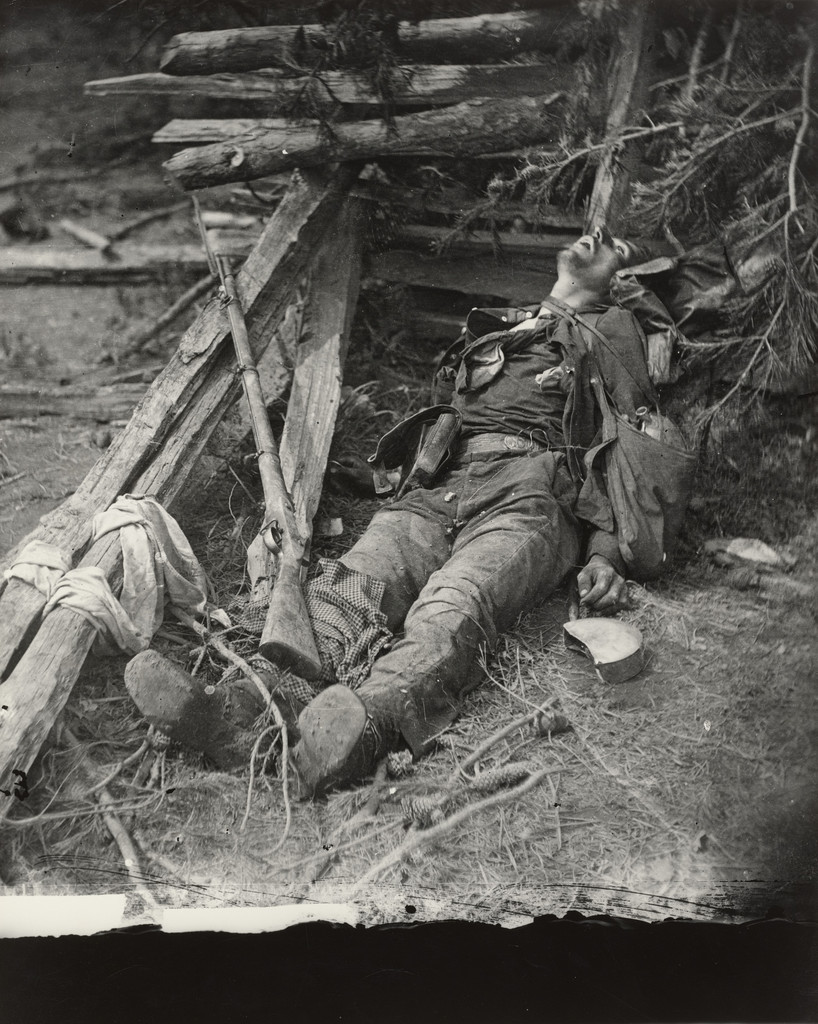
    He opens, in his New York gallery, an exhibition of photographs of the Battle of Antietam; many of the images show corpses, a presentation new to America — the first time many Americans saw the realities of war in photographs rather than in artists’ impressions.
Autres œuvres : Mathew B. Brady

Toutes les œuvres
Untitled, Mathew B. Brady, 1860-70

Untitled

1860-70 · Non exposée · Museum of Modern Art

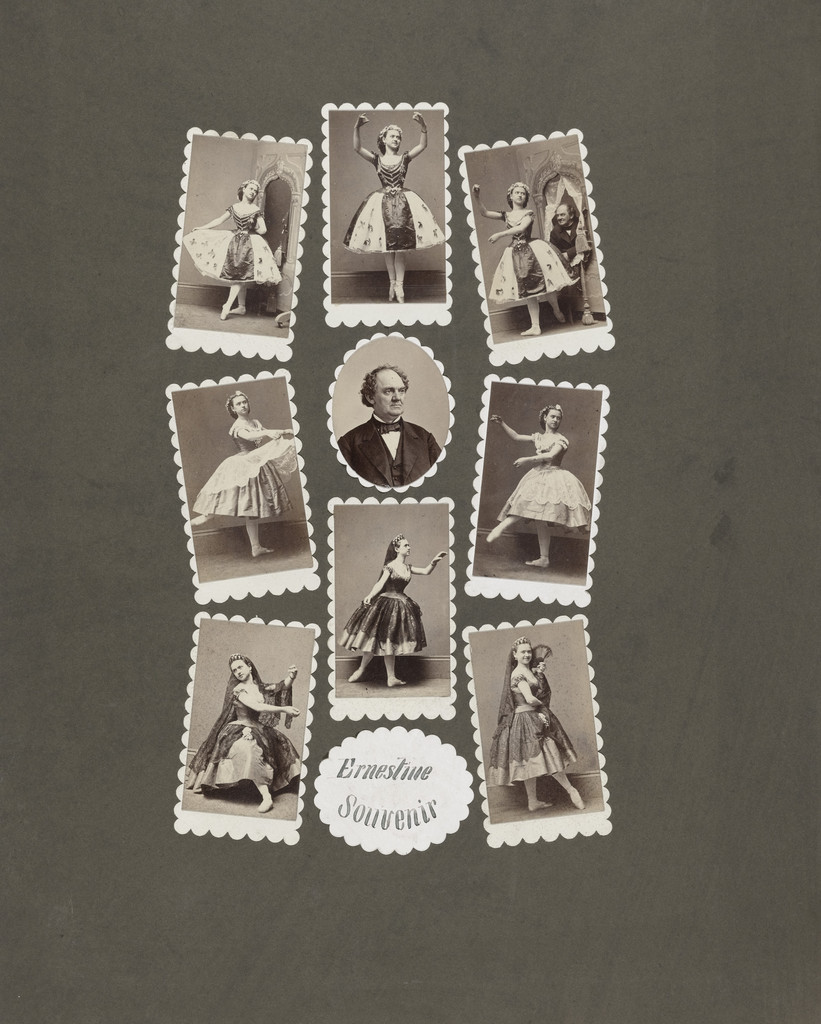
Ernestine Souvenir, Mathew B. Brady, 1860-69

Ernestine Souvenir

1860-69 · Non exposée · Museum of Modern Art

Untitled, Mathew B. Brady, c. 1860

Untitled

c. 1860 · Non exposée · Museum of Modern Art

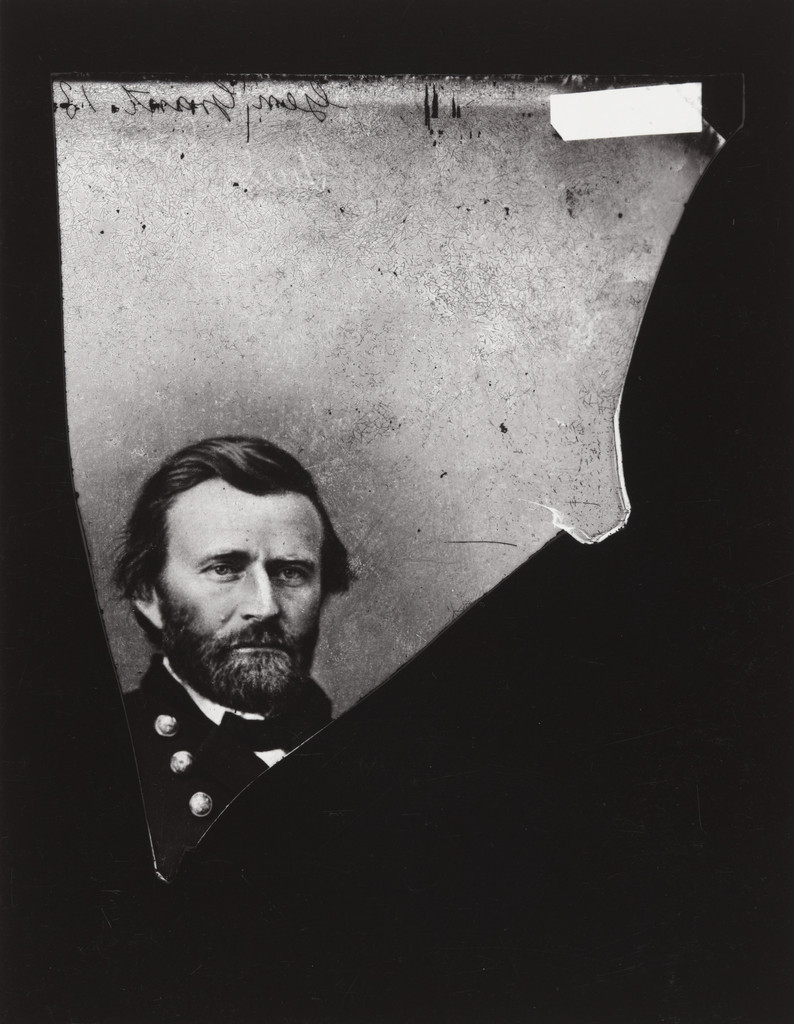
General Ulysses S. Grant, Mathew B. Brady, 1861-65

General Ulysses S. Grant

1861-65 · Non exposée · Museum of Modern Art

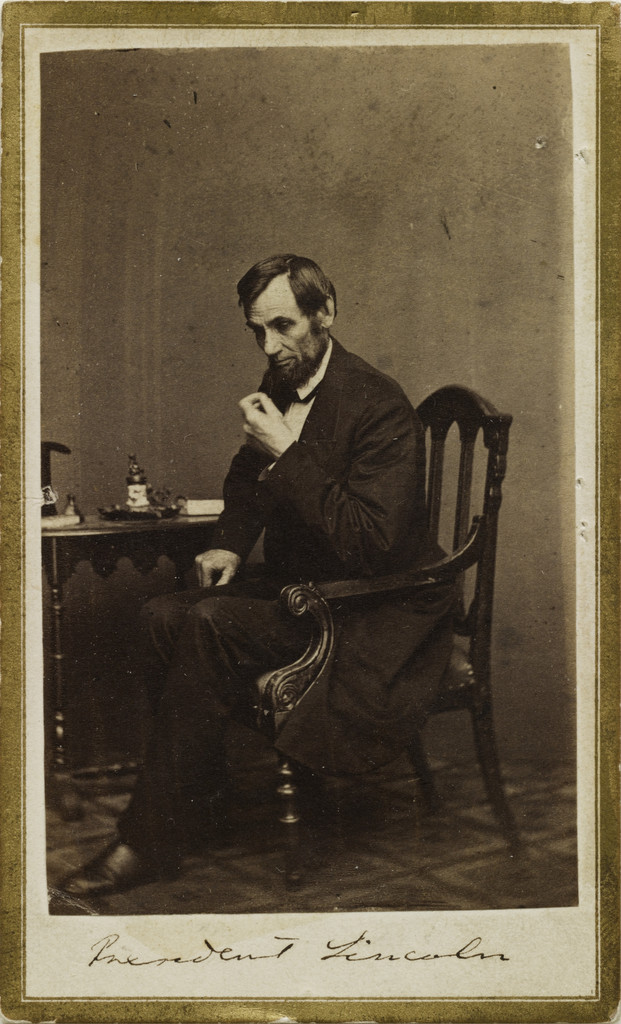
President Lincoln, Mathew B. Brady, c. 1862

President Lincoln

c. 1862 · Non exposée · Museum of Modern Art

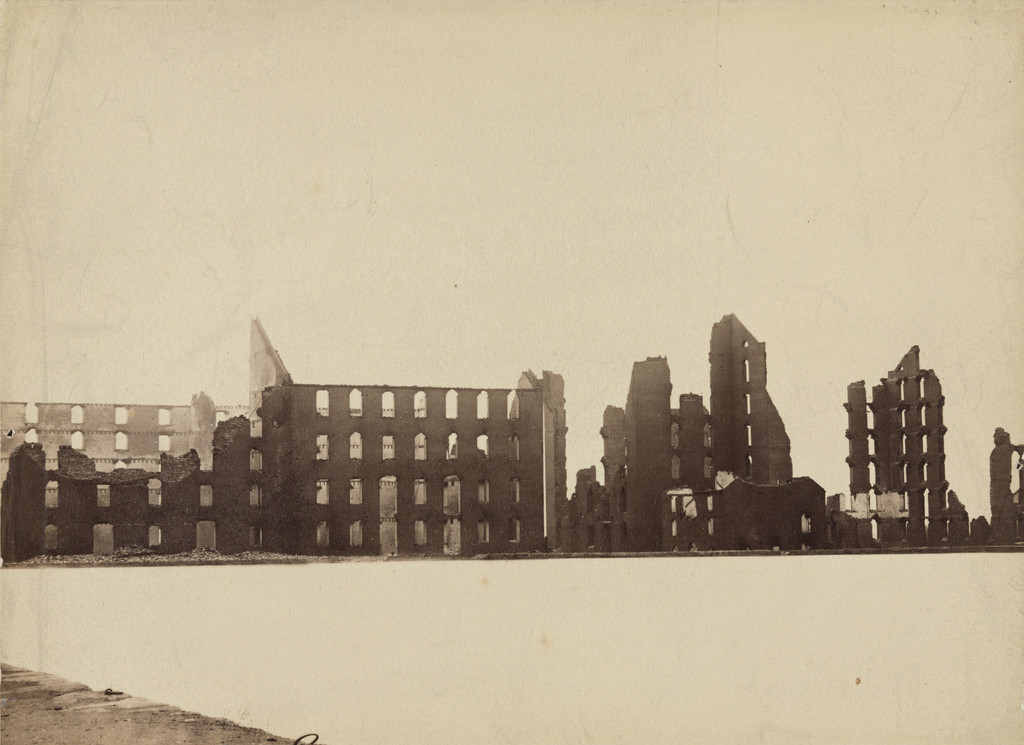
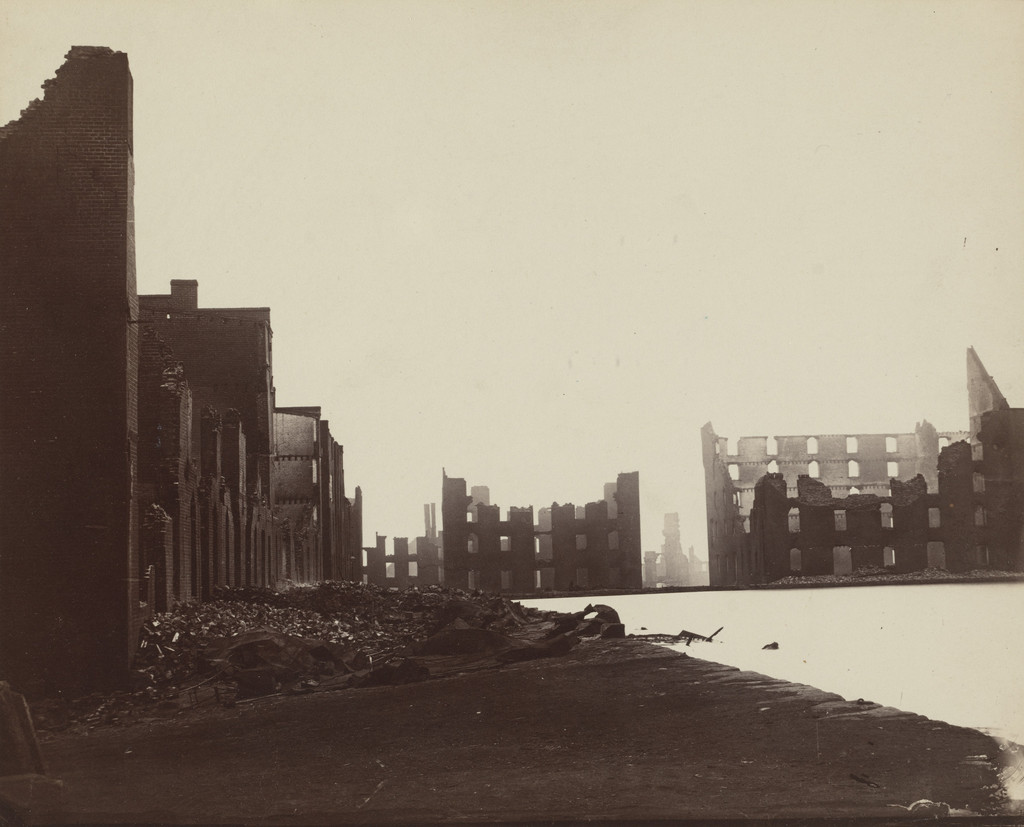
Ruins of Richmond, Mathew B. Brady, 1863-65

Ruins of Richmond

1863-65 · Non exposée · Museum of Modern Art

Ruins of the Gallego Flour Mills, Richmond, Virginia, Mathew B. Brady (studio of), Alexander Gardner, 1865

Ruins of the Gallego Flour Mills, Richmond, Virginia

1865 · Non exposée · Museum of Modern Art

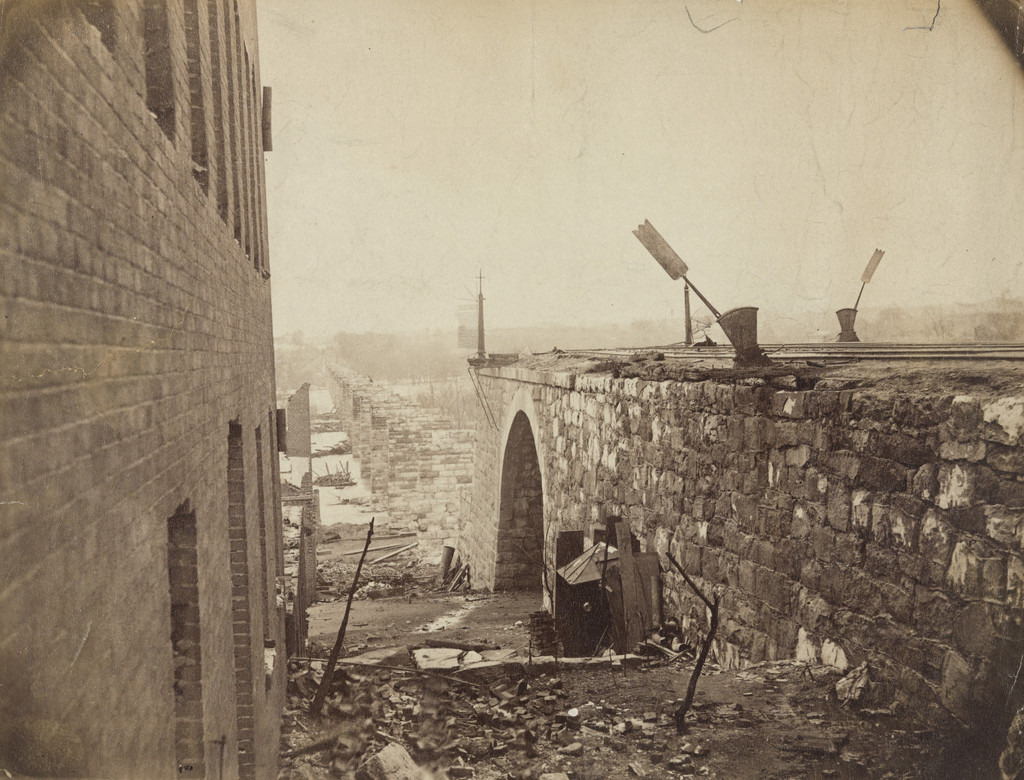
Ruins of Richmond & Petersburg Railroad Bridge, Richmond, Virginia, Mathew B. Brady, April 1865

Ruins of Richmond & Petersburg Railroad Bridge, Richmond, Virginia

April 1865 · Non exposée · Museum of Modern Art

Sous le même toit : National Portrait Gallery

Page du musée
Robert F. Kennedy, Gardner Cox, 1968

Gardner Cox

Robert F. Kennedy, 1968

Babe Ruth, Paolo Garretto, 1929

Paolo Garretto

Babe Ruth, 1929

Alice Dunbar Nelson, Laura Wheeler Waring, 1927

Laura Wheeler Waring

Alice Dunbar Nelson, 1927

Pauline Morton Sabin, Philip Alexius de László, 1926

Philip Alexius de László

Pauline Morton Sabin, 1926

Adolph Ochs, Philip Alexius de László, 1926

Philip Alexius de László

Adolph Ochs, 1926

Samuel Gompers, Moses Wainer Dykaar, 1924

Moses Wainer Dykaar

Samuel Gompers, 1924

Alexander Graham Bell, Moses Wainer Dykaar, 1922

Moses Wainer Dykaar

Alexander Graham Bell, 1922

Lillian D. Wald, William Valentine Schevill, 1919

William Valentine Schevill

Lillian D. Wald, 1919