ART WIKI32 979 en salle
CarteCollectionArtistesMuséesExpositionsJournal
Connexion

ART WIKI

Où est accroché le chef-d’œuvre, et quand on vous laisse entrer.

Collections : Art Institute of Chicago, Cleveland Museum of Art, Galerie Tretiakov, Hirshhorn Museum and Sculpture Garden, J. Paul Getty Museum, Metropolitan Museum of Art, Minneapolis Institute of Art, Musée de l'Ermitage, Musée des Beaux-Arts Pouchkine, Musée du Louvre, musée national d'art asiatique, Musée russe, Musées d'Art de Harvard, Museum of Modern Art, National Gallery of Art, National Portrait Gallery, Rijksmuseum Amsterdam, Smithsonian American Art Museum, Statens Museum for Kunst, Victoria and Albert Museum, Villa Getty, Whitney Museum of American Art, Catalogue d’État du fonds muséal de Russie (274 musées), Europeana (19 musées), Wikidata (6 musées), Paris Musées (12 musées) et Joconde, la base des musées du ministère de la Culture (495 musées). Les images appartiennent à leurs ayants droit.

Rubriques

  • Carte
  • Recherche
  • Collection
  • Chefs-d’œuvre
  • Exposées en ce moment
  • Artistes

Et aussi

  • Musées et galeries
  • Expositions
  • Journal
  • D’où viennent les données
  • Confidentialité et cookies
AccueilCarteCatalogue
  1. Collection/
  2. Art Institute of Chicago/
  3. Excavation
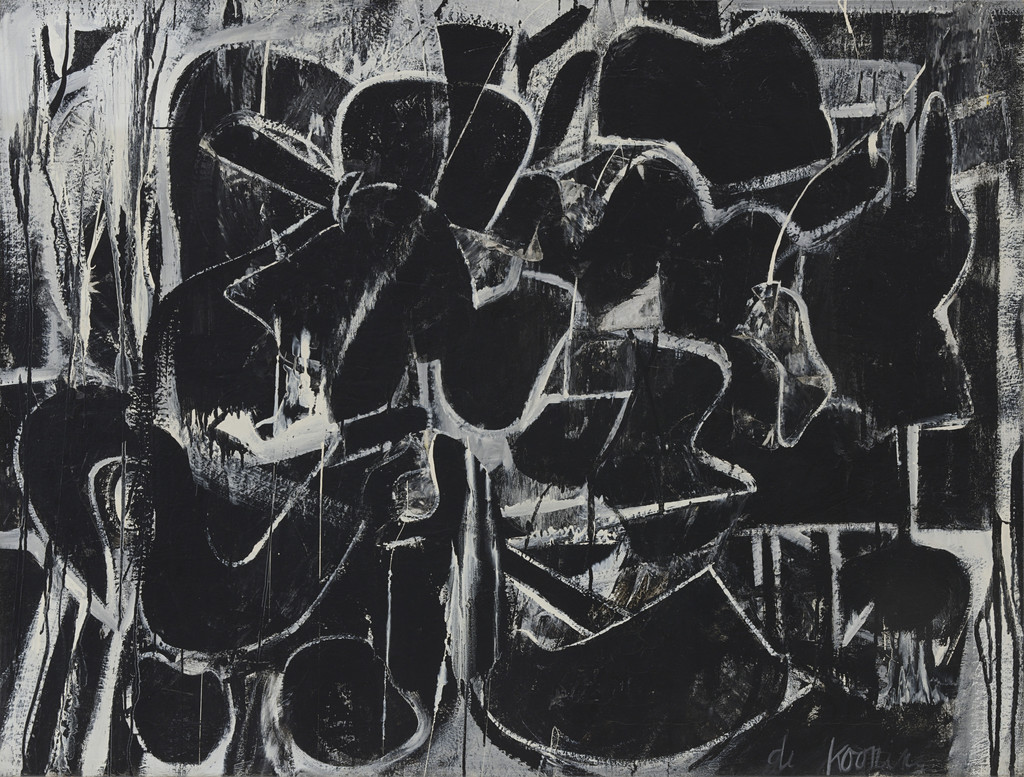
Excavation, Willem de Kooning, 1950
Willem de Kooning, portraitWillem de KooningÉtats-Unis, 1904–1997

Excavation

1950 · Painting

Peut-on la contempler ?

Elle ne reçoit pas en ce moment

Art Institute of Chicago

Chicago, États-Unis

Elle appartient à la collection, mais n’est pas présentée en ce moment.

Vérifié
il y a 3 jours
Dans cet état depuis
2 oct. 2026
Source
Le musée
Sur la cartePage du musée

À propos du tableau

Willem de Kooning was a central figure in Abstract Expressionism, an art movement that espoused the painterly actions of the artist as a sign of his or her emotions. De Kooning completed Excavation in June 1950, just in time for it to be exhibited in the twenty-fifth Venice Biennale. His largest painting up to that date, the work exemplifies the Dutch-born innovator’s style, with its expressive brushwork and distinctive organization of space into sliding planes with open contours. According to the artist, the point of departure for the painting was an image of women working in a rice field in Bitter Rice, a 1949 Neorealist film by Italian director Giuseppe de Santis.

Lire la suite

The mobile structure of hooked calligraphic lines defines anatomical parts—bird and fish shapes, human noses, eyes, teeth, necks, and jaws—that seem to dance across the painted surface, revealing the particular tension between abstraction and figuration that is inherent in de Kooning’s work. The original white pigment has yellowed over the years, diluting somewhat the flashes of red, blue, yellow, and pink that punctuate the composition. Aptly titled, the painting reflects de Kooning’s technically masterful painting process: an intensive building up of the surface and scraping down of its paint layers, often for months, until the desired effect was achieved.

Art Institute of Chicago · CC BY 4.0

Notice

1950 · à 46 ans
19041997
Numéro d’inventaire
1952.1

Ce qu’elle montre

GeometricAbstract shapes

Au catalogue

PeinturesHuilePeinture néerlandaisePeinture américaineArt d’après-guerreXXe siècleContemporaryÉtats-Unis

Allées et venues

  1. Non exposée en ce moment

    Art Institute of Chicago · 2 oct. 2026 — aujourd’hui · Vérifié

  2. Exposée · Regenstein Hall

    Art Institute of Chicago · 28 sept. 2026 — 2 oct. 2026 · Vérifié

  3. Exposée · Salle 291

    Art Institute of Chicago · 19 août 2026 — 28 sept. 2026 · Vérifié

Sources

  • Art Institute of Chicago
  • Image : Art Institute of Chicago — © the artist or rights holder

Pendant ce temps, chez Willem de Kooning

La vie entière
  1. 1940s

    Meets Franz Kline

    De Kooning met the younger painter Franz Kline, who was also working in the figurative style of American realism and had been drawn to monochrome. Kline, who died young, became one of De Kooning’s closest artist friends; his influence is evident in De Kooning’s calligraphic black images of this period.

  2. 1943–1957

    An “open” marriage with Elaine

    Willem and Elaine’s marriage was later called an open marriage: both were casual about sex and about each other’s affairs. Elaine had affairs with men who helped further Willem’s career, such as the art critic Harold Rosenberg, the ARTnews editor Thomas B. Hess and Charles Egan, owner of the Charles Egan Gallery.

  3. 1948

    First solo exhibition at the Charles Egan Gallery

    In 1948 De Kooning had his first one-man show at the Charles Egan Gallery in New York City, consisting largely of black-and-white works, though a few pieces had passages of bright colour. By then he had already acquired a formidable underground reputation.

  4. 1948–1966

    Fourteen solo exhibitions

    From 1948 to 1966 De Kooning had 14 solo exhibitions, many in New York but also nationally and internationally, among them the Egan Gallery, the Sidney Janis Gallery, the Martha Jackson Gallery, the Allan Stone Gallery and museums such as the Museum of Fine Arts, Boston and the Smith College Museum of Art. There were two a year in 1953, 1964 and 1965.

  5. 1950s

    The path of “figurative abstractions”

    In the 1950s De Kooning followed a path of primitivisation and developed so-called “figurative abstractions”: a solitary female figure, under furious, pasty “blow-like” brushstrokes, turns into a painterly totem open to radical Freudian readings.

  6. 1951 · Distinction

    Logan Medal of the Arts
Autres œuvres : Willem de Kooning

Toutes les œuvres
Painting, Willem de Kooning, 1948

Painting

1948 · Museum of Modern Art

Woman, II, Willem de Kooning, 1952

Woman, II

1952 · Museum of Modern Art

Litho #2 (Waves #2), Willem de Kooning, 1960

Litho #2 (Waves #2)

1960 · Art Institute of Chicago

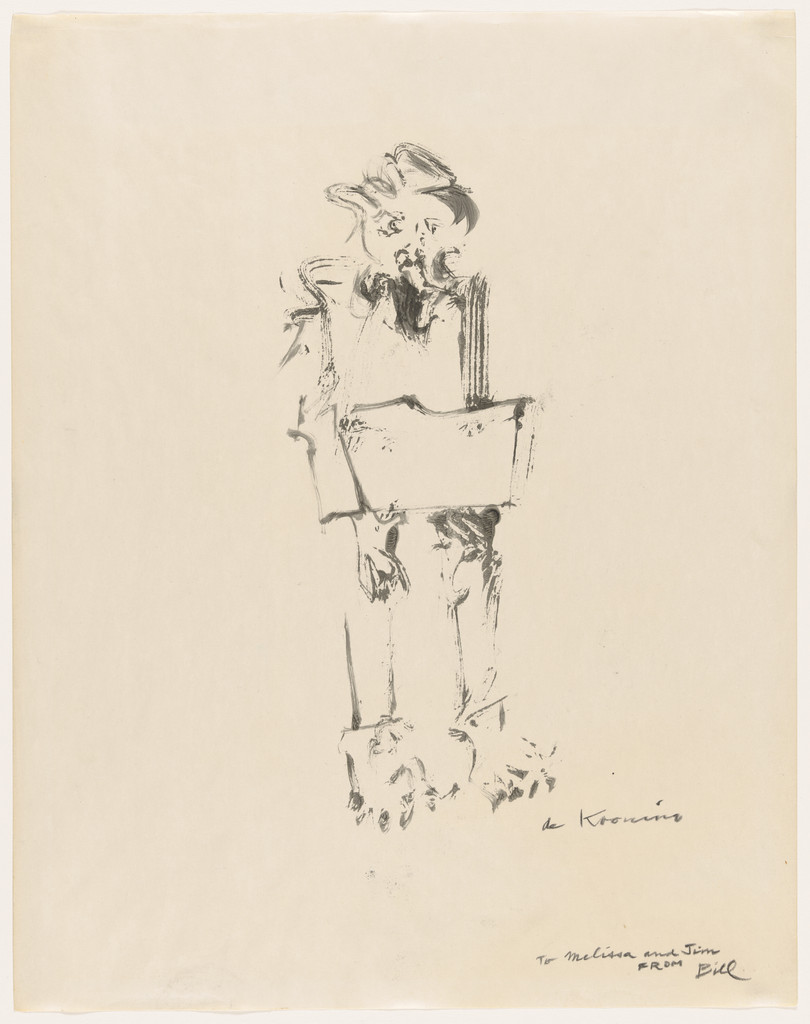
Joe Gould, Willem de Kooning, (n.d.)

Joe Gould

(n.d.) · Non exposée · Museum of Modern Art

Legend and Fact, Willem de Kooning, 1940

Legend and Fact

1940 · Non exposée · National Gallery of Art

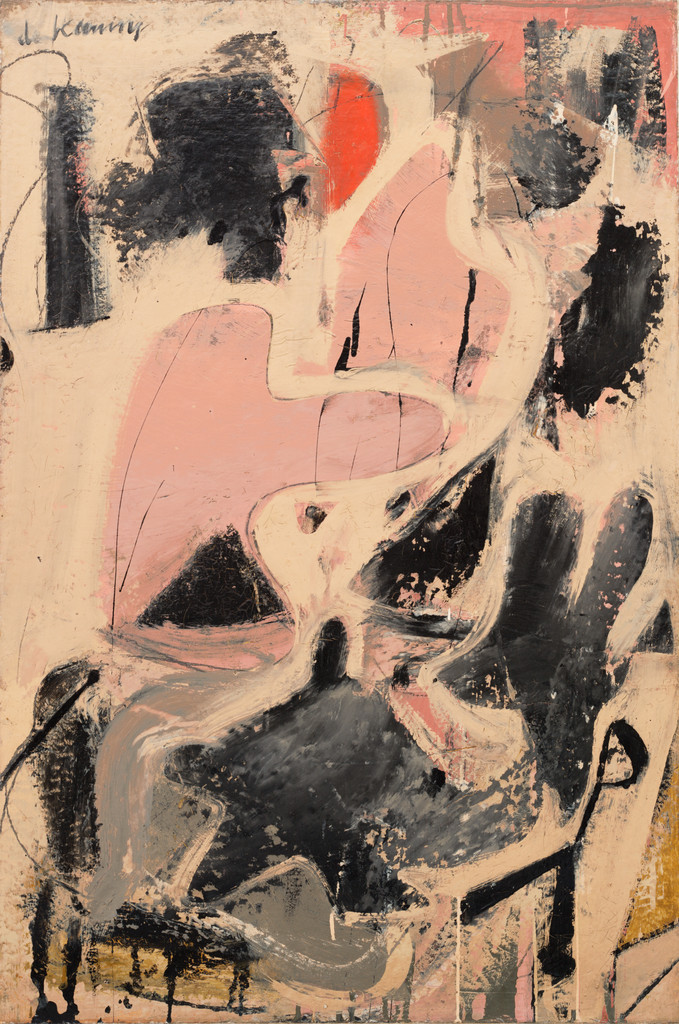
Valentine, Willem de Kooning, 1947

Valentine

1947 · Non exposée · Museum of Modern Art

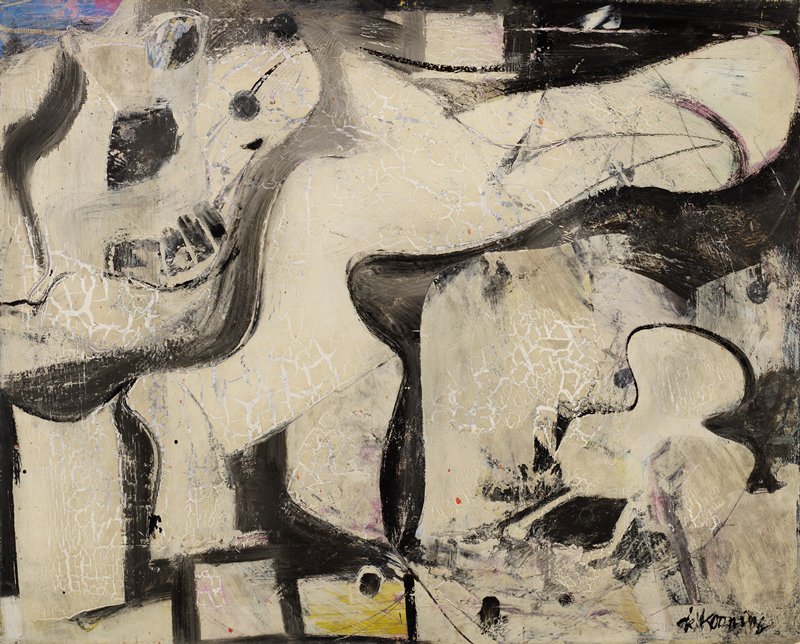
Night, Willem de Kooning, 1948

Night

1948 · Non exposée · Minneapolis Institute of Art

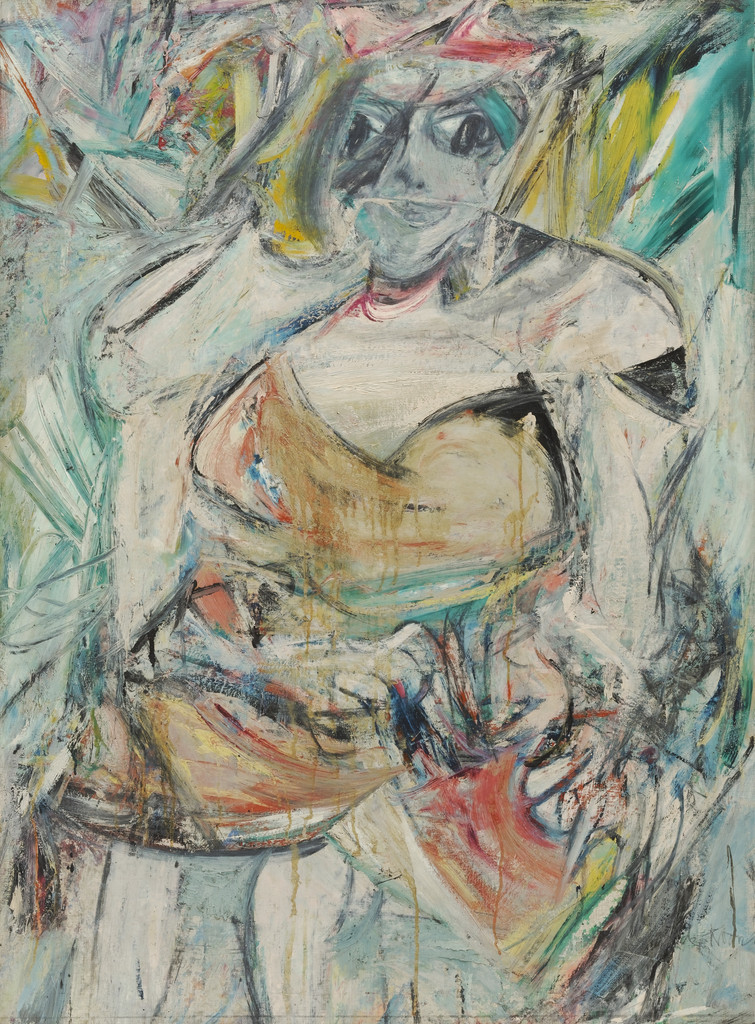
Woman, Willem de Kooning, 1949-50

Woman

1949-50 · Non exposée · Museum of Modern Art

Sous le même toit : Art Institute of Chicago

Page du musée
The Bedroom, Vincent van Gogh, 1889

Vincent van Gogh

The Bedroom, 1889

A Sunday on La Grande Jatte — 1884, Georges Seurat, 1884–86, border added 1888–89

Georges Seurat

Un dimanche après-midi à l'Île de la Grande Jatte, 1884–86, border added 1888–89

Paris Street; Rainy Day, Gustave Caillebotte, 1877

Gustave Caillebotte

Rue de Paris, temps de pluie, 1877

Two Sisters (On the Terrace), Pierre-Auguste Renoir, 1881

Pierre-Auguste Renoir

Les Deux Sœurs, 1881

The Basket of Apples, Paul Cézanne, c. 1893

Paul Cézanne

La Corbeille de pommes, c. 1893

Stacks of Wheat (End of Summer), Claude Monet, 1890–91

Claude Monet

Stacks of Wheat (End of Summer), 1890–91

American Gothic, Grant Wood, 1930

Grant Wood

American Gothic, 1930

Nighthawks, Edward Hopper, 1942

Edward Hopper

Nighthawks, 1942

Sur le même thème · Geometric

Toutes les œuvres sur ce thème
Fourth Knot, after Leonardo da Vinci, c. 1490/1500

Leonardo da Vinci

Fourth Knot, c. 1490/1500

Non exposée · National Gallery of Art

First Knot, after Leonardo da Vinci, c. 1490/1500

Leonardo da Vinci

First Knot, c. 1490/1500

Non exposée · National Gallery of Art

Dream and Lie of Franco II, Pablo Picasso, 1937

Pablo Picasso

Dream and Lie of Franco II, 1937

Non exposée · National Gallery of Art

The Bull (Le taureau), Pablo Picasso, 1946

Pablo Picasso

The Bull (Le taureau), 1946

Non exposée · National Gallery of Art

Pike (Pique), Pablo Picasso, 1959

Pablo Picasso

Pike (Pique), 1959

Non exposée · National Gallery of Art

Dream and Lie of Franco I, Pablo Picasso, 1937

Pablo Picasso

Dream and Lie of Franco I, 1937

Non exposée · National Gallery of Art

The Bull (Le taureau), Pablo Picasso, 1946

Pablo Picasso

The Bull (Le taureau), 1946

Non exposée · National Gallery of Art

The Bull (Le taureau), Pablo Picasso, 1945

Pablo Picasso

The Bull (Le taureau), 1945

Non exposée · National Gallery of Art