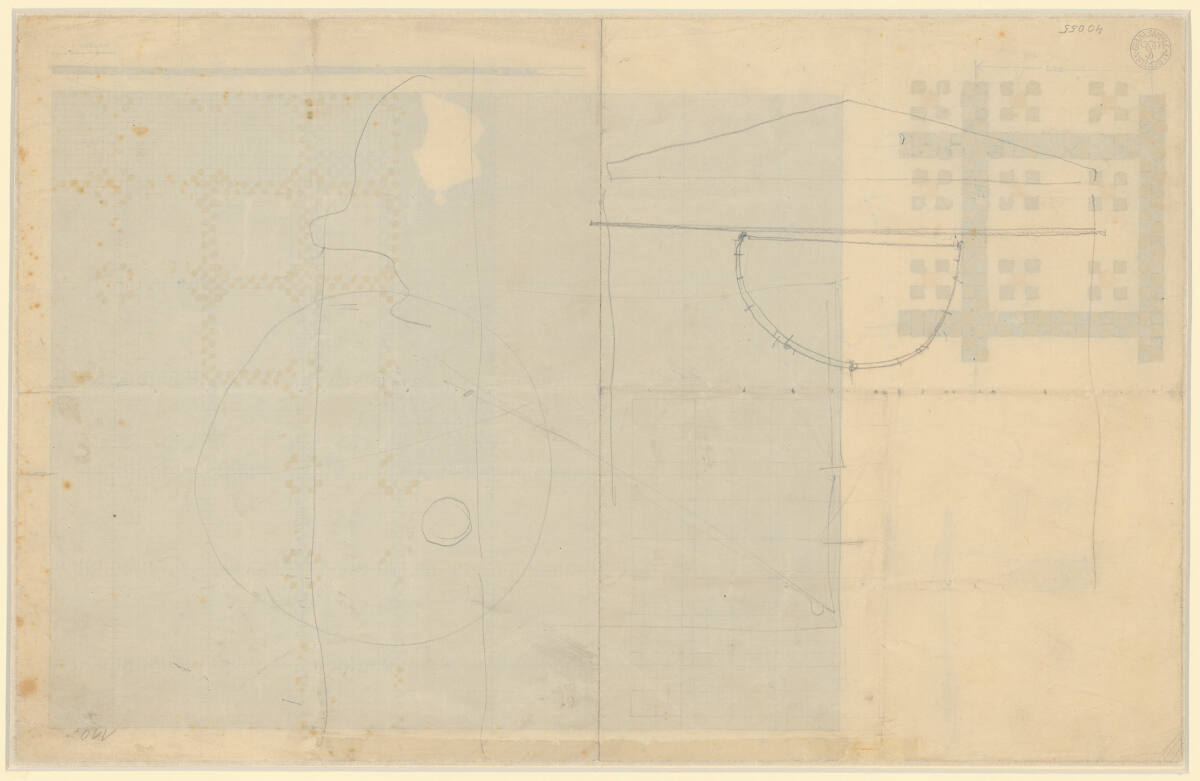
 Koloman (Kolo) MoserAutriche, 1868–1918
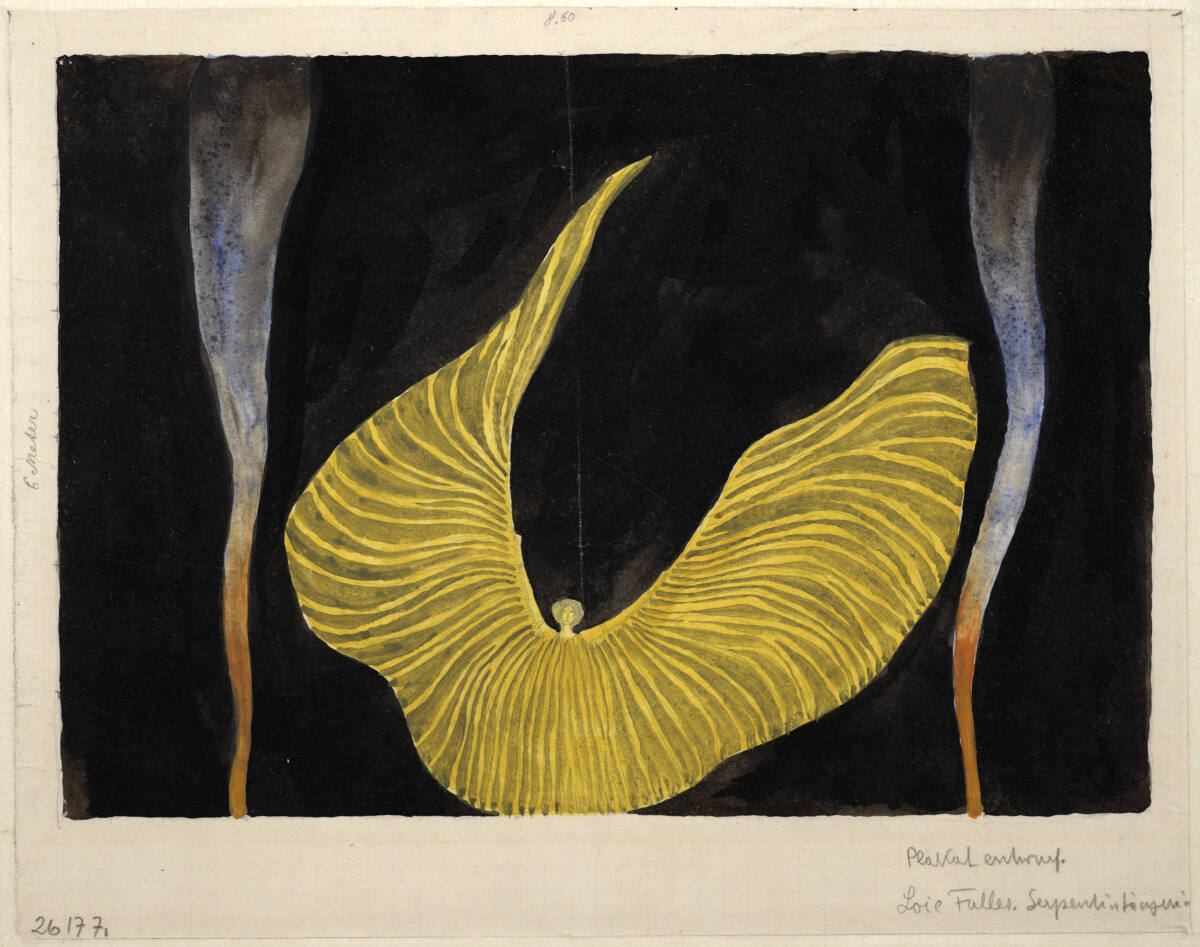
Entwurfsskizze
Peut-on la voir ?
Inconnu
Où est « Entwurfsskizze » aujourd’hui ? Collection: Albertina, Vienne. Inconnu.

Vienne, Autriche
Le propriétaire est connu ; on ignore si l’œuvre est exposée aujourd’hui.
- Dans cet état depuis
- Source
- Le musée
Notice
Au catalogue
Sources
- Albertina
- Image : Albertina — Public Domain Mark 1.0
Dans la vie de Koloman (Kolo) Moser
La vie entière1890s
Applied arts: Mackintosh and the Arts and Crafts movement
In the 1890s he devotes himself extensively to the applied arts, strongly influenced by the Glasgow School artists Charles Rennie Mackintosh and Margaret Macdonald Mackintosh and by the English Arts and Crafts movement.
1899
Begins teaching at the School of Applied Arts
From 1899 he teaches at the Kunstgewerbeschule (School of Applied Arts); other accounts say that from 1900 to 1918 he was a professor at the Vienna Academy of Fine Arts.
1900
To the World Exhibition in Paris
In 1900 he travels to the World Exhibition in Paris via Munich and Strasbourg.
1900–1902
The portfolio “Die Quelle” (“The Source”)
With Martin Gerlach and Carl Otto Czeschka he publishes the three-volume portfolio “Die Quelle” (“The Source”) of elegant graphic designs for tapestries, fabrics and wallpaper.
1903
Founds the Wiener Werkstätte
Together with Josef Hoffmann and the entrepreneur Fritz Waerndorfer he founds the Wiener Werkstätte (Vienna Workshops) to produce decorative and applied-art objects on the model of the Arts and Crafts movement. The workshops turn out glassware, flatware, rugs, textiles, graphic designs and eventually clothing, and become the new commercial standard for Viennese art.
summer 1903
Meets Ferdinand Hodler and Cuno Amiet
In the summer of 1903 he travels via Munich to Bern, where he meets Ferdinand Hodler, who will greatly influence his work (they meet in person twice), and Cuno Amiet; he then goes on to Basel, Paris, Bruges, Scheveningen, Antwerp, Lübeck and Hamburg.