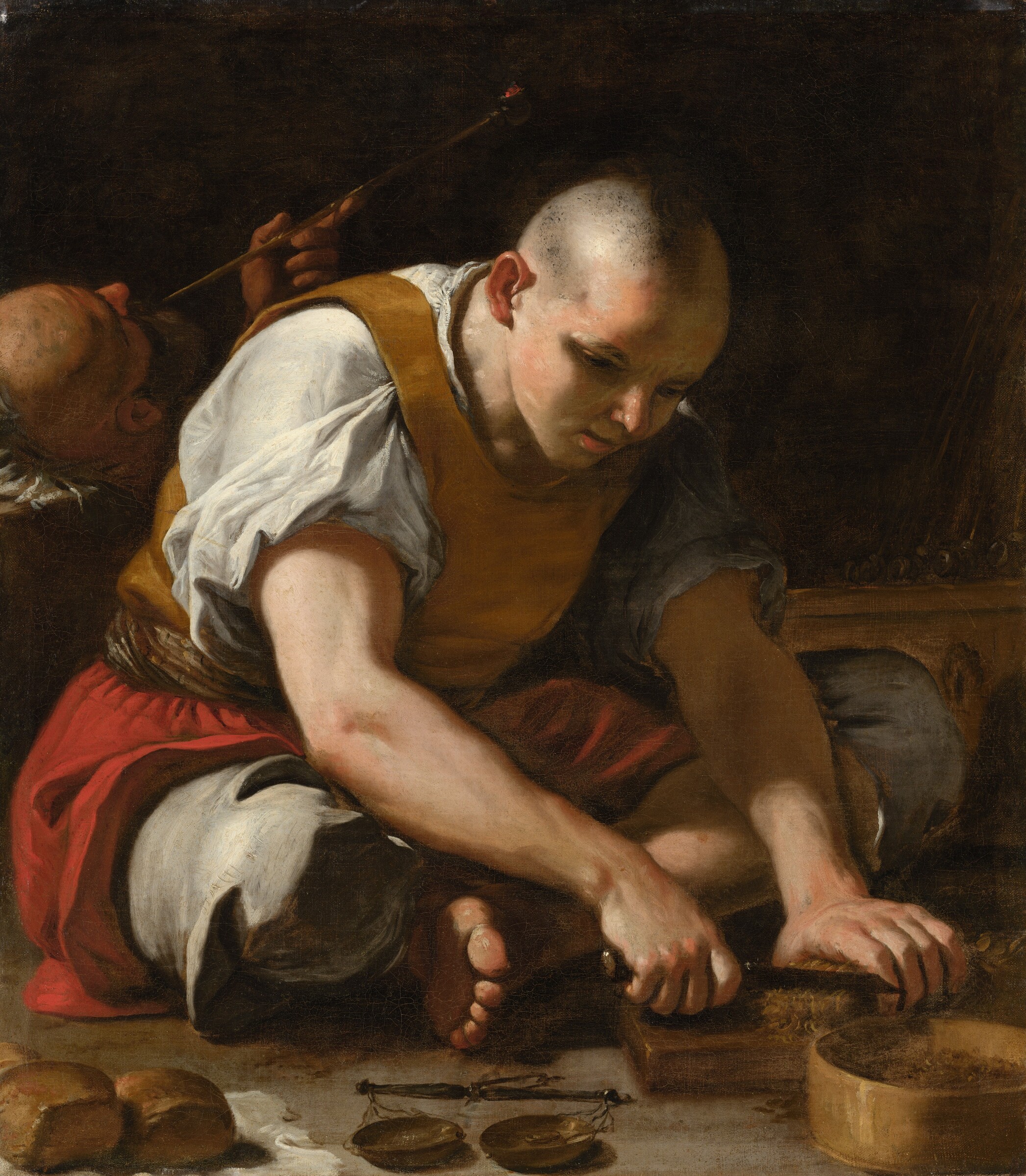
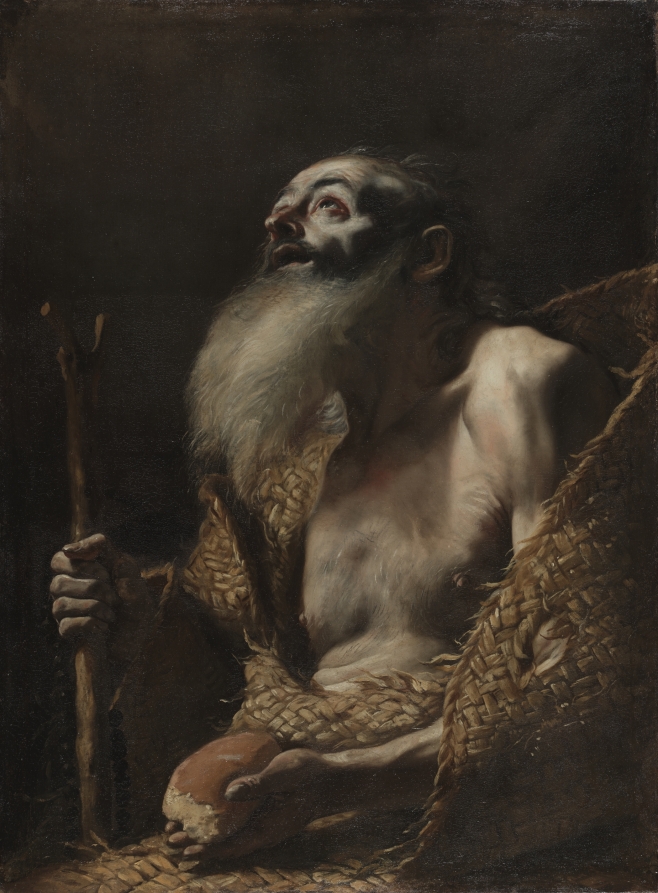
Mattia PretiItalie, 1613–1699
ECCE HOMO
Peut-on la contempler ?
Inconnu
Musée Condé
Chantilly, France
Le propriétaire est connu ; on ignore si l’œuvre est exposée aujourd’hui.
- Dans cet état depuis
- Source
- Le musée
Notice
- Numéro d’inventaire
- PE 82
Ce qu’elle montre
Au catalogue
Sources
- Musée Condé
- Image : Musée Condé — © Harry Bréjat ; Réunion des musées nationaux - utilisation soumise à autorisation; Ministère de la Culture (France), base Joconde
Pendant ce temps, chez Mattia Preti
La vie entière1653–1661
A relationship of mutual influence with the young Luca Giordano
In Naples he developed a mutually influential relationship with the younger Luca Giordano; together they contributed to the development of the Neapolitan school of painting in the second half of the century. For the young Neapolitan artist, Preti acted as a bridge between the early naturalism of the first half of the century and the fully-fledged Baroque style.
1656
The plague in Naples
The plague that struck Naples in 1656 reduced its population from 450,000 to just under 200,000; after it, numerous public works were commissioned in gratitude to the Virgin Mary and Naples’ patron saints for saving the city.
summer 1659
A trip to Malta: Knight of Grace of the Order
In the summer of 1659 he travelled to Malta, where he was made a Knight of Grace in the Order of St John and visited the Order’s headquarters.
1660
Commissioned to decorate the vault of St John’s Co-Cathedral
In 1660 he was commissioned to decorate the vault of St John’s Co-Cathedral in Valletta, the church of the Order of Malta.
1660–1661
Back in Rome: Valmontone and Sant’Andrea
By around 1660 he was no longer based permanently in Naples, and was initially in Rome, where he succeeded Pier Francesco Mola to complete the fresco cycle of the Elements of the Air at the Villa Pamphilij in Valmontone and made improvements to his Stories of the Saint at Sant’Andrea della Valle, painted during his earlier years in Rome. Meanwhile, in Naples, he had established a strong professional relationship with Don Antonio Ruffo, a wealthy Sicilian patron who invited him to fresco Messina Cathedral.
1661–1699
Malta: work for the island and for all of Europe
From 1661 he worked in Malta: besides the cathedral decoration he realised several paintings on the island for private patrons and parish churches, and his increased reputation brought him commissions from all over Europe. His major works in Malta include the “Conversion of Saint Paul” in St Paul’s Cathedral in Mdina, commissioned by the Knights Hospitaller, and the “Madonna and Child with Saints John the Baptist and Anthony Abbot” in the chapel of Verdala Palace in Siġġiewi.