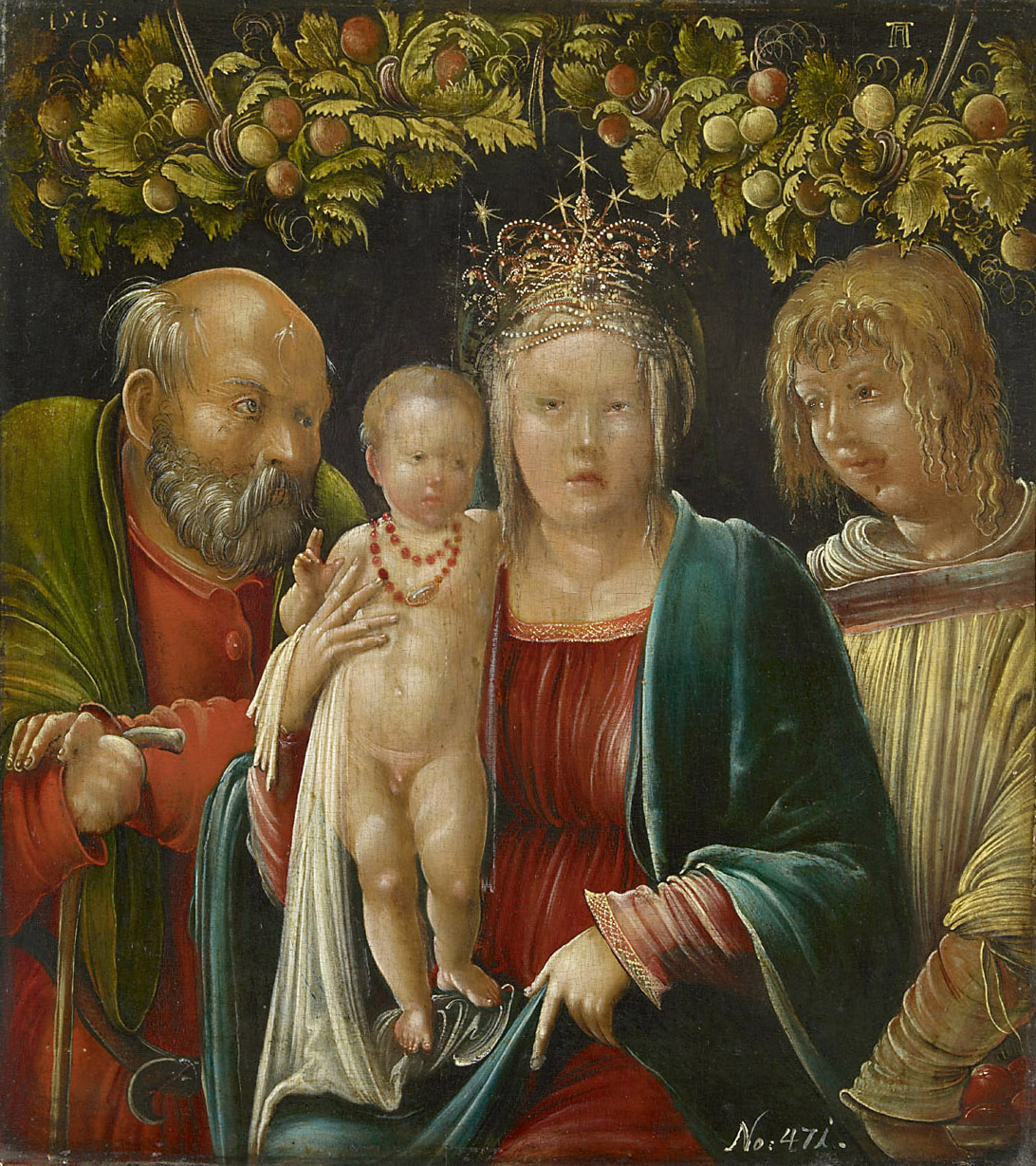
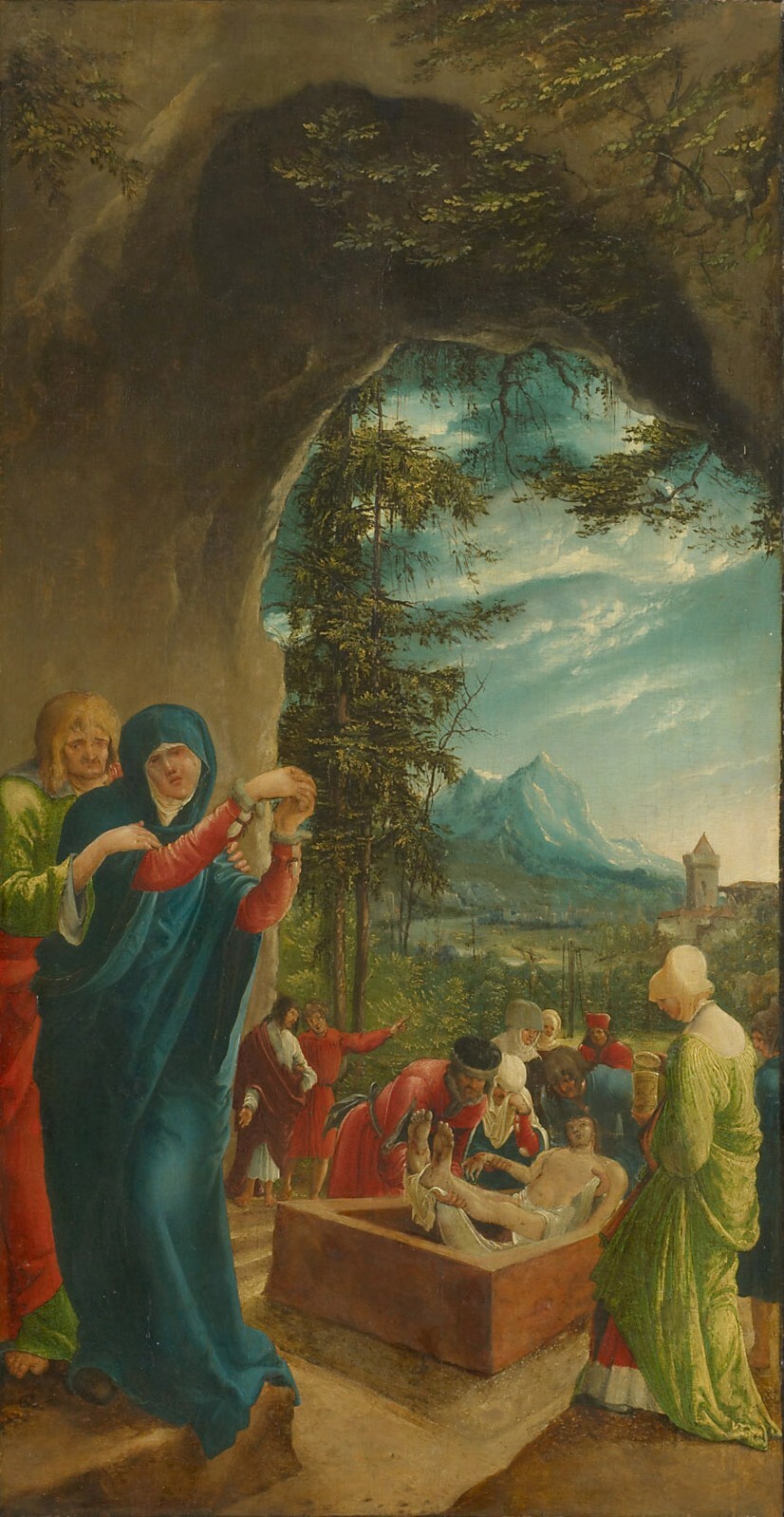
Albrecht AltdorferAllemagne, 1480–1538
Ecce Homo
Peut-on la voir ?
Pas exposée actuellement
Où est « Ecce Homo » aujourd’hui ? Collection: Musées d'Art de Harvard, Cambridge. Pas exposée actuellement. Vérifié 29 septembre 2026.

Cambridge, États-Unis
Elle appartient à la collection, mais n’est pas présentée en ce moment.
- Vérifié
- Dans cet état depuis
- Source
- Le musée
Notice
- Numéro d’inventaire
- M13533
Au catalogue
Sources
- Musées d'Art de Harvard
- Image : Musées d'Art de Harvard — © President and Fellows of Harvard College
Dans la vie de Albrecht Altdorfer
La vie entière1505
Settles in the free city of Regensburg
He settles in Regensburg, a free imperial city on the Danube, where he will in time become town architect and a member of the city council.
1511
A journey down the Danube to the Austrian Alps
In 1511 he travels along the Danube to the Austrian Alps, making sketches on the way. Altdorfer is regarded as one of the first German artists to turn to landscape as an independent genre.
1513
In the service of Emperor Maximilian I in Innsbruck
From 1513 he is in the service of Emperor Maximilian I in Innsbruck (Tyrol) and carries out several commissions for the imperial court; for the emperor he also made drawings for the “Triumphal Arch”, the “Triumphal Procession” and Maximilian's “Prayer Book”.
1526
Becomes the chief architect of Regensburg
From 1526 he is the city's chief architect, responsible among other things for its fortifications; during the Reformation he devoted himself mainly to architecture. Contemporaries saw in him above all an architect: his gravestone says that a builder lies buried beneath it.
by 1529
Gives up the office of mayor for the Duke's commission
William IV, Duke of Bavaria, commissions “The Battle of Alexander” as part of a series of eight historical battle scenes for the Residenz in Munich; to accept the commission, Altdorfer renounces the office of Mayor of Regensburg. The painting is thought to be the earliest to show the curvature of the Earth from a great height.
12 février 1538
Died