 John FlaxmanAngleterre, 1755–1826
Drawing
Peut-on la contempler ?
Nous l’ignorons : le musée garde le silence

Victoria and Albert Museum
Londres, Royaume-Uni
Le propriétaire est connu. Si elle est exposée aujourd’hui, le musée ne le dit pas, et l’on ne nous a pas appris à deviner.
- Dans cet état depuis
- 25 sept. 2026
- Source
- Les données de collection du musée lui-même
À propos de l’œuvre
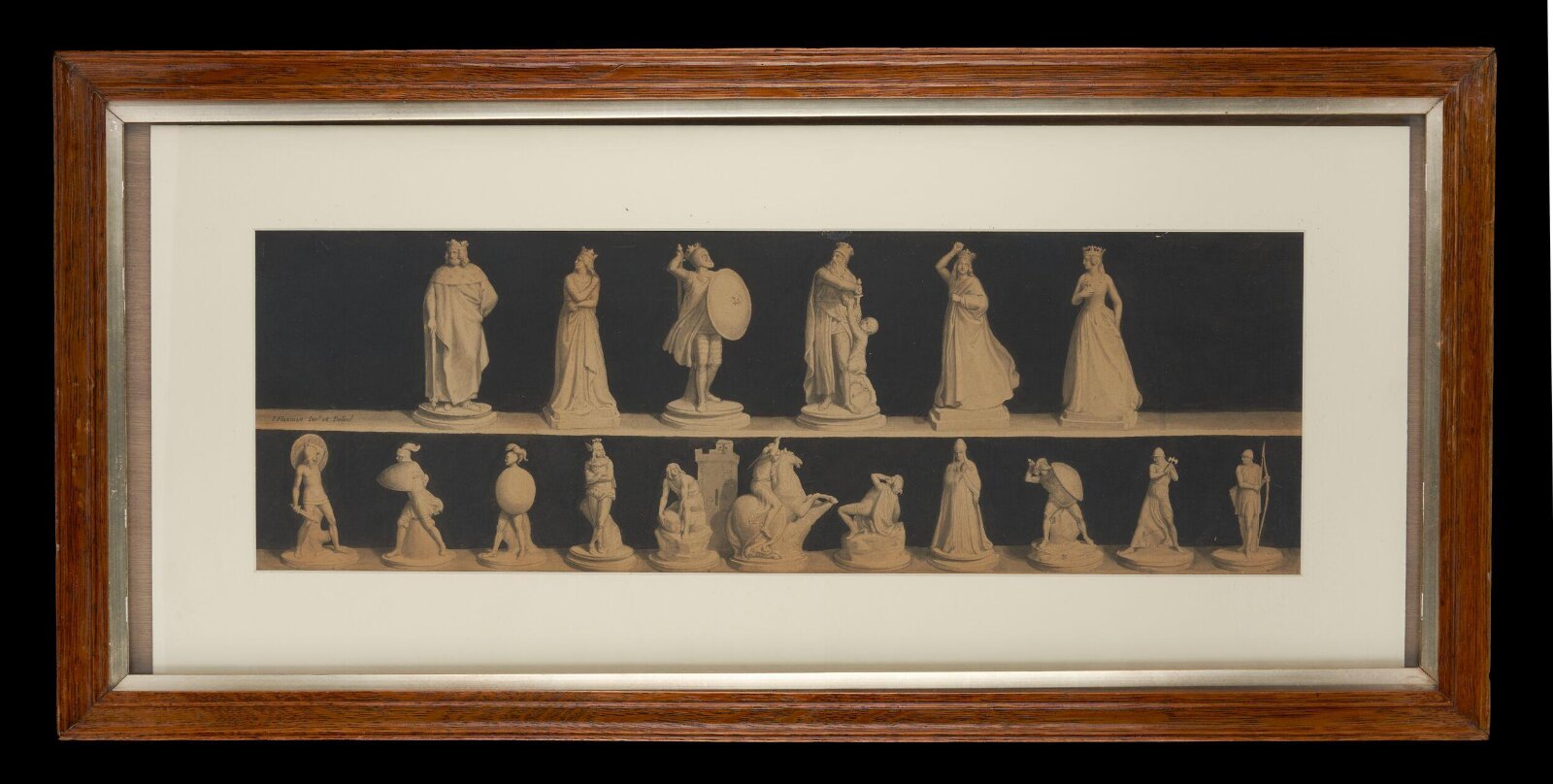
Chess pieces or 'Chessmen' have been a popular Wedgwood product in jasperware, black basalt and Queen's ware since the late 18th century.
A set was designed by John Flaxman Jr (1755-1826) in 1785, with a bill from Flaxman, dated 30 October 1783, recording the purchase of ‘a figure of a fool for chess £1 : 5 : 0’ (V&A Wedgwood Collection Archives: E2-1339) implying that the subject has been modelled in wax. Josiah Wedgwood (1730-95) was pleased with the set, indicated by a reply from Flaxman, dated 5 February 1784, ‘I return you many thanks, for the liberal praise you bestow on my chess figures’ (V&A Wedgwood Collection Archives: E2-30188). On 20 February 1784, progress in the production of the figures was reported to Flaxman, ‘We are getting forward with the chessmen and hope soon to send a complete set to Greek Street’ (V&A Wedgwood Collection Archives: E2-30189).
Read on
Between 1785 and 1795, 130 sets were sold, and variations in colour were employed. Dark blue, lilac, and green dip bases were provided for some of the white jaspeware pieces. The figures of the Kings and Queens are traditionally said to portray Sarah Siddons and Philip Kemble in Shakespearian roles.
Victoria and Albert Museum
Notice
- Numéro d’inventaire
- WE.13366-2014
Au catalogue
Sources
- Victoria and Albert Museum: the museum's own open data · obtenue il y a 5 jours
- Image : Victoria and Albert Museum — © Victoria and Albert Museum, London

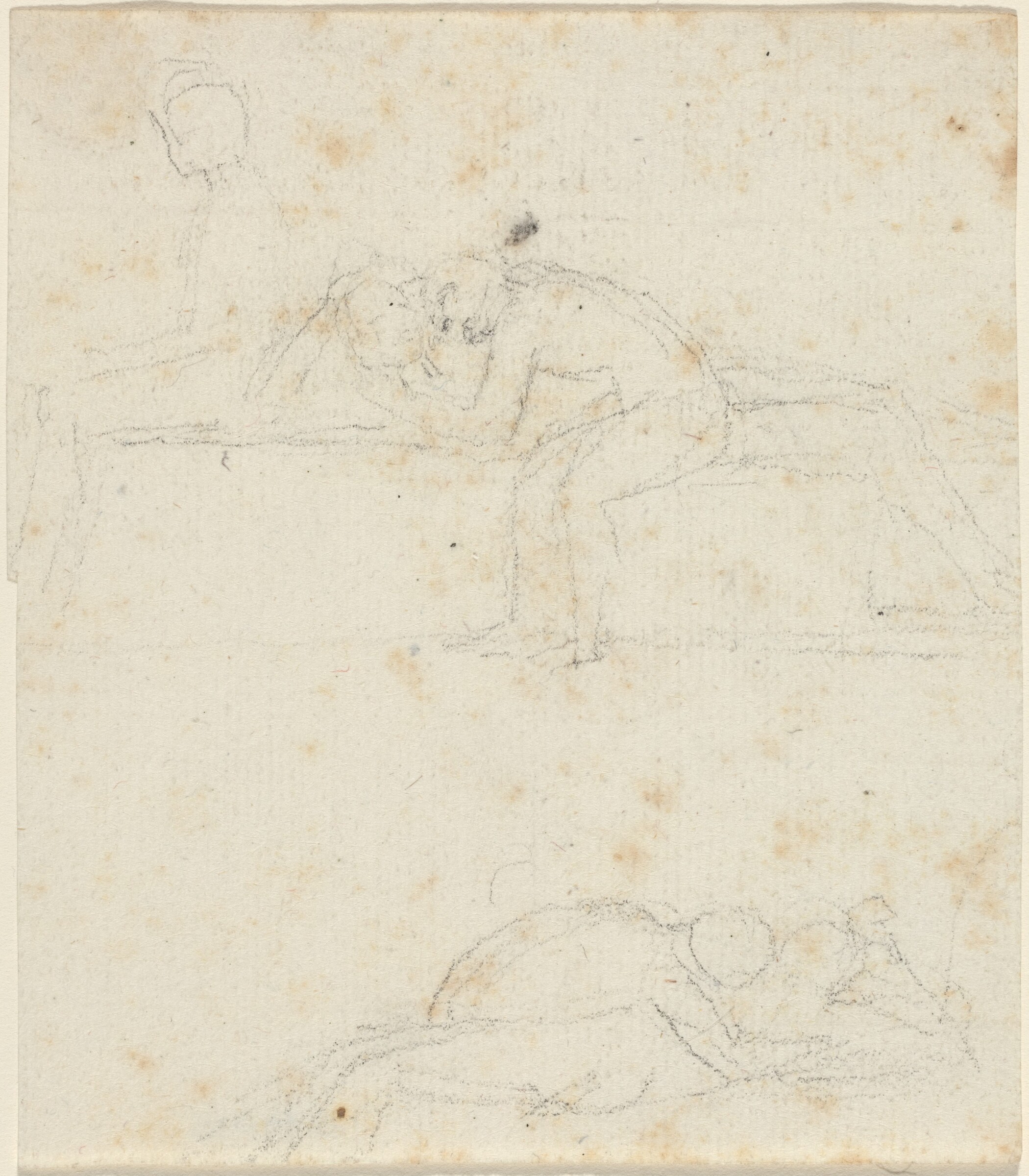
![Studies for a Monument with Angels Reaching Down to a Praying Figure [recto and verso], John Flaxman](https://api.nga.gov/iiif/464350cb-972e-45d4-88f8-92384ba11824/full/!2400,2400/0/default.jpg)