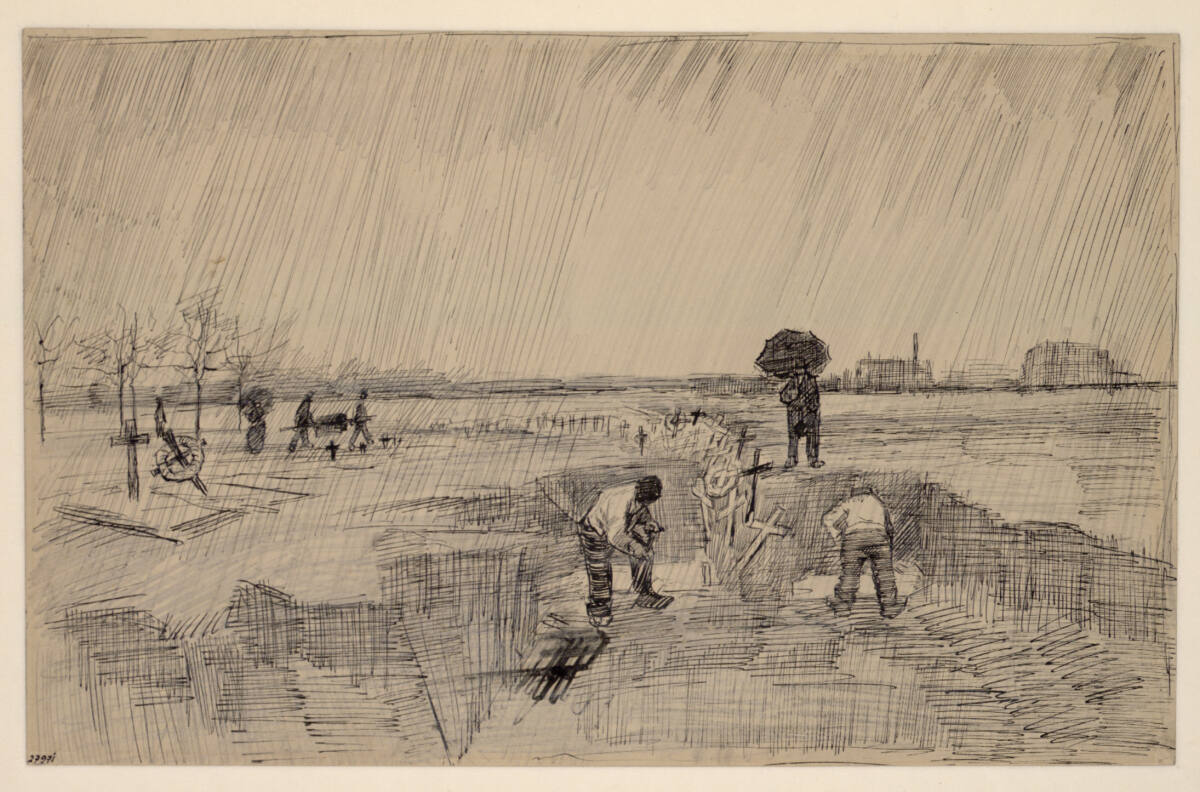
Karel van Mander the ElderPays-Bas historiques, 1548–1606
Die Predigt des Täufers
Peut-on la voir ?
Inconnu
Où est « Die Predigt des Täufers » aujourd’hui ? Collection: Albertina, Vienne. Inconnu.

Vienne, Autriche
Le propriétaire est connu ; on ignore si l’œuvre est exposée aujourd’hui.
- Dans cet état depuis
- Source
- Le musée
Notice
Au catalogue
Sources
- Albertina
- Image : Albertina — Public Domain Mark 1.0
Dans la vie de Karel van Mander the Elder
La vie entière1583–1603
Inventory of Haarlem's art collection
While translating Vasari's “Lives” into Dutch, van Mander is offered a commission by the Haarlem city fathers to inventory “their” art collection — the city had confiscated all Catholic religious art after the Satisfaction of Haarlem, which gave Catholics equal rights with Protestants, was overturned in 1578. The work lasts twenty years and yields the chapters of his future “Schilder-Boeck” on Early Netherlandish painters.
1583–1603
Evenings of drawing and pupils in his home
After the Calvinist iconoclasm religious themes have gone out of fashion and mythology has become popular, but few painters could afford a trip to Italy, so van Mander receives budding artists in his home for evenings of communal drawing and study of classical mythology, to educate them in the proper techniques. A firm believer in the hierarchy of genres, and in the idea that true-to-life historical allegories can be achieved only through proper study of existing works, he counts Frans Hals and Hendrick Gerritsz Pot among his Haarlem pupils.
1597
“De Gulden Harpe”: first spiritual poems
The poetry volume “De Gulden Harpe” (“The Golden Harp”) is published — longwinded versifications of biblical stories meant to educate readers in biblical words. His style develops under the influence of his translations of classical literature from the French, above all the Iliad and Virgil's Bucolica and Georgica.