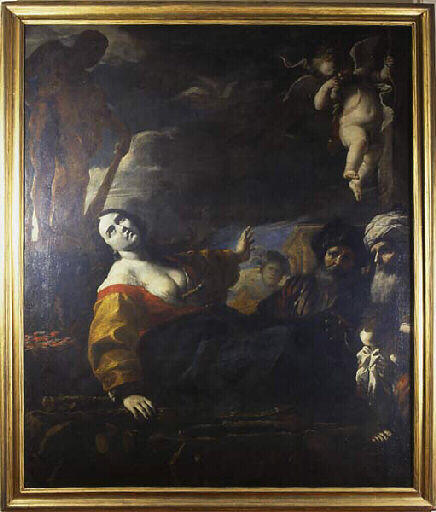
 Mattia PretiItalie, 1613–1699
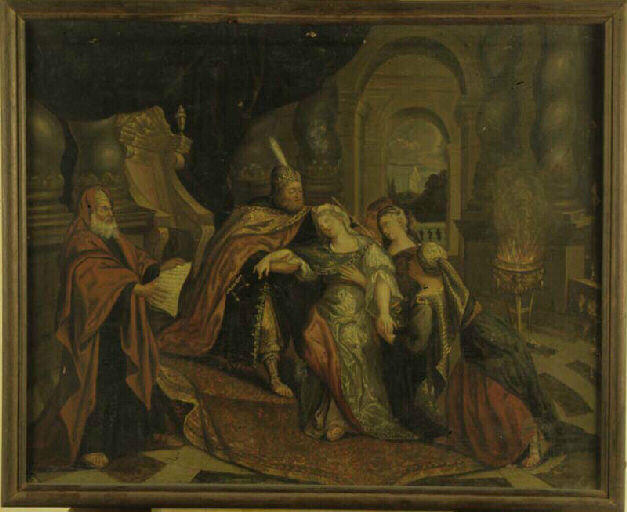
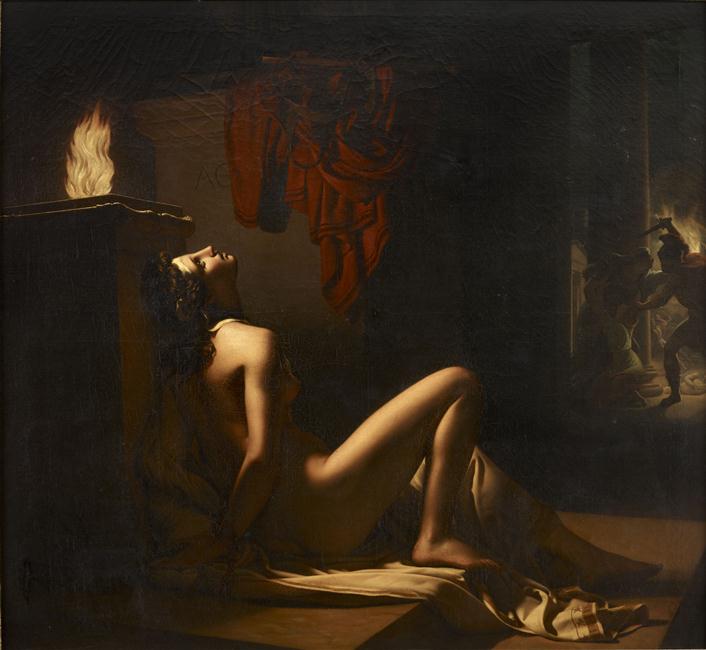
Didon sur le bûcher
Peut-on la voir ?
Inconnu
Où est « Didon sur le bûcher » aujourd’hui ? Collection: Musée des Beaux-Arts de Chambéry, Chambéry. Inconnu.
Chambéry, France
Le propriétaire est connu ; on ignore si l’œuvre est exposée aujourd’hui.
- Dans cet état depuis
- Source
- Le musée
Notice
- Numéro d’inventaire
- M 999 ; A 175 (Ancien numéro) ; Bord 755 (Autre numéro)
Ce qu’elle montre
Au catalogue
Sources
- Musée des Beaux-Arts de Chambéry
- Image : Musée des Beaux-Arts de Chambéry — Giroud, Bouchayer; Ministère de la Culture (France), base Joconde
Dans la vie de Mattia Preti
La vie entière1630–1653
Frequent journeys: Italy, Spain and Flanders
Although he remained in Rome for nearly twenty-five years, he travelled frequently throughout Italy and abroad, particularly to Spain and Flanders, and established contacts with Emilian painters of the preceding generation, Guercino and Giovanni Lanfranco, who further influenced his style.
1653
Moves to Naples
He first appears in the records in Naples in March 1653; he quickly became a prominent figure in Neapolitan artistic circles.
early 1653
Candidate for President of the Accademia di San Luca
In early 1653, still living in Rome, he was a candidate for the position of Principe (President) of the Accademia di San Luca, but was not appointed; a few months later he departed for Naples.
1653–1661
A relationship of mutual influence with the young Luca Giordano
In Naples he developed a mutually influential relationship with the younger Luca Giordano; together they contributed to the development of the Neapolitan school of painting in the second half of the century. For the young Neapolitan artist, Preti acted as a bridge between the early naturalism of the first half of the century and the fully-fledged Baroque style.
1656
The plague in Naples
The plague that struck Naples in 1656 reduced its population from 450,000 to just under 200,000; after it, numerous public works were commissioned in gratitude to the Virgin Mary and Naples’ patron saints for saving the city.