 Mikhail Vrubel1856–1910
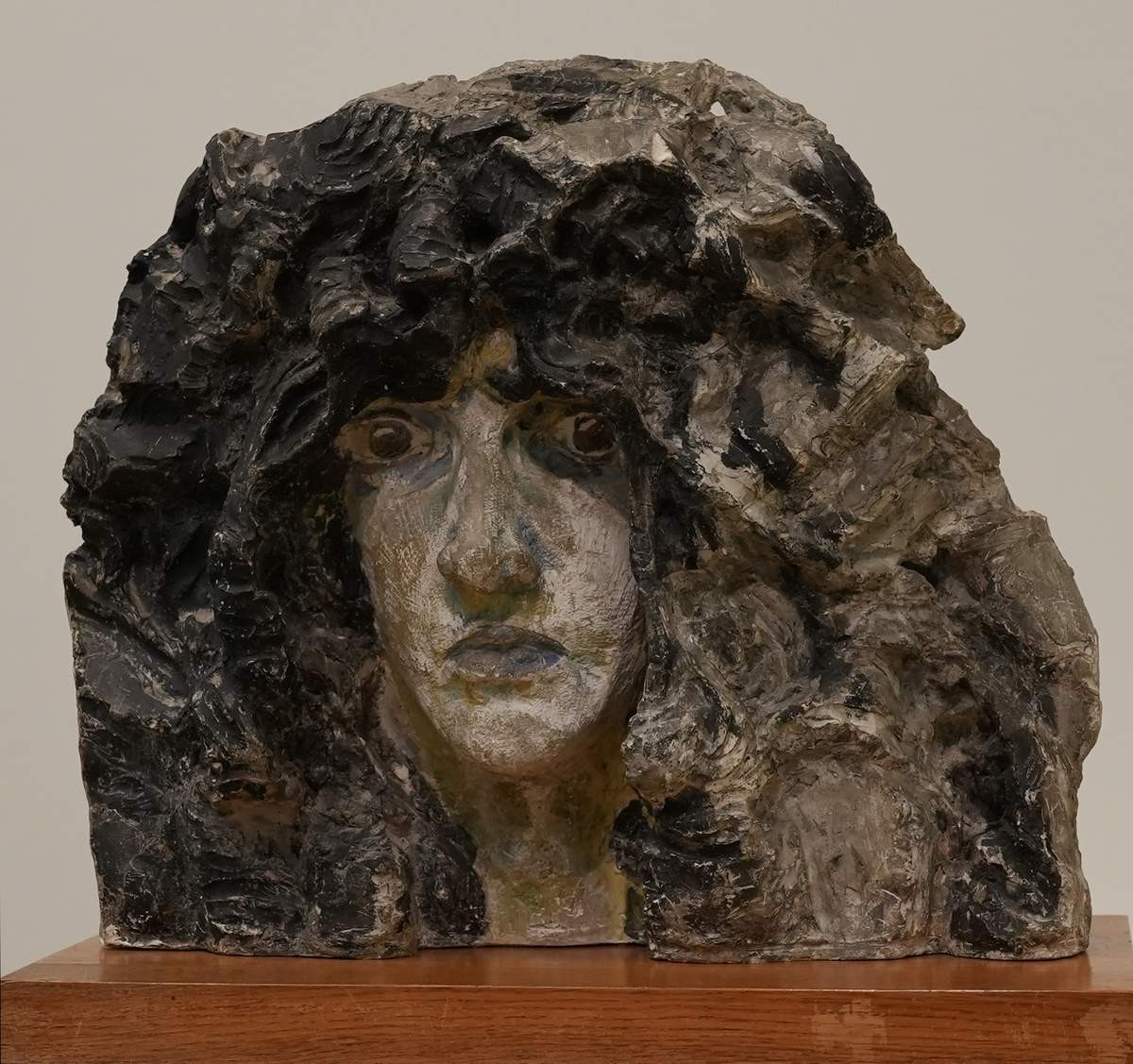
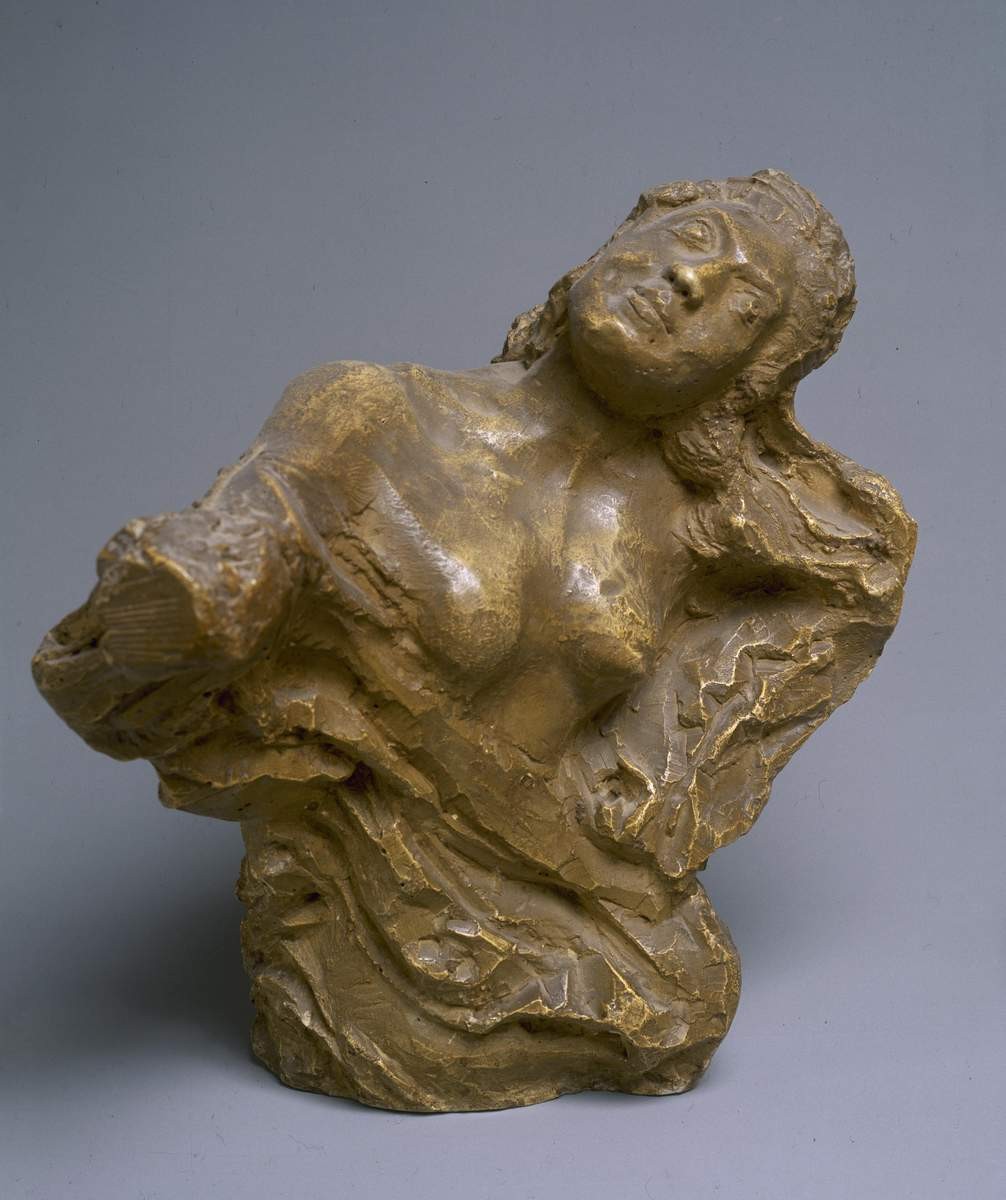
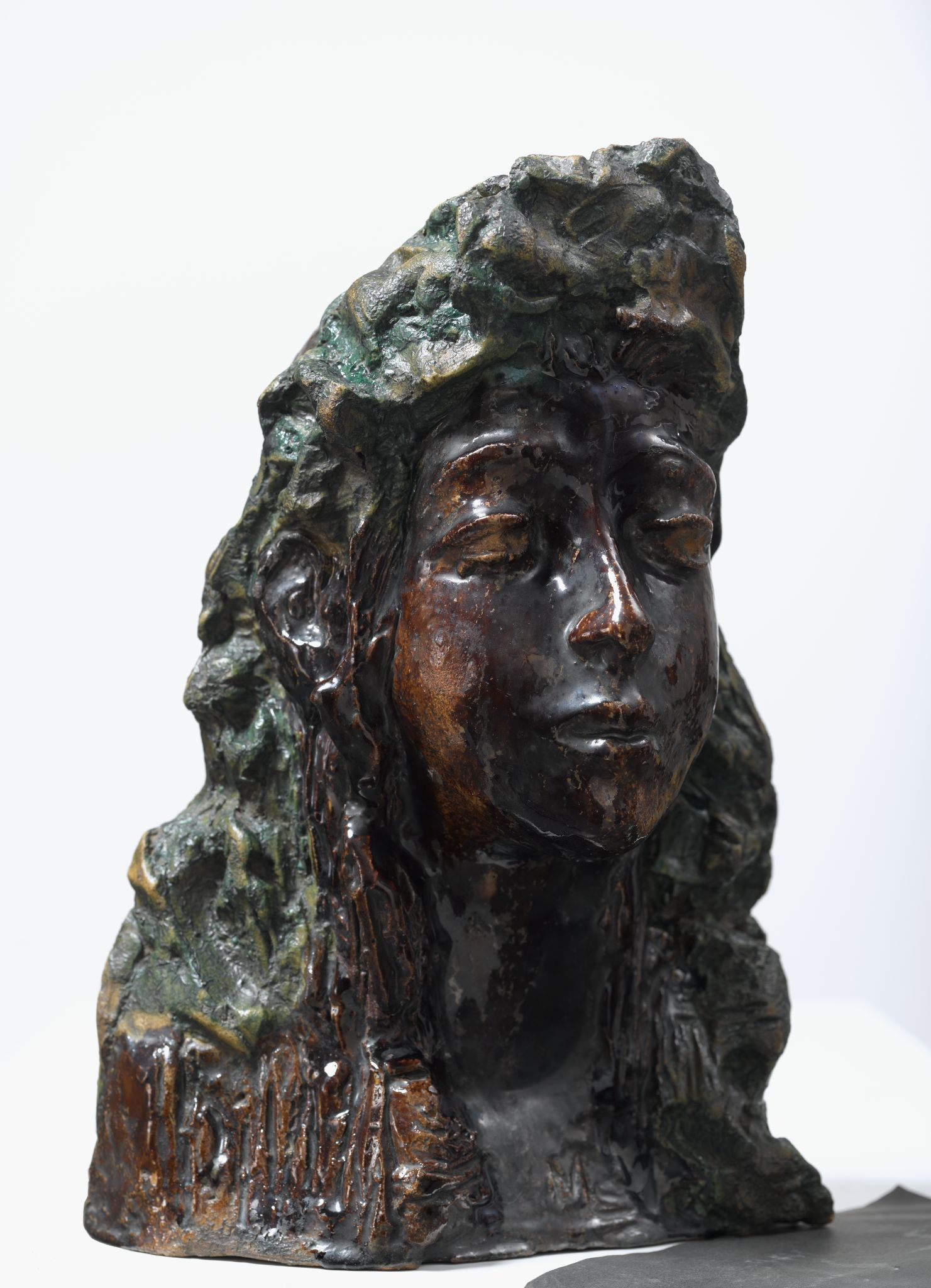
Девушка в венке
Peut-on la contempler ?
Inconnu

Galerie Tretiakov
Moscou, Russie
Le propriétaire est connu ; on ignore si l’œuvre est exposée aujourd’hui.
- Dans cet état depuis
- Source
- Le musée
À propos de la sculpture
Selon le musée — en russe
В произведении «Девушка в венке» Врубель создал загадочный образ молодой девушки, предстающей перед зрителем в облике то ли богини флоры, то ли нимфы. Можно предположить, что эта композиция появилась у Врубеля в процессе творческих поисков типажа героини русской сказки. По мнению многих исследователей, черты облика модели имеют портретное сходство с его музой и женой Надеждой Ивановной Забелой-Врубель.
Михаил Врубель руководил керамической мастерской в Абрамцево с 1890 года. Изучив технологию гончарного искусства, Врубель много экспериментировал с композицией, формой, фактурой, открыв новые возможности майолики. За несколько лет небольшая мастерская превратилась в гончарный завод, продукция которого получила всемирное признание.
Lire la suite
В собрании музея находятся два экземпляра произведения «Девушка в венке», отличающиеся цветом глазури. В этом варианте скульптуры форма покрыта полихромной поливой, демонстрирующей богатство оттенков глазури: темно-коричневое лицо, зеленый с желтыми вкраплениями венок, на голове белый жгут. Скульптура имеет автограф-монограмму МВ в тесте майолики, что является редким явлением для керамики Врубеля.
Galerie Tretiakov
Notice
- Numéro d’inventaire
- СК-275
Au catalogue
Sources
- Galerie Tretiakov
- Image : Galerie Tretiakov — © State Tretyakov Gallery
Pendant ce temps, chez Mikhail Vrubel
La vie entièreearly 1896
Meeting Nadezhda Zabela
In St Petersburg Vrubel stepped in for the ailing Korovin as designer of Humperdinck’s opera “Hansel and Gretel”, which Mamontov was financing, and at a rehearsal he first heard, then saw, the singer of Gretel — Nadezhda Zabela. Rushing up to her in the interval with the cry “What a lovely voice!”, he proposed almost on the day they met, and later told his sister that had she refused, he would have killed himself on the spot.
22 May 1896
The Academy rejects his Nizhny Novgorod panels
Mamontov secured Vrubel a commission for two huge panels for the art section of the All-Russian Exhibition — “Mikula Selyaninovich” and “The Princess of the Dream”, a hundred square metres in three months. But the academician Albert Benois, in charge of the pavilion, demanded sketches, a telegram went to St Petersburg — “Vrubel’s panels are monstrous, they must be removed” — the Academy’s commission ruled them unfit to show, and on 22 May the works were carried out of the pavilion.
July 1896
Mamontov’s pavilion for the “rejected” panels
Mamontov bought both panels for 5,000 roubles: Polenov and Korovin finished “Mikula”, Vrubel completed “The Princess of the Dream” in a shed at the Abramtsevo pottery, and in time for the imperial couple’s visit on 15–17 July the canvases were shown in a specially built pavilion signposted “Exhibition of decorative panels by the artist M. A. Vrubel, rejected by the jury of the Imperial Academy of Arts” — the words naming the Academy’s jury soon had to be painted over. A newspaper battle followed: Nikolai Garin-Mikhailovsky offered the first balanced analysis of Vrubel’s art, while Maxim Gorky mocked his panels in five articles.
28 July 1896
Marries Nadezhda Zabela in Geneva
Meeting Zabela’s family went badly — the age gap troubled them (he was 40, she 28), and the bride herself knew that Vrubel drank and squandered money — but on 28 July the couple were married in the Cathedral of the Exaltation of the Holy Cross in Geneva. They spent their honeymoon in a guesthouse in Lucerne, where Vrubel went on working on panels for A. V. Morozov’s Gothic study: by the wedding he was literally penniless and had walked from the station to his bride’s.
summer 1898
First symptoms of illness
During a summer stay in Ukraine the first symptoms of his future illness appeared: his migraines grew so severe that he took phenacetin in huge quantities — up to 25 grains or more, according to his sister-in-law. A previously unknown irritability set in too, especially when someone disagreed with his opinion of a work of art.
January 1898
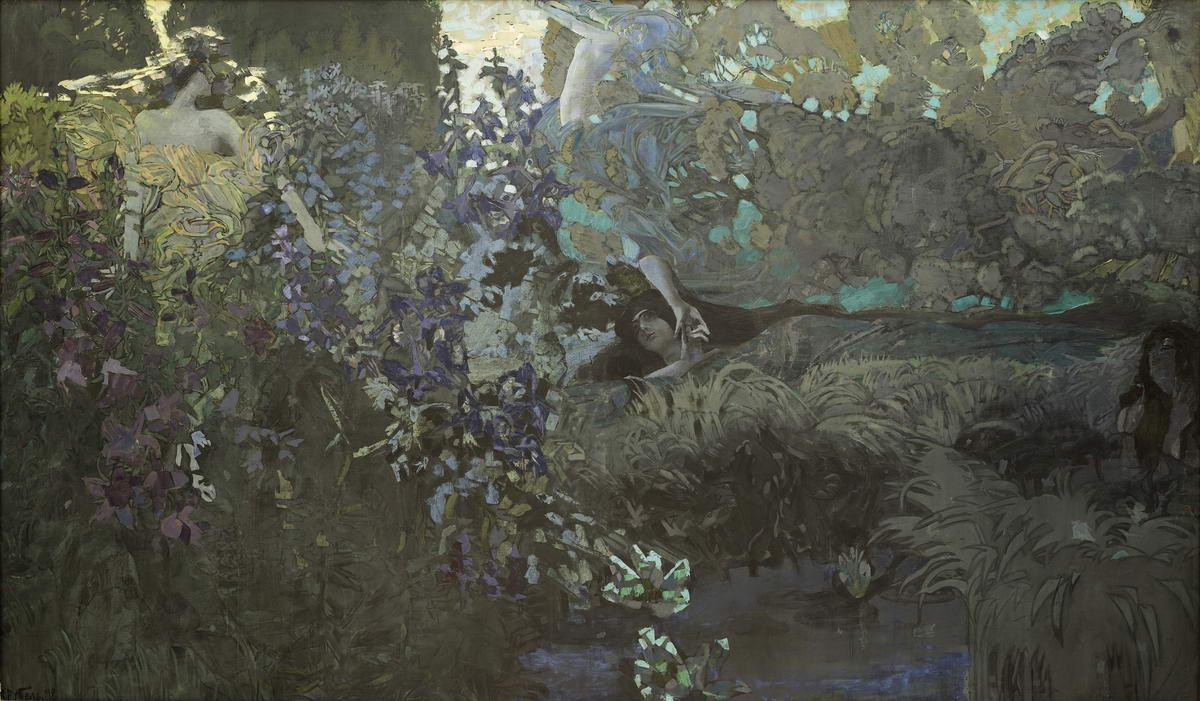
“Morning” at Diaghilev’s exhibition
In St Petersburg Ilya Repin advised Vrubel not to destroy his panel “Morning”, which a client had turned down, but to show it at an exhibition. So the canvas went into Sergei Diaghilev’s exhibition of Russian and Finnish artists at the museum of the Stieglitz School.