Jean-Honoré FragonardFrance, 1732–1806
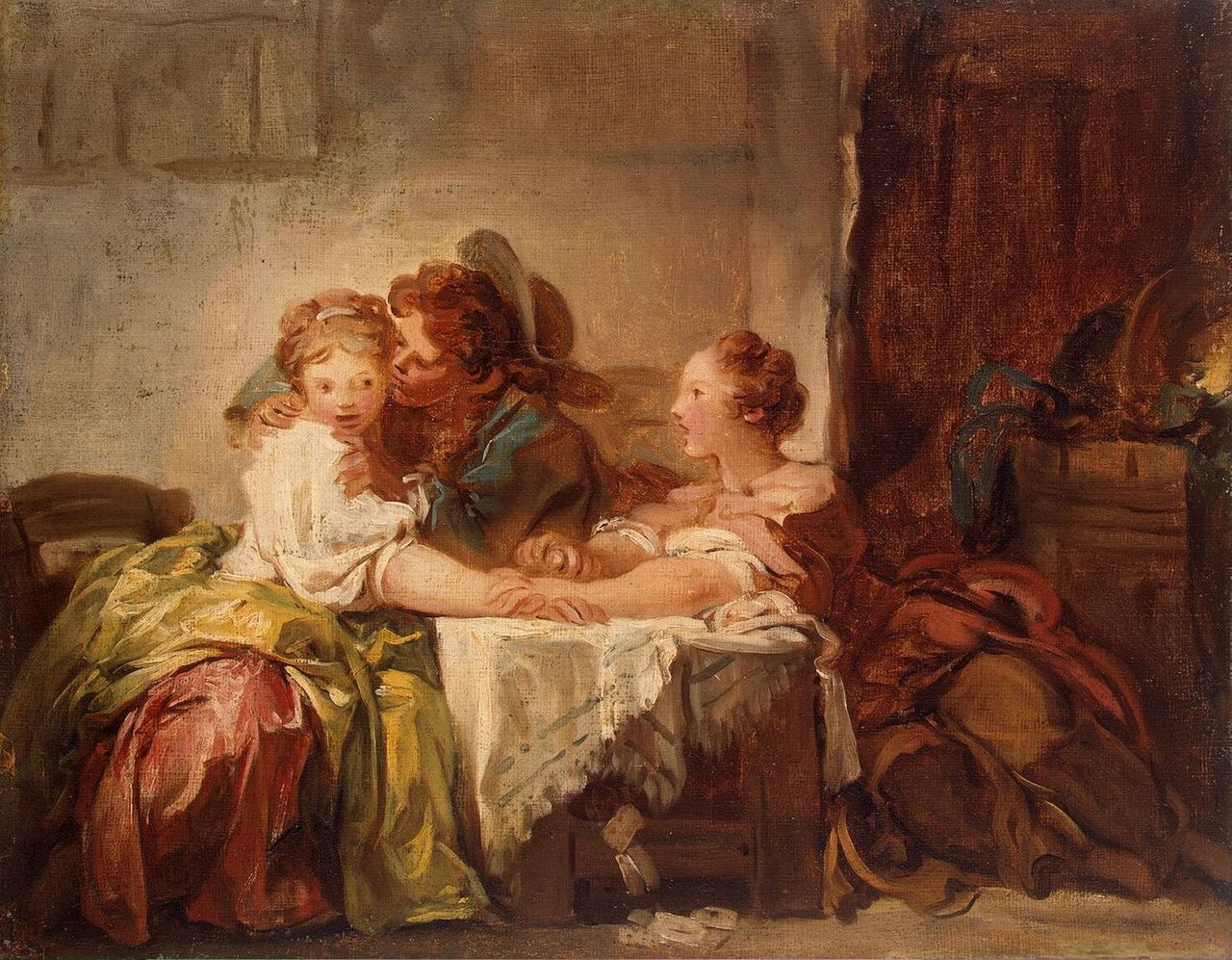
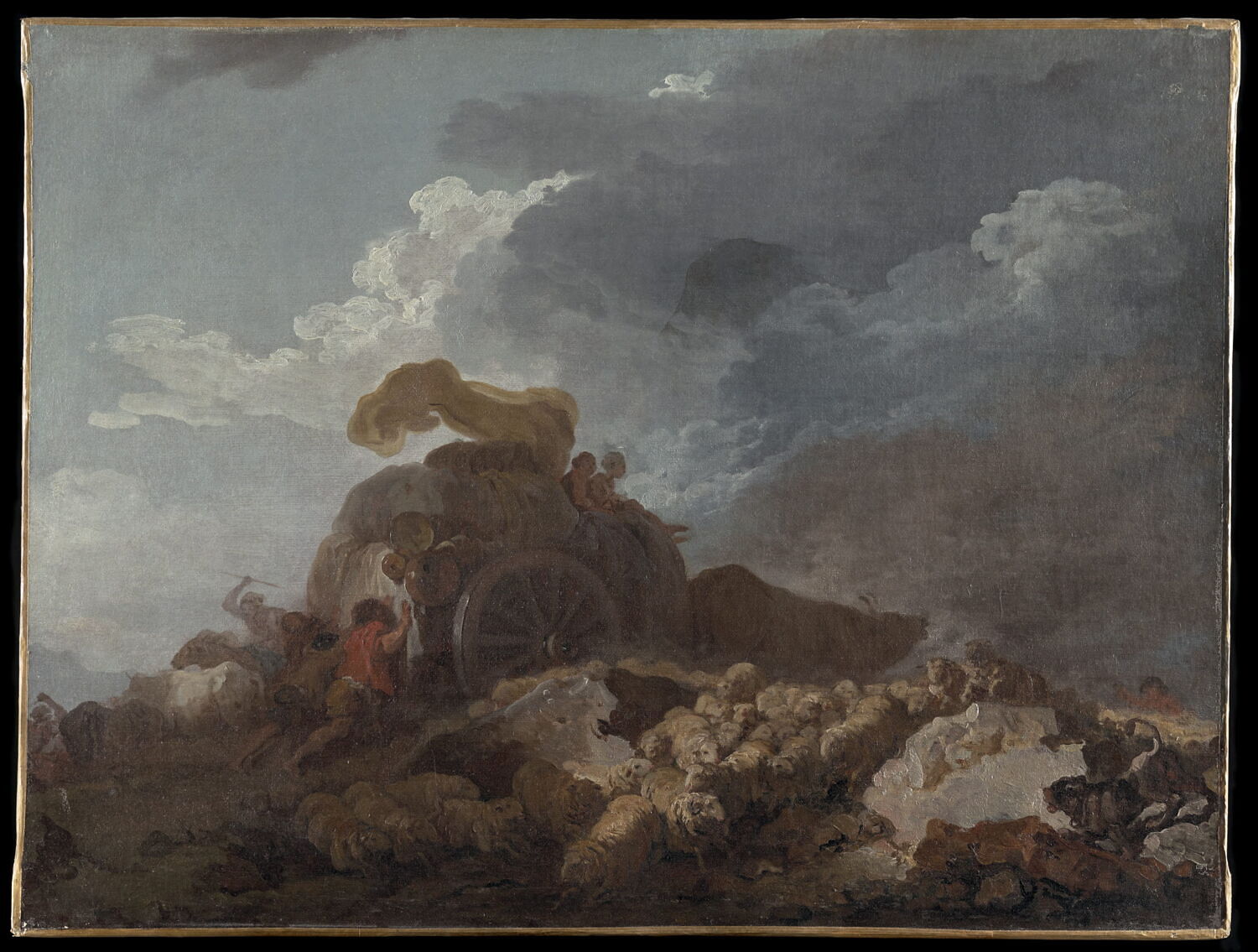
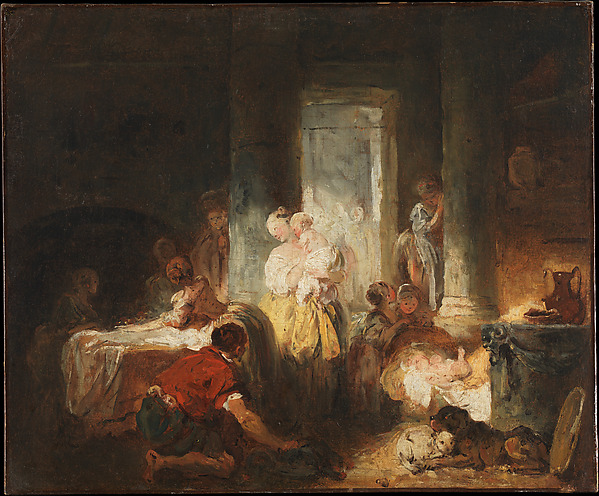
Farmer's Children
Peut-on la voir ?
Oui, exposée actuellement
Où est « Farmer's Children » aujourd’hui ? Musée de l'Ermitage, Salle 288, Saint-Pétersbourg. Oui, exposée actuellement. Vérifié 29 août 2026.

Saint-Pétersbourg, Russie
Ouvert· jusqu’à 21:00
Présentée au public.
- Vérifié
- Dans cet état depuis
- Source
- Le musée
Notice
- Numéro d’inventaire
- ГЭ-1179
Au catalogue
Sources
- Musée de l'Ermitage
- Image : Musée de l'Ermitage — © State Hermitage Museum
Dans la vie de Jean-Honoré Fragonard
La vie entière1760
Travels through Italy with Hubert Robert
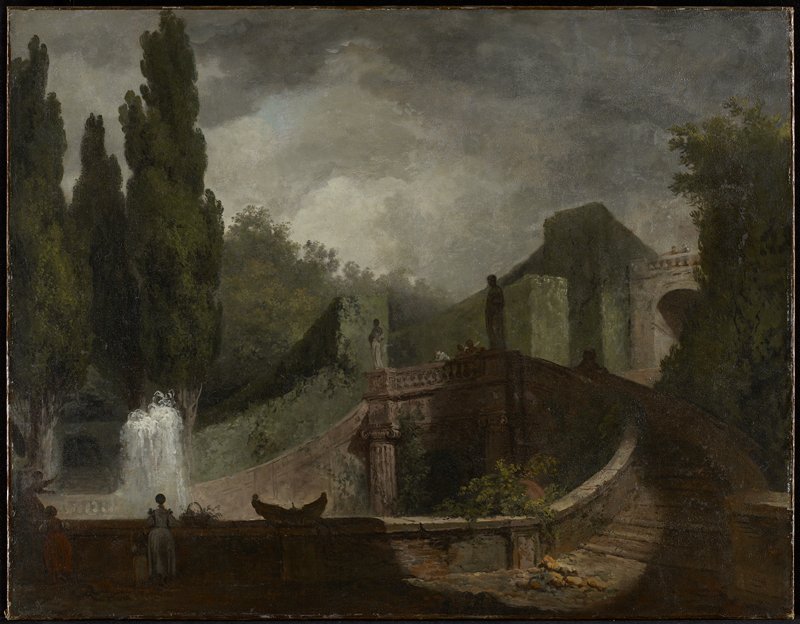
Together with Hubert Robert he traveled across Italy, making numerous sketches of the local scenery. In the romantic gardens with their fountains, grottoes, temples and terraces, Fragonard found the imagery he would later embody in his art.
c. 1761
Studio in the Louvre
On his return to Paris he received a studio in the Louvre palace, where he lived, and was put in charge of the decoration of the Galerie d'Apollon.
1761
Return to France via Venice and southern Italy
Having lived in Rome until April 1761, he left the Eternal City with his patron the Abbé de Saint-Non and Hubert Robert: he visited Florence, Bologna and Venice, where he studied Tiepolo, made a journey to southern Italy, and returned to France.
1765
"Coresus and Callirhoe" at the Salon: admission to the Academy
He exhibited at the Paris Salon the painting "Coresus and Callirhoe" (now in the Louvre), for which the Royal Academy of Painting and Sculpture admitted him as a member. Diderot devoted a lavish panegyric to it, and the king bought the painting and ordered it reproduced at the Gobelins manufactory.
second half of the 1760s
Abandoning history painting for "gallant scenes"
Despairing of attaining the position of first painter in the classical genre, he abandoned it for erotic genre scenes, which enjoyed the greatest success at the court of Louis XV. He soon became a fashionable artist — a master of pastoral landscapes, female portraits and small-format "cabinet pictures."
17 June 1769
Marriage to Marie-Anne Gérard
He married the miniature painter Marie-Anne Gérard; that same year their daughter Rosalie was born, who became one of her father's favorite models.