 Nicolai AbildgaardDanemark, 1743–1809
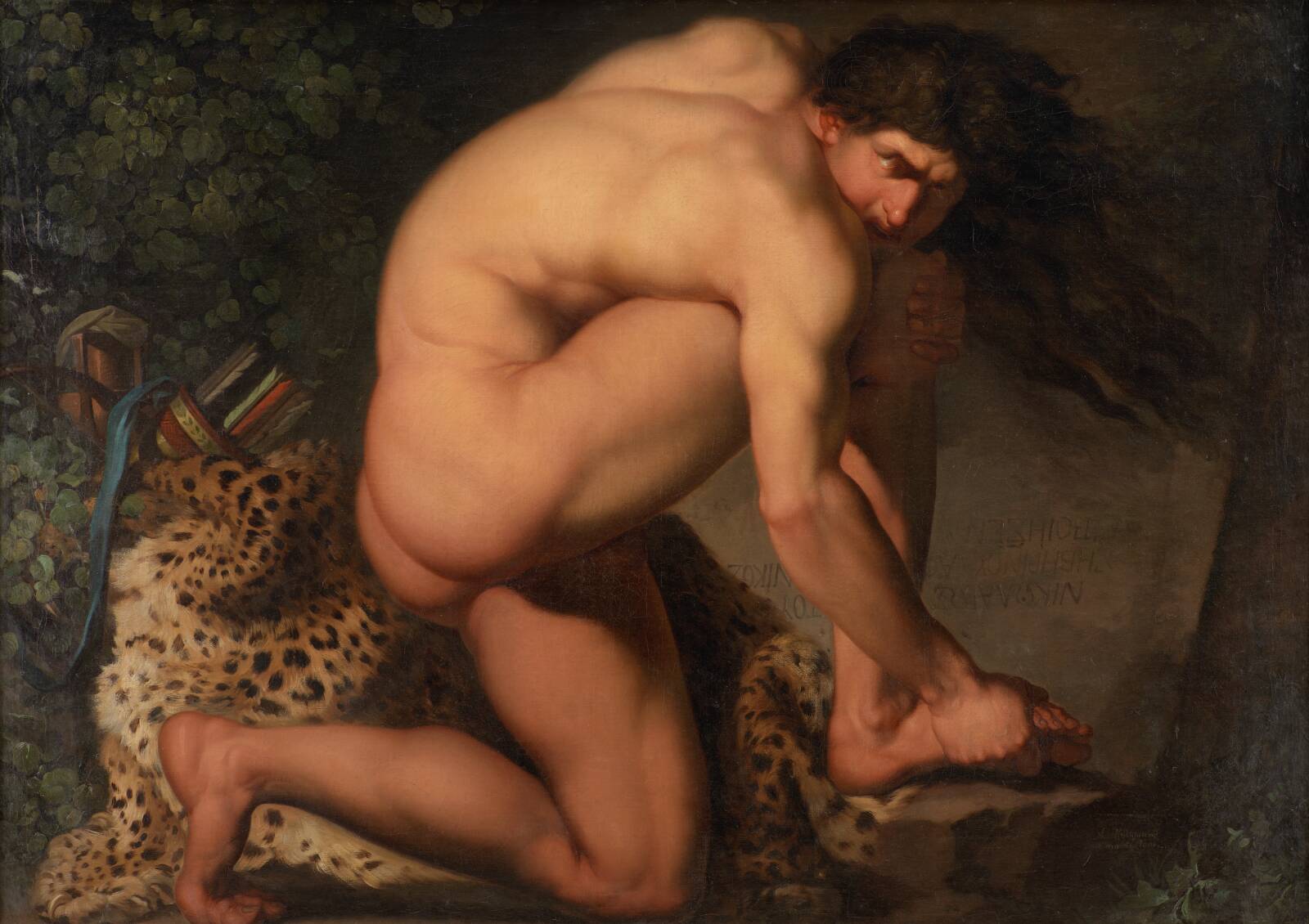
Den sårede Filoktet
Peut-on la contempler ?
Oui, elle reçoit

Copenhague, Danemark
Présentée au public.
- Vérifié
- Dans cet état depuis
- Source
- Le musée
À propos du tableau
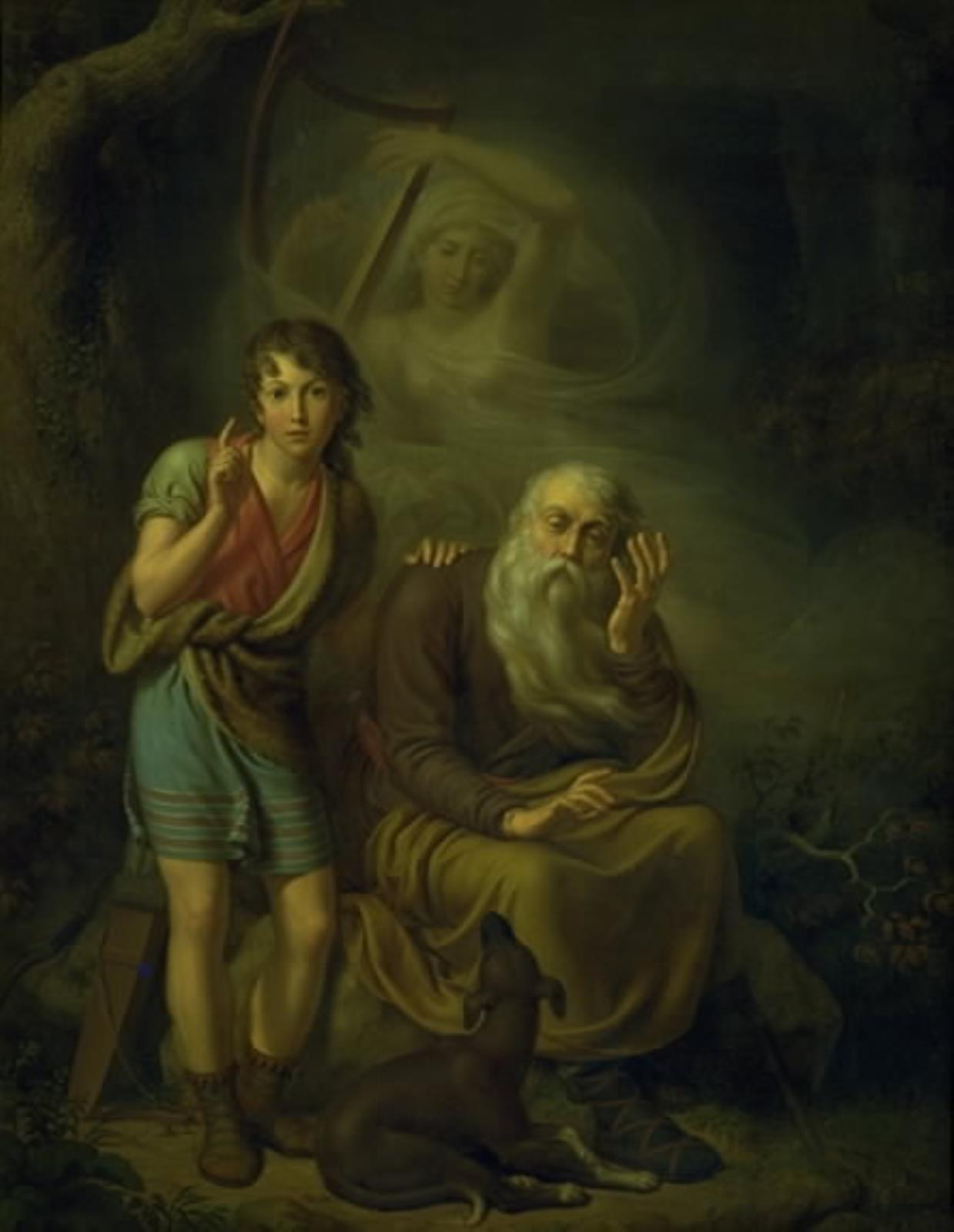
The Wounded Philoctetes is a painting by the Danish painter, N. A. Abildgaard. It was painted in 1775.
Having received a five-year scholarship from the Royal Danish Academy of Fine Arts, Abildgaard stayed in Rome where he painted his interpretation of the hero Philoctetes who was wounded by a snake and left behind on a Greek island by his brothers-in-arms during the Trojan War.
Notice
- Numéro d’inventaire
- KMS586
Au catalogue
Allées et venues
Exposée · Salle 217B
Statens Museum for Kunst · 28 sept. 2026 — aujourd’hui · Vérifié
Était exposée
Statens Museum for Kunst · 19 août 2026 — 28 sept. 2026 · Vérifié
Sources
- Statens Museum for Kunst
- Image : Statens Museum for Kunst — public domain
Pendant ce temps, chez Nicolai Abildgaard
La vie entière1772–1777
Sergel and Füssli: a turn towards Romanticism
In the company of the Swedish sculptor Johan Tobias Sergel and the painter Johann Heinrich Füssli, Abildgaard began to move away from academic classicism and came to love Shakespeare, Homer and Ossian. Themes from Greek and Norse mythology placed him at the forefront of Nordic Romanticism.
1772–1777 · Lieu de travail
Rome
1776
A trip to Naples with Jens Juel
From Rome Abildgaard made a side trip to Naples with Jens Juel. Juel’s portrait of Abildgaard was turned into a medallion by Abildgaard’s friend Johan Tobias Sergel.
June – December 1777
Home by way of Paris, hoping for a professorship
In June 1777 Abildgaard left Rome, hoping to become a professor at the Academy in Copenhagen. He stopped in Paris on the way and reached Denmark in December.
1777–1794
His most productive years
Besides monumental works Abildgaard produced vignettes and illustrations, to Socrates and Ossian among others, designed Old Norse costumes, and did some sculpture, etching and writing.