ART WIKI32 963 en salle
CarteCollectionArtistesMuséesExpositionsJournal
Connexion

ART WIKI

Où est accroché le chef-d’œuvre, et quand on vous laisse entrer.

Collections : Art Institute of Chicago, Cleveland Museum of Art, Galerie Tretiakov, Hirshhorn Museum and Sculpture Garden, J. Paul Getty Museum, Metropolitan Museum of Art, Minneapolis Institute of Art, Musée de l'Ermitage, Musée des Beaux-Arts Pouchkine, Musée du Louvre, musée national d'art asiatique, Musée russe, Musées d'Art de Harvard, Museum of Modern Art, National Gallery of Art, National Portrait Gallery, Rijksmuseum Amsterdam, Smithsonian American Art Museum, Statens Museum for Kunst, Victoria and Albert Museum, Villa Getty, Whitney Museum of American Art, Catalogue d’État du fonds muséal de Russie (274 musées), Europeana (19 musées), Wikidata (6 musées), Paris Musées (12 musées) et Joconde, la base des musées du ministère de la Culture (495 musées). Les images appartiennent à leurs ayants droit.

Rubriques

  • Carte
  • Recherche
  • Collection
  • Chefs-d’œuvre
  • Exposées en ce moment
  • Artistes

Et aussi

  • Musées et galeries
  • Expositions
  • Journal
  • D’où viennent les données
  • Confidentialité et cookies
AccueilCarteCatalogue
  1. Collection/
  2. Rijksmuseum Amsterdam/
  3. De reddingslijn
De reddingslijn, Winslow Homer, 1884
Winslow Homer, portraitWinslow HomerÉtats-Unis, 1836–1910

De reddingslijn

1884 · Print

Peut-on la contempler ?

Inconnu

Rijksmuseum Amsterdam

Amsterdam, Pays-Bas

Le propriétaire est connu ; on ignore si l’œuvre est exposée aujourd’hui.

Source
Le musée
Sur la cartePage du musée

À propos de l’œuvre

Selon le musée — en néerlandais

Een vrouw wordt door een man van een reddingsbrigade met een lijn uit het water gehaald.

Rijksmuseum Amsterdam

Notice

1884 · à 48 ans
18361910
Numéro d’inventaire
RP-P-1960-105

Ce qu’elle montre

Drowning, shipwrecked personSaving a person from drowning

Au catalogue

EstampesImpressionnismeXIXe siècle

Sources

  • Rijksmuseum Amsterdam
  • Image : Rijksmuseum Amsterdam — public domain

Pendant ce temps, chez Winslow Homer

La vie entière
  1. spring 1881 – November 1882

    England: the village of Cullercoats

    In 1881 Homer set off on his second and last trip abroad, to England, and from the spring of 1881 to November 1882 lived in the village of Cullercoats on the North Sea, depicting the courage of fishermen and above all of women: gutting fish, mending nets, waiting for the men at the water's edge. The period profoundly changed his later work: his palette grew sober and his pictures larger. Of the local women he wrote: “The women are the working bees.”

  2. November 1882

    Return: “a very different Homer”

    In November 1882 Homer returned to the United States and showed his English watercolours in New York. Critics noticed the change at once: “He is a very different Homer from the one we knew”, his pictures were “works of High Art”, and his women were no longer “dolls who flaunt their millinery” but sturdy, fearless wives and mothers.

  3. summer 1883

    Moves to Prouts Neck

    In the summer of 1883 Homer moved from New York to Prouts Neck, a peninsula ten miles south of Portland, Maine, and lived there for the rest of his life, using solitude to work. He settled on the family estate, in a remodelled carriage house seventy-five feet from the ocean.

  4. 1884

    Death of his mother

    In 1884 Homer's mother died: his first teacher and the strongest influence on him. After her death he became a “parent” to his ageing but domineering father, and his sister-in-law Martha (“Mattie”) became his closest female intimate.

  5. winter 1884 – 1885

    Florida, Cuba and the Bahamas

    In the winter of 1884–1885 Homer travelled to Florida, Cuba and the Bahamas, painting a series of watercolours commissioned by Century Magazine: the storm-tossed green sea of Prouts Neck gave way to the sparkling blue skies of the Caribbean, and for Edith Blake, wife of the governor of the Bahamas, he painted “Children Under a Palm Tree”. “A Garden in Nassau” (1885) is one of the best of these watercolours, but they proved too advanced for traditional buyers.
Autres œuvres : Winslow Homer

Toutes les œuvres
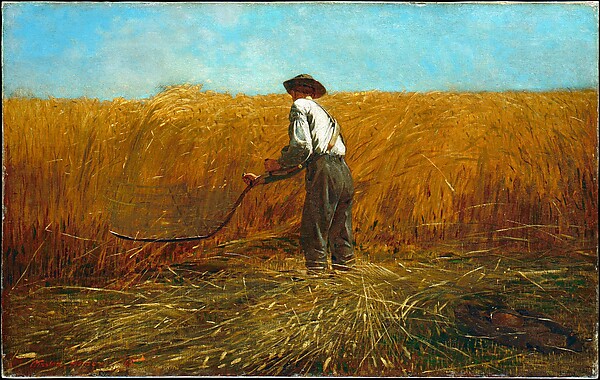
The Veteran in a New Field, Winslow Homer, 1865

The Veteran in a New Field

1865 · Metropolitan Museum of Art

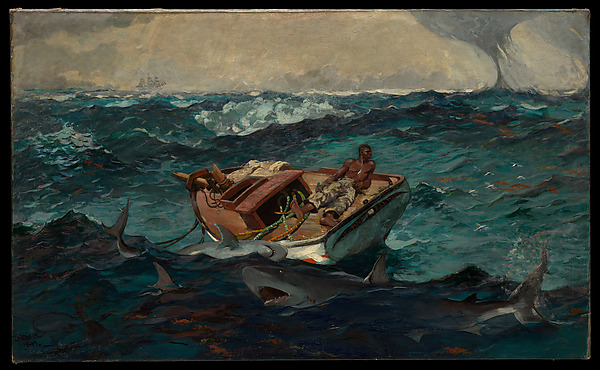
The Gulf Stream, Winslow Homer, 1899; reworked by 1906

The Gulf Stream

1899; reworked by 1906 · Metropolitan Museum of Art

Home, Sweet Home, Winslow Homer, c. 1863

Home, Sweet Home

c. 1863 · National Gallery of Art

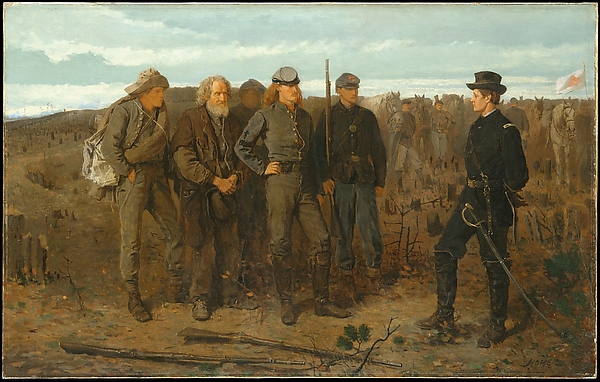
Prisoners from the Front, Winslow Homer, 1866

Prisoners from the Front

1866 · Metropolitan Museum of Art

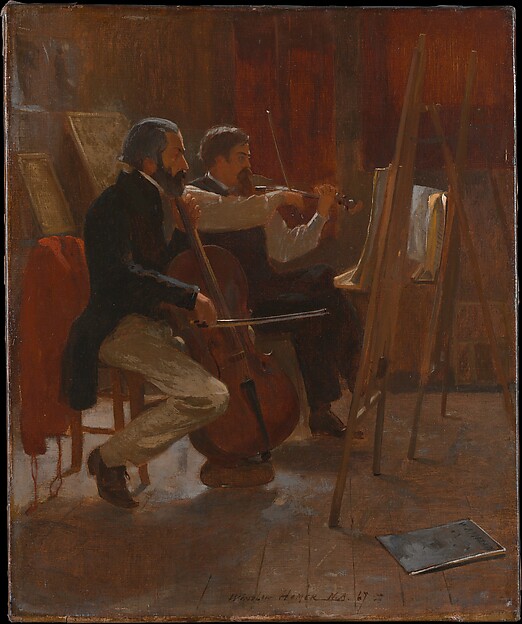
The Studio, Winslow Homer, 1867

The Studio

1867 · Metropolitan Museum of Art

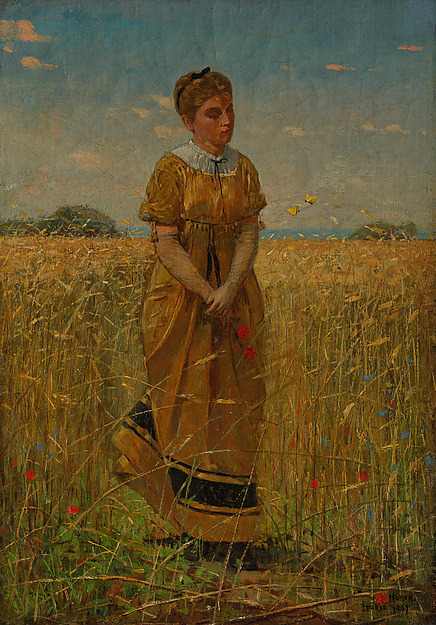
Coming through the Rye, Winslow Homer, 1867

Coming through the Rye

1867 · Metropolitan Museum of Art

The Dinner Horn (Blowing the Horn at Seaside), Winslow Homer, 1870

The Dinner Horn (Blowing the Horn at Seaside)

1870 · National Gallery of Art

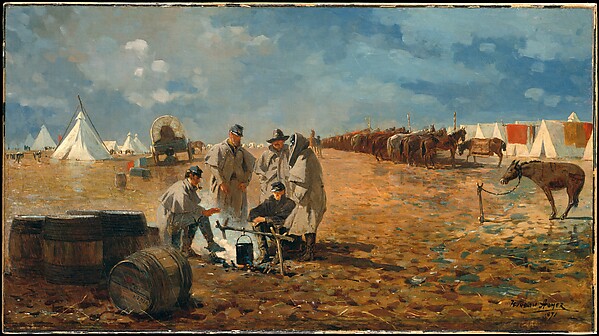
Rainy Day in Camp, Winslow Homer, 1871

Rainy Day in Camp

1871 · Metropolitan Museum of Art

Sous le même toit : Rijksmuseum Amsterdam

Page du musée
Self-portrait, Vincent van Gogh, 1887

Vincent van Gogh

Self-portrait, 1887

La Corniche near Monaco, Claude Monet, 1884

Claude Monet

La Corniche bij Monaco, 1884

De Nachtwacht, Rembrandt van Rijn, 1642

Rembrandt van Rijn

La Ronde de nuit, 1642

Portrait of a Woman, Probably Maria Trip (1619-1683), Rembrandt van Rijn, 1639

Rembrandt van Rijn

Portrait de Maria Trip, 1639

Still Life with Peacocks, Rembrandt van Rijn, c. 1639

Rembrandt van Rijn

Still Life with Peacocks, c. 1639

Landscape with a Stone Bridge, Rembrandt van Rijn, c. 1638

Rembrandt van Rijn

Paysage avec un pont de pierre, c. 1638

Man in Oriental Dress, Rembrandt van Rijn, 1635

Rembrandt van Rijn

Man in Oriental Dress, 1635

Portrait of Haesje Jacobsdr van Cleyburg, Rembrandt van Rijn, 1634

Rembrandt van Rijn

Portrait of Haesje Jacobsdr van Cleyburg, 1634