Gustave DoréFrance, 1832–1883
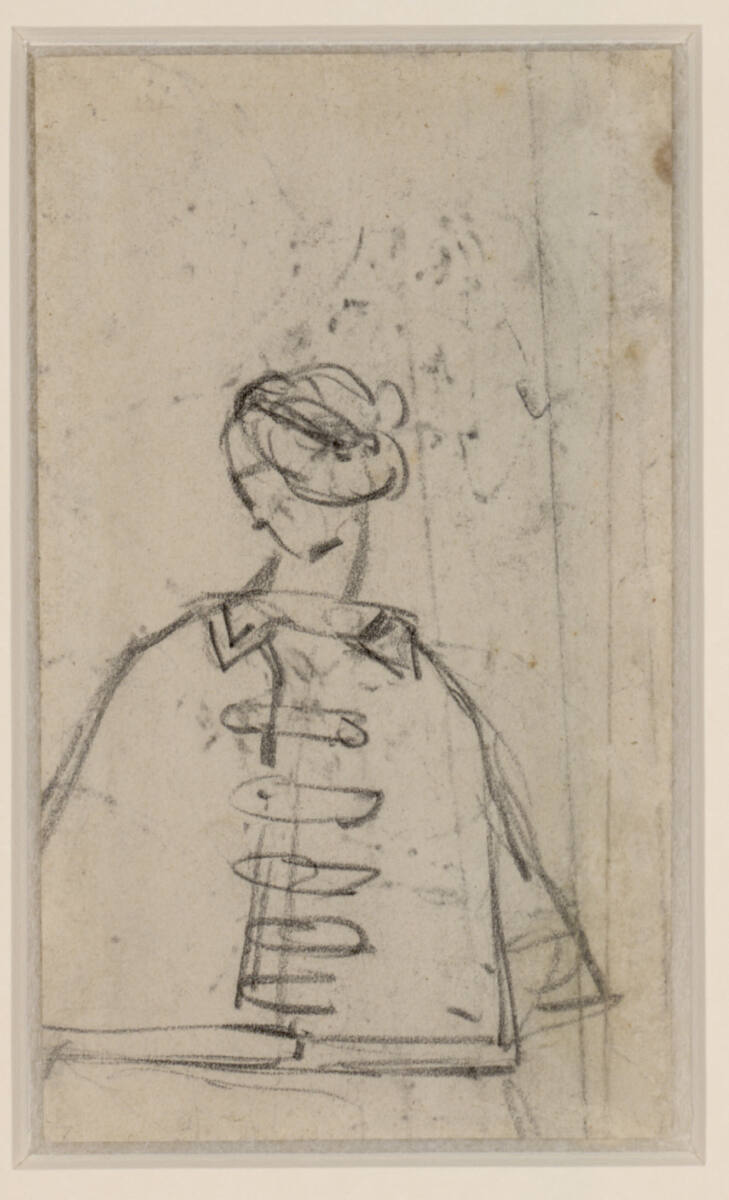
Dansfeest in de Elzas
Peut-on la voir ?
Inconnu
Où est « Dansfeest in de Elzas » aujourd’hui ? Collection: Rijksmuseum Amsterdam, Amsterdam. Inconnu.

Amsterdam, Pays-Bas
Le propriétaire est connu ; on ignore si l’œuvre est exposée aujourd’hui.
- Source
- Le musée
Notice
- Numéro d’inventaire
- RP-P-1968-101
Ce qu’elle montre
Au catalogue
Sources
- Rijksmuseum Amsterdam
- Image : Rijksmuseum Amsterdam — public domain
Dans la vie de Gustave Doré
La vie entièrelate 1847
The album “The Labours of Hercules”: the author is fifteen
At the end of 1847 an album of lithographs, “The Labours of Hercules”, is published by Aubert; it states that the author is a fifteen-year-old artist who made them without a teacher and without a classical education.
1847
Moving to Paris with his mother
In 1847 Gustave moves to Paris with his mother, where he is enrolled at the Lycée Charlemagne. He never receives an artistic education, but spends his time in the Louvre and the National Library studying paintings and engravings.
1847
Caricaturist at “Le Journal pour rire”
The fifteen-year-old Doré goes to Philipon, editor-in-chief of Le Journal pour rire, with a series of drawings of the labours of Hercules and is taken on as a staff member at a salary of 5,000 francs.
1848
Takes part in the Salon
In 1848 Doré becomes a participant in the Salon, where he exhibits his work.
1849
His father's death; living with his mother
Following his father's death in 1849 Doré continues to live with his mother, illustrating books until his death; he never marries.
1851
Illustrated stories of 1851
In 1851 two of Doré's “text comics” appear — “Trois artistes incompris et mécontents” and “Les Dés-agréments d'un voyage d'agrément”; they belong to a group of such works that includes “The Labours of Hercules” (1847) and “The History of Holy Russia” (1854).