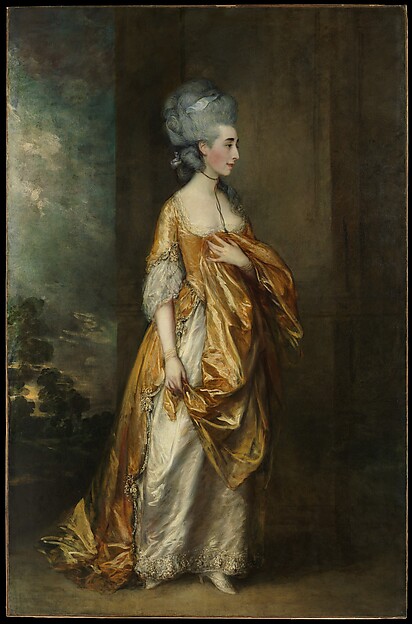
Thomas GainsboroughRoyaume-Uni, 1727–1788
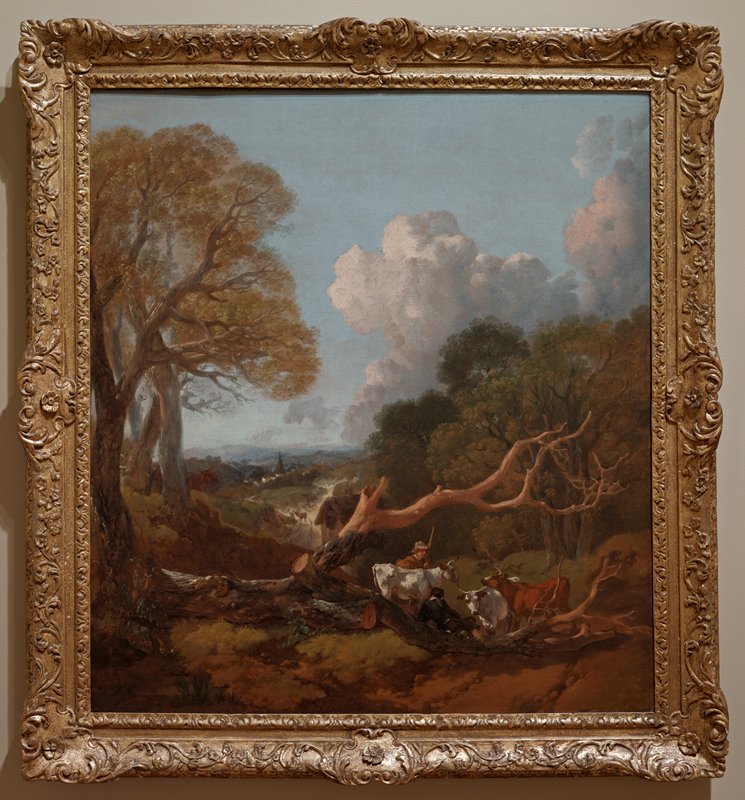
Cornard Wood
Peut-on la contempler ?
Inconnu

Londres, Royaume-Uni
Le propriétaire est connu ; on ignore si l’œuvre est exposée aujourd’hui.
- Dans cet état depuis
- Source
- Le musée
À propos du tableau
Cornard Wood, près de Sudbury, dans le Suffolk est une peinture de paysage datant de 1748 et réalisée par Thomas Gainsborough.
Notice
- Numéro d’inventaire
- NG925
Au catalogue
Sources
- Wikidata
- Image : National Gallery — Thomas Gainsborough · Public domain · Wikimedia Commons
Pendant ce temps, chez Thomas Gainsborough
La vie entière1740s
Making a living in London: landscapes, restoration, prints
Landscapes interest the young man most — plant sketches from the 1740s survive. He earns his living with landscapes on commission, touches up old paintings, assists the engraver John Boydell, and helps Francis Hayman decorate the supper boxes in Vauxhall Gardens.
15 July 1746
Marriage to Margaret Burr
On 15 July 1746 Gainsborough marries Margaret Burr, an illegitimate daughter of the Duke of Beaufort.
1748
His father dies; back to Sudbury
Gainsborough's father, John, dies in 1748. With no new commissions coming in London, the painter returns to Sudbury, to the house of his childhood.
c. 1749
Landscapes do not pay: a turn to portraiture
Gainsborough has always thought of himself as a landscape painter, but landscapes bring no income: in the England of the day they count as a “low genre”. Around 1749 he unites portrait and landscape in one composition for the first time, in “Mr and Mrs Andrews”.
31 janvier 1750
Daughter born: Mary Gainsborough Fischer
1750s
Portraits pay the bills: the example of Hogarth
Gainsborough's main income comes from portraits; in this genre he tries to follow Hogarth, caring more about likeness than about conveying the sitter's social standing. Around 1753, probably, he receives a flattering commission for a portrait of Admiral Vernon, and he paints many members of his own family — for example a self-portrait of 1754 in a tricorn hat.