 El GrecoGrèce, 1541–1614
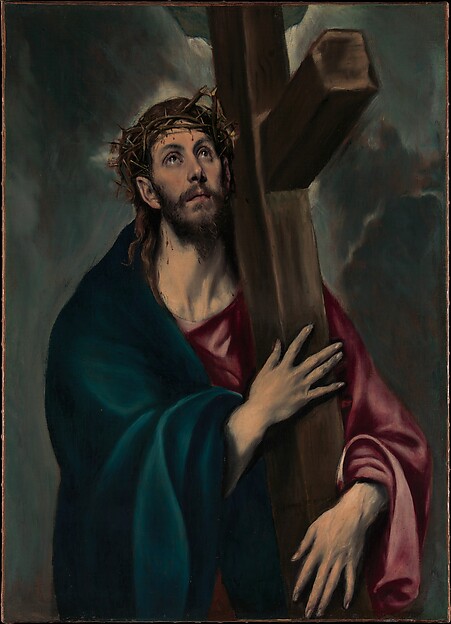
Christ Carrying the Cross
Peut-on la voir ?
Oui, exposée actuellement
Où est « Christ Carrying the Cross » aujourd’hui ? Metropolitan Museum of Art, Salle 958, New York. Oui, exposée actuellement. Vérifié 29 septembre 2026.

New York, États-Unis
Fermé· ouvre à 10:00
Présentée au public.
- Vérifié
- Dans cet état depuis
- Source
- Le musée
À propos du tableau
Le Christ portant la croix est une peinture à l'huile sur toile de l'artiste Le Greco, réalisée au début de sa période espagnole à Tolède vers 1580. Ses dimensions sont de 105 x 79 cm. Le tableau est exposé dans la salle El Greco de la collection du Metropolitan Museum of Art de New York.
Notice
- Numéro d’inventaire
- 1975.1.145
Ce qu’elle montre
Au catalogue
Sources
- Metropolitan Museum of Art
- Image : Metropolitan Museum of Art — Open Access (CC0)
Dans la vie de El Greco
La vie entière1570s
The quarrel with Michelangelo in Rome
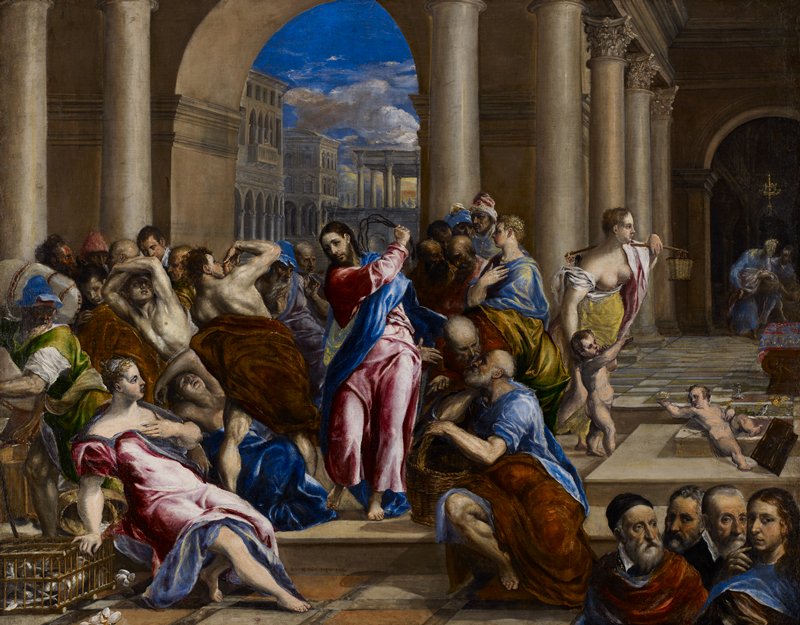
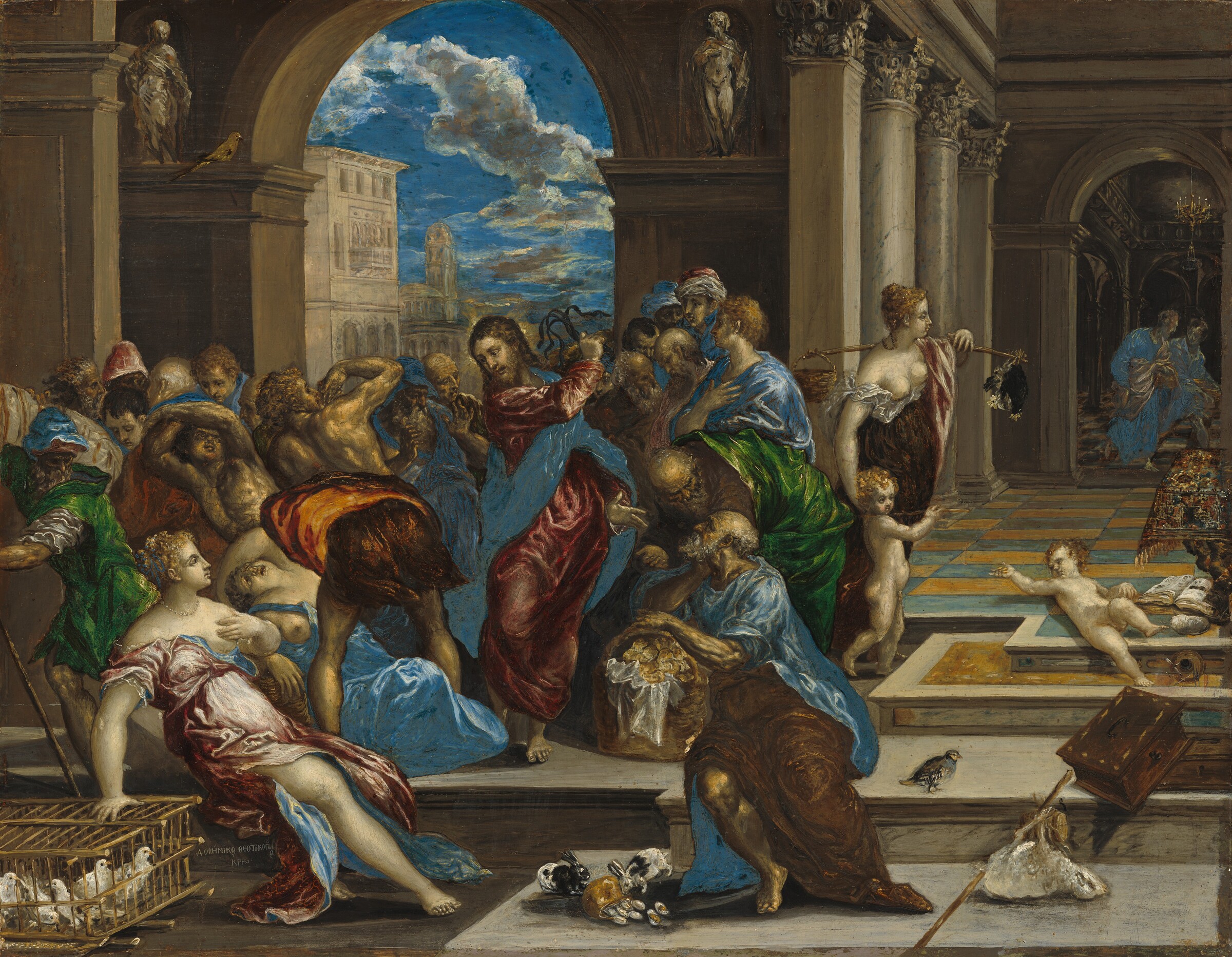
El Greco singled out Correggio and Parmigianino for praise but did not hesitate to dismiss Michelangelo's Last Judgment, offering Pope Pius V to paint over the whole fresco in accord with the new and stricter Catholic thinking; later he said Michelangelo was a good man who did not know how to paint. In The Purification of the Temple he painted portraits of Michelangelo, Titian, Clovio and presumably Raphael, advancing a claim to rival them.
1577
Moving to Spain: Madrid and Toledo
In 1577 El Greco moved to Madrid and then to Toledo, then the religious capital of Spain. Philip II, with the Escorial still under construction, had difficulty finding good artists: Titian was dead, and Tintoretto, Veronese and Anthonis Mor all refused to come to Spain.
by July 1577
Contracts for Santo Domingo el Antiguo and “El Espolio”
He had arrived in Toledo by July 1577 and signed contracts for a group of paintings for the church of Santo Domingo el Antiguo and for El Espolio.
1577–1585
Royal commissions and the disfavour of Philip II
El Greco did not plan to stay in Toledo: he meant to win a place at court and secured two important commissions from Philip II, the Allegory of the Holy League and the Martyrdom of St Maurice. The king disliked them — the St Maurice altarpiece was hung in the chapter-house instead of the intended chapel — and gave him no further commissions; the reasons are unclear: some scholars think he disliked living persons in a religious scene, others that El Greco let style outweigh content.
1578
Birth of his son Jorge Manuel
In 1578 El Greco's only son, Jorge Manuel, was born; his mother, the Spaniard Jerónima de las Cuevas, was probably never married to him. Jorge Manuel also became a painter, assisted his father and repeated his compositions for many years after inheriting the studio.
12 March 1586
The commission for “The Burial of the Count of Orgaz”
On 12 March 1586 El Greco obtained the commission for The Burial of the Count of Orgaz, now his best-known work.